If you have ever stood in the haircare aisle wondering whether a "natural" label actually means anything, you are not alone. Switching from a conventional formula to a cleaner one is one of the simplest ways to look after both your scalp and your hair's long-term health. This guide breaks down what natural shampoo really is, the ingredients worth avoiding, and how to choose the best organic shampoo and conditioner for your hair type — whether you are chasing length, protecting colour, or calming a sensitive scalp.
What makes a shampoo "natural" or "organic"?
"Natural" isn't a regulated term — any brand can print it on a bottle, so the word alone tells you little. What matters is the ingredient list. A genuinely natural shampoo is built mostly from plant-derived cleansers and botanical ingredients rather than harsh synthetic detergents. An organic shampoo goes further: its key ingredients are grown without synthetic pesticides, and the best ones carry certification you can verify. The practical takeaway — turn the bottle over and read the first five ingredients, where the bulk of any formula lives.
Ingredients to avoid in conventional shampoo
Most common hair complaints — dryness, an itchy scalp, colour fading fast, fine hair going limp — trace back to a handful of aggressive ingredients:
-
Sulfates (SLS / SLES) — strong detergents that create lather but can strip the scalp's natural oils, leaving hair dry and brittle.
-
Parabens — synthetic preservatives many people prefer to avoid.
-
Heavy silicones — coat the hair for instant shine, then build up and leave strands dull.
-
Synthetic fragrance — a frequent trigger for sensitive scalps.
Choosing an organic shampoo with no harsh chemicals lets your scalp return to its natural balance — often when the very issues you were fighting quietly settle down.
What to look for instead
The best natural shampoo and conditioner pairings usually rely on gentle, coconut- or plant-derived cleansers (like cocamidopropyl betaine), nourishing botanical oils, organic aloe and pro-vitamin B5, and a formula that's vegan and cruelty-free. Transparency about all of the above is the mark of a truly clean, non-toxic hair care range.
Best natural shampoo for everyday use
For most people, the best all-natural shampoo is simply one that cleanses thoroughly without that squeaky, stripped feeling, and rinses clean without residue. A good test: after a week, your hair should feel softer at the roots and your scalp calmer, not tighter.
Best organic shampoo for hair growth
No shampoo regrows hair on its own — be wary of any product that promises it. What the best organic shampoo for hair growth actually does is create the right conditions: a clean, balanced scalp free of the build-up and irritation that can hold healthy growth back. Paired with a gentle routine and a healthy diet, it's a sensible part of a hair-growth plan.
Best natural shampoo for colour-treated hair
Colour-treated hair needs the gentlest approach, because aggressive surfactants are exactly what strips dye and dulls tone. The best non-toxic shampoo for colour-treated hair cleanses without lifting colour, so your shade stays vivid longer between salon visits.
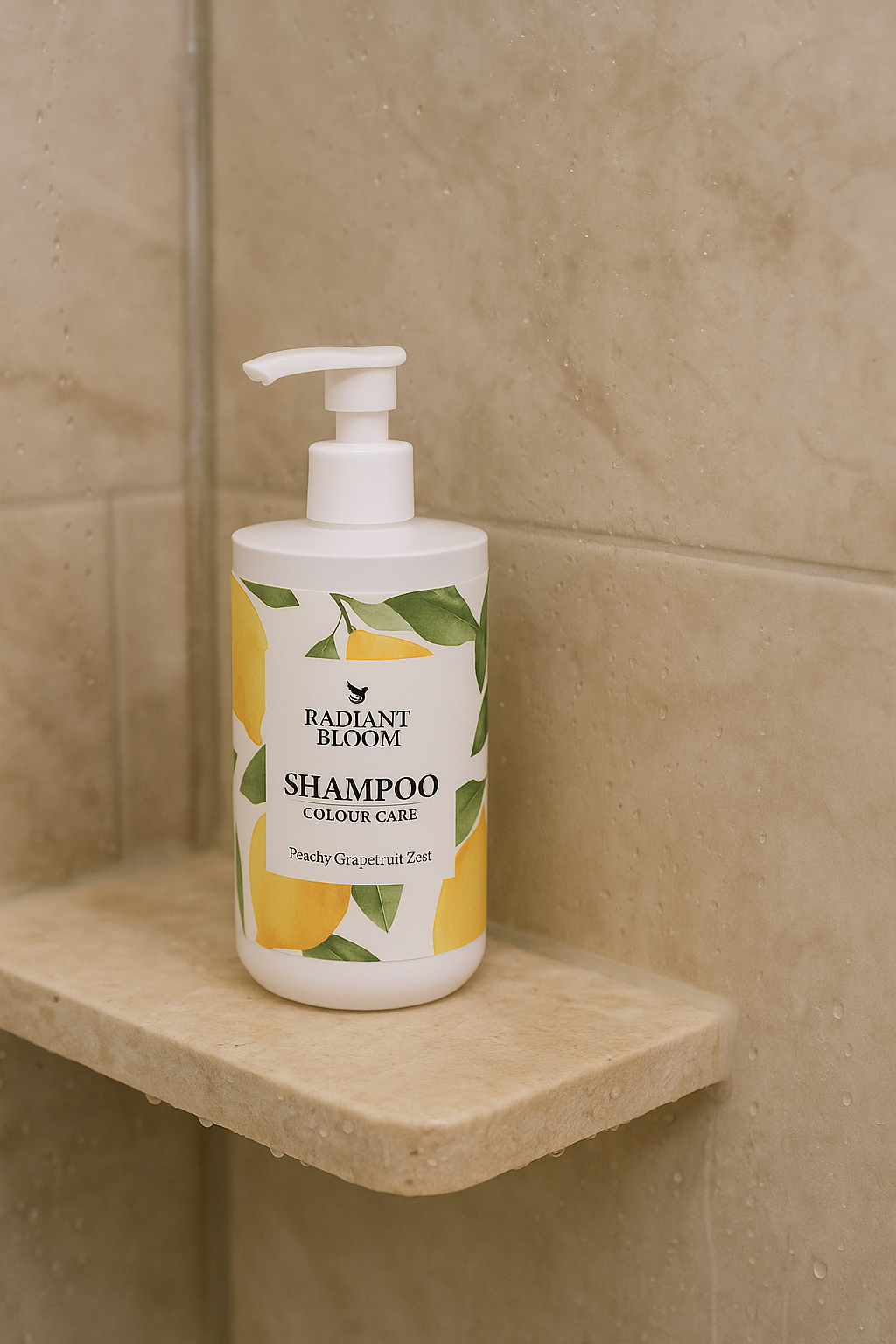
Our Colour Care Shampoo in Peachy Grapefruit Zest was formulated for exactly this: a rich, sulfate-free lather that protects colour while organic aloe and pro-vitamin B5 nourish the scalp. The citrus scent comes entirely from real fruit oils — no synthetic fragrance. Pair it with the matching Fresh Conditioner for softness through the ends.
"This transformed my colored hair — it's now soft, manageable, and my color stays fresh for weeks longer!"
— Verified Radiant Bloom Customer
Expert tip: leave any natural shampoo on for 60–90 seconds before rinsing, so the botanical ingredients have time to work rather than washing straight down the drain.
Best for sensitive scalps
If your scalp reacts easily, prioritise simplicity: a short ingredient list, no synthetic fragrance, no sulfates. A pure, clean shampoo with naturally derived cleansers is usually the healthiest choice for reactive skin, because there's simply less in it to cause a flare-up.
How to switch to natural shampoo (the adjustment period)
Here's the part most guides skip. When you move off silicone-heavy shampoo, your hair can feel different for a week or two while build-up clears and your scalp rebalances. This is normal and temporary. To make the switch smoother:
- Clarify once before you start, to remove existing silicone build-up.
- Use a little less shampoo than you think you need — natural formulas often go further.
- Give it two to three weeks before judging the results.
Frequently asked questions
What is natural shampoo?
A shampoo built mostly from plant-derived cleansers and botanical ingredients rather than harsh synthetic detergents like sulfates.
Which shampoo is best for hair without chemicals?
Look for a transparently formulated organic shampoo that's sulfate-free, paraben-free, and free of synthetic fragrance. "No chemicals" really means no harsh or unnecessary ones.
What is the best natural shampoo and conditioner?
The best pairing is the one matched to your hair: a gentle daily formula for normal hair, a colour-safe one for dyed hair, and a fragrance-free option for sensitive scalps.
What is the healthiest shampoo?
Usually the simplest — a short, recognisable ingredient list, no sulfates or synthetic fragrance, and gentle enough for regular use.
The bottom line
True hair health comes from simplicity: more plant power, fewer harsh chemicals. Whether you're after the most trustworthy organic shampoo or just the cleanest daily hair care, explore the full Radiant Bloom organic haircare range — vegan, cruelty-free, and made with naturally derived ingredients — and give your scalp the gentle reset it's been asking for.
For hair & scalp
Try our Organic Rosemary Hair & Scalp Oil
Supports stronger-looking hair and a healthy scalp — vegan and ECOCERT-certified. New customers get 15% off the first order.
Shop the Rosemary Oil →