Cart
0
Yes, mineral sunscreen is safe during pregnancy, and it is the type most doctors recommend. Its active ingredients, zinc oxide and titanium dioxide, sit on top of your skin and reflect UV rays instead of being absorbed into it. That makes mineral SPF the simplest, most cautious way to protect both your skin and your peace of mind for the next nine months. Here is everything you need to know.
In this article
- Why does sun protection matter more during pregnancy?
- What makes mineral sunscreen the safer choice?
- Which sunscreen ingredients should you avoid while pregnant?
- How do you choose a pregnancy-safe mineral sunscreen?
- How should you apply sunscreen during pregnancy?
- FAQ
Why does sun protection matter more during pregnancy?
Pregnancy hormones make your skin more reactive to sunlight than it has ever been. Rising estrogen and progesterone levels stimulate your pigment-producing cells, which is why up to 50 to 70 percent of pregnant women develop melasma, the patchy darkening often called "the mask of pregnancy". Once those dark patches appear, they are stubborn, and UV exposure is their number one trigger.
On top of that, many women find their skin becomes more sensitive overall: quicker to burn, quicker to flush, quicker to react. Daily SPF is the one step that protects against all of it. The question is not whether to wear sunscreen while pregnant, but which kind.

What makes mineral sunscreen the safer choice?
Sunscreens work in one of two ways. Chemical filters (like oxybenzone, avobenzone, and octinoxate) absorb into the upper layers of skin and neutralise UV as heat. Mineral filters (zinc oxide and titanium dioxide) form a physical shield on the surface and reflect UV away.
That difference is the whole story for pregnancy. Studies have detected chemical filters such as oxybenzone in blood and urine after application, which is why the American College of Obstetricians and Gynecologists and many dermatologists point expecting mothers toward mineral formulas as the cautious default. Zinc oxide and titanium dioxide are also the only two filters the US FDA currently proposes as generally recognised as safe and effective. They stay where you put them: on the outside.
| Mineral sunscreen | Chemical sunscreen | |
|---|---|---|
| How it works | Sits on skin, reflects UV | Absorbs into skin, converts UV to heat |
| Absorption into the body | Minimal | Filters detectable in blood and urine |
| Works immediately? | Yes, on application | Needs 15 to 20 minutes |
| Sensitive or pregnant skin | The recommended default | More likely to sting or irritate |
| Reef safe | Yes (non-nano zinc) | Oxybenzone and octinoxate banned in several regions |
For a deeper side-by-side, see our guide to mineral sunscreen for sensitive skin.
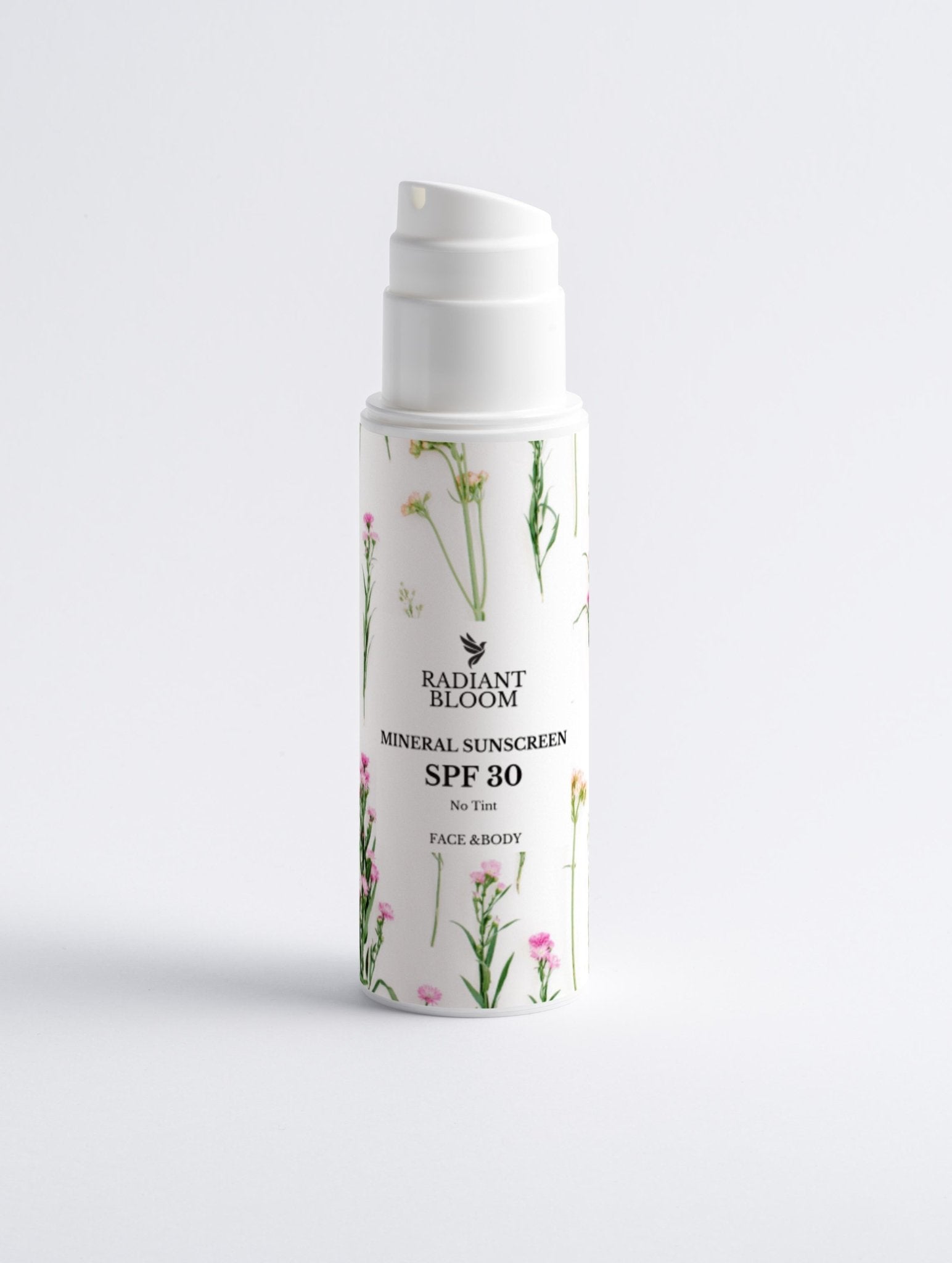
Pregnancy-friendly pick
Mineral Sunscreen SPF30 for Face & Body, 150ml
Zinc-based broad-spectrum protection with no synthetic UV filters, gentle enough for the most reactive trimester skin.
€29.99
Shop SPF30 →
Which sunscreen ingredients should you avoid while pregnant?
Read the "active ingredients" box on the back of the tube. During pregnancy, most experts suggest skipping formulas that list:
- Oxybenzone (benzophenone-3): the most studied chemical filter, repeatedly detected in body fluids after use.
- Octinoxate and homosalate: chemical filters under ongoing safety review.
- Added fragrance and essential-oil-heavy formulas: not a safety issue for baby, but a common trigger for newly sensitive pregnancy skin.
- Retinyl palmitate: a vitamin A derivative sometimes added to SPF; retinoids as a family are the one ingredient class to avoid entirely while pregnant. Our guide to what skincare to avoid while pregnant covers the full list.
If the actives say only zinc oxide, or zinc oxide plus titanium dioxide, you are looking at a mineral formula.
How do you choose a pregnancy-safe mineral sunscreen?
Five things to check before you buy:
- SPF 30 or higher. SPF 30 blocks about 97 percent of UVB rays. Higher is fine; lower is not enough for melasma-prone skin.
- Broad spectrum. UVA rays drive pigmentation and aging, so UVB-only protection misses the point.
- Non-nano zinc oxide. Larger mineral particles stay on the surface and are the reef-safe standard.
- Fragrance-free or naturally scented. Kind to a suddenly sensitive nose and skin.
- A tint, if melasma is your worry. Tinted mineral formulas contain iron oxides, which add protection against visible light, the part of daylight that untinted SPF cannot block and that contributes to dark patches.

Best for melasma
Sunscreen SPF30 with Tint, 30ml
The iron-oxide tint helps shield against visible light, the pigmentation trigger regular SPF misses, while evening out your skin tone.
€24.99
Shop tinted SPF →
How should you apply sunscreen during pregnancy?
The best sunscreen is the one you actually reapply. Three habits that matter more than any label claim:
- Use enough. Two finger-lengths of product for the face and neck, every single morning, rain or shine. Melasma does not take cloudy days off.
- Reapply every two hours outdoors. A stick format makes midday top-ups over a bump-day outfit or light makeup realistic instead of theoretical.
- Pair it with shade, a hat, and sunglasses during the 11am to 3pm peak. Sunscreen is the last line of defence, not the only one.

For reapplying on the go
Sun Protection SPF50 Stick, No Tint
Handbag-sized SPF50 that swipes on over makeup, so the every-two-hours rule actually happens.
€24.99
Shop SPF50 stick →
Frequently asked questions
Is sunscreen safe to use while pregnant?
Yes. Doctors agree that daily sunscreen is not only safe but recommended during pregnancy. Mineral formulas with zinc oxide or titanium dioxide are the most cautious choice because they are not absorbed into the body.
Which SPF is best during pregnancy?
SPF 30 broad spectrum is the everyday minimum; it blocks around 97 percent of UVB. Choose SPF 50 for beach days, long outdoor time, or if melasma has already appeared.
Can sunscreen prevent the pregnancy mask (melasma)?
It is your best defence. UV and visible light trigger melasma, so daily mineral SPF, ideally tinted with iron oxides, significantly reduces the chance of new patches and stops existing ones from darkening.
Is tinted mineral sunscreen better for pregnancy?
If pigmentation is your concern, yes. The iron oxides that create the tint block visible light, which plays a role in melasma and which untinted sunscreens cannot filter.
Do I need to avoid oxybenzone while pregnant?
Out of caution, most experts say skip it. Oxybenzone is a chemical UV filter that has been detected in blood and urine after use. Zinc-based mineral sunscreen avoids the question entirely.
Can I keep using mineral sunscreen while breastfeeding?
Yes. Mineral SPF stays on the surface of the skin, making it the preferred choice while nursing too. Just avoid applying it exactly where your baby feeds.
Protect your glow for two
Certified organic, vegan, zinc-based sun care that is kind to changing skin.
Shop Mineral SPF →Vegan. Cruelty-free. Reef-safe.
This article is for general information and is not medical advice. Always check with your doctor or midwife about your personal skincare routine during pregnancy. For authoritative guidance on skin changes in pregnancy, see the American College of Obstetricians and Gynecologists.