Einkaufswagen
0
Damaged Skin Barrier: Signs, Causes & How to Repair It
How to recognise a damaged skin barrier, what's quietly causing it, and the gentle, barrier-first routine that heals it — without the harsh actives that broke it in the first place.

If your skin suddenly feels tight, stingy, red, and reactive to products it used to love, you are probably dealing with a damaged skin barrier. It is one of the most common — and most misunderstood — skin problems, and the instinct to fix it with more products usually makes it worse. The good news: a damaged barrier is almost always reversible with the right gentle care. This complete guide explains how to recognise the signs, what is causing the damage, and exactly how to repair your skin barrier naturally.
What Is the Skin Barrier?
Your skin barrier is the outermost layer of your skin — a protective shield made of skin cells held together by a mortar of lipids (ceramides, fatty acids, and cholesterol). It does two essential jobs: it locks moisture in, and it keeps irritants, bacteria, and environmental stress out. When that barrier is intact, skin looks calm, hydrated, and resilient. When it is compromised, moisture escapes and irritants get in — and that is when the trouble starts.
The Signs of a Damaged Skin Barrier
A damaged barrier announces itself fairly clearly once you know what to look for. The most common signs are:
- Persistent dryness and tightness that moisturizer does not seem to fix
- Redness and inflammation across the cheeks, nose, or wherever skin is thinnest
- Stinging or burning when you apply products — even gentle ones
- Increased sensitivity to products you previously tolerated
- Flaking, rough texture, or small bumps
- Dehydration — skin feels tight and looks dull despite hydrating
- More frequent breakouts as the barrier loses its defences
The clearest signal: if your skin suddenly reacts badly to products it used to handle fine, your barrier is almost certainly compromised. That sudden intolerance is the giveaway.
What Does a Damaged Skin Barrier Look Like?
Visually, a damaged barrier tends to look red, dull, and uneven. You may notice blotchy patches of redness that flare after cleansing, visible flaking or rough texture, a tight or shiny look in dehydrated areas, and more pronounced fine lines (dehydrated skin shows lines more). Some people see small bumps or a generally irritated, inflamed appearance. The skin simply looks unhappy — and it usually feels that way too.
What Causes a Damaged Skin Barrier?
Here is the part that surprises people: most barrier damage is self-inflicted, caused by doing too much to the skin rather than too little. The usual culprits:
- Over-exfoliating: Using acids or scrubs too often is the number-one cause.
- Too many actives at once: Layering retinoids, acids, and vitamin C overwhelms the barrier.
- Harsh sulfate cleansers: They strip the protective lipids with every wash.
- Synthetic fragrance: A leading cause of irritation and sensitization.
- Hot water and over-washing: Both dissolve the barrier's natural oils.
- Environmental stress: UV exposure, pollution, cold weather, and wind.
- Lifestyle factors: Stress, poor sleep, and dehydration all weaken the barrier from within.
If you have been using strong exfoliants like glycolic acid too frequently, that is a common trigger — these are excellent ingredients used correctly, but over-use is one of the fastest ways to damage the barrier.
Most barrier damage is self-inflicted — caused by doing too much to the skin, not too little. The cure is usually subtraction, not addition.
How to Repair a Damaged Skin Barrier
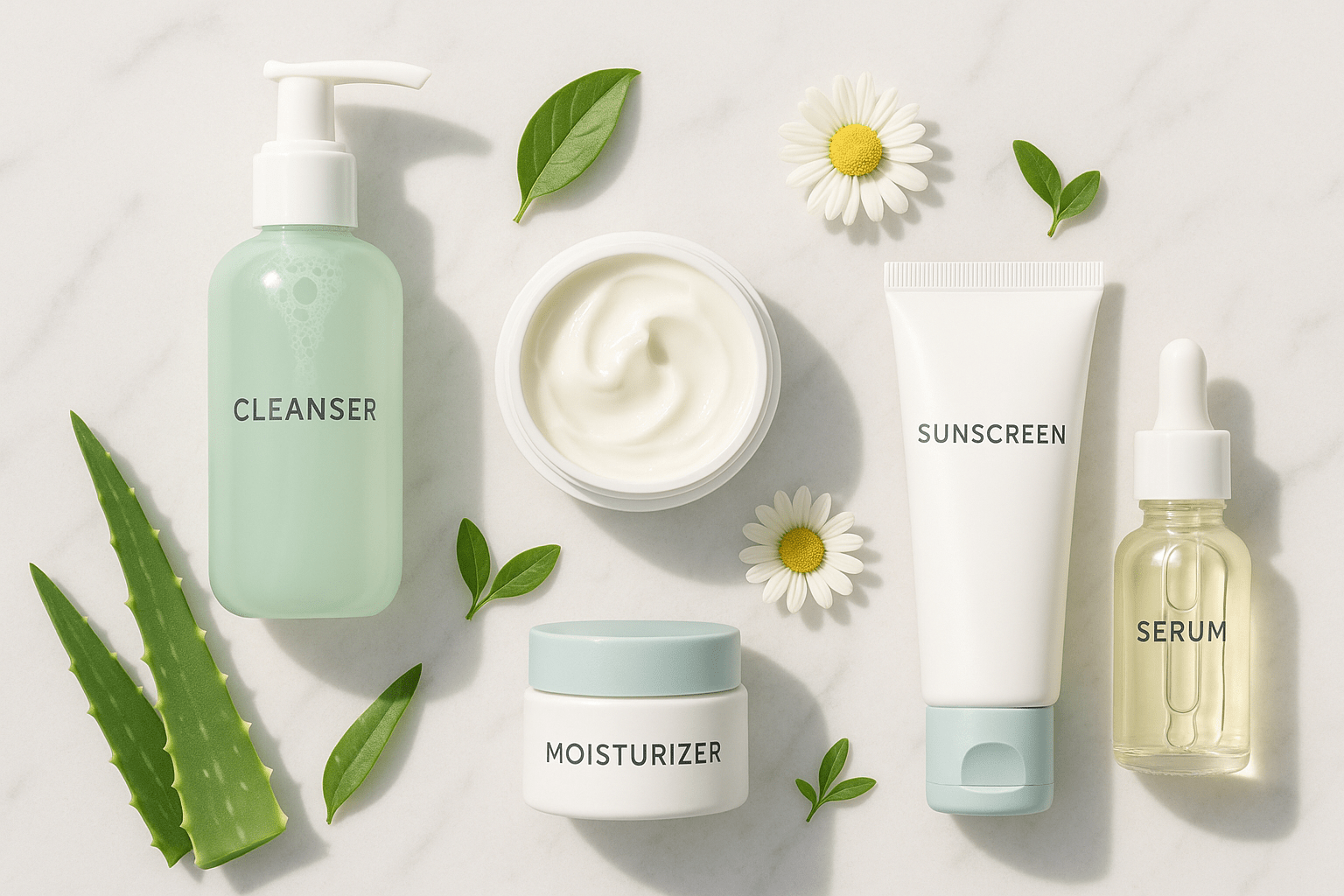
Barrier repair is about gentleness, moisture, and consistency. The single most effective thing you can do is simplify. Strip your routine back to three steps — gentle cleanser, barrier-supporting moisturizer, and SPF — and pause everything else. Here is the recovery approach:
- Pause all strong actives. Stop retinoids, AHAs, BHAs, and vitamin C completely until the barrier heals.
- Stop exfoliating. No acids, no scrubs, no exfoliating tools.
- Cleanse gently. Use a sulfate-free, fragrance-free cleanser and lukewarm water.
- Moisturize consistently. Apply a barrier-supporting moisturizer morning and night, on slightly damp skin.
- Protect with SPF. Mineral sunscreen shields healing skin from further UV stress — see our guide to mineral sunscreen for sensitive skin.
- Be patient. Give it 2 to 4 weeks before reintroducing anything.

The cure for a damaged barrier is usually subtraction: fewer, gentler products and time.
The Right Cleanser for a Damaged Skin Barrier
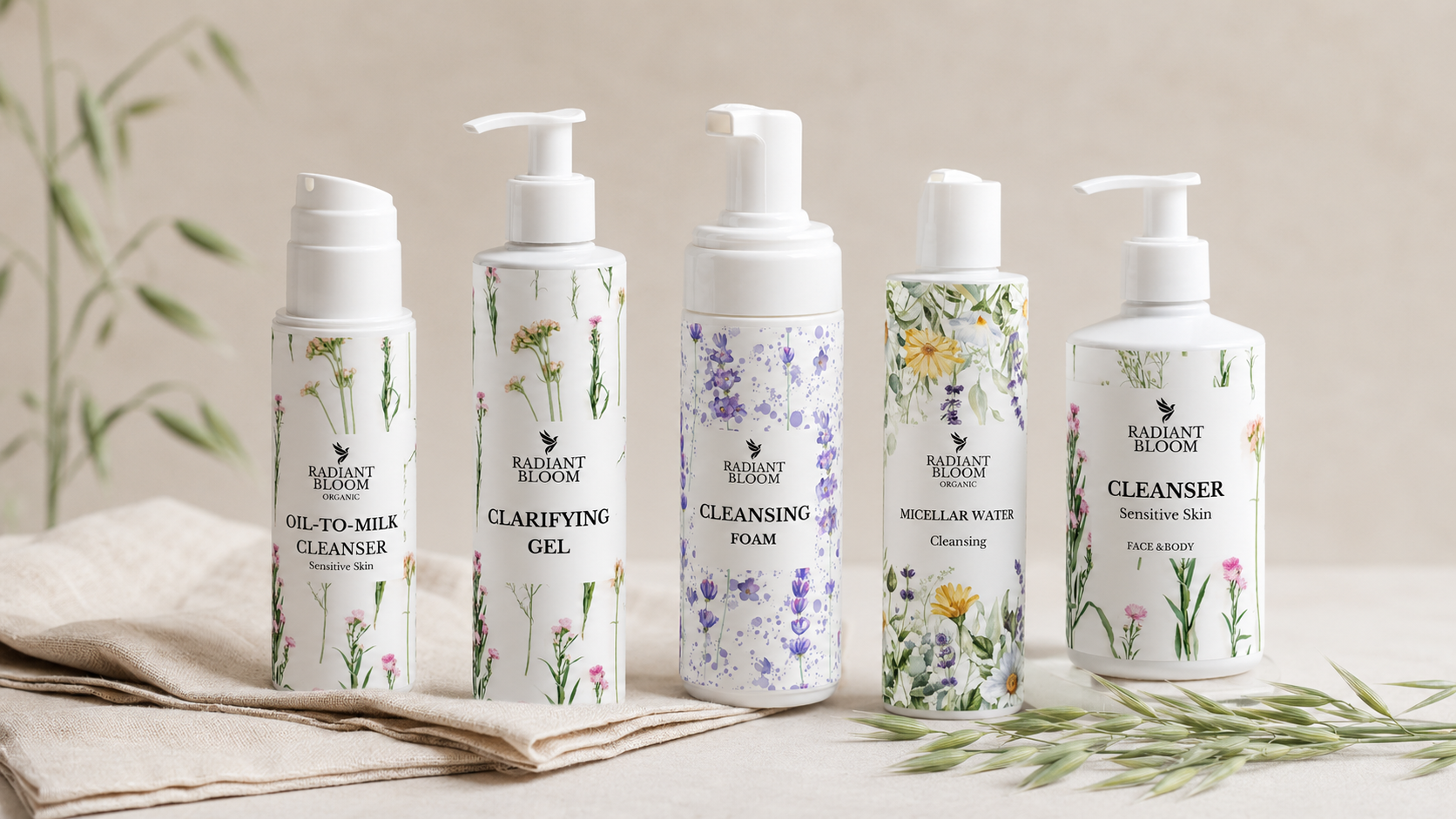
Cleansing is where most barrier damage happens - and where healing begins. The wrong cleanser strips the barrier with every wash; the right one cleanses without disrupting it. For a compromised barrier, you want a sulfate-free, fragrance-free formula with a creamy or gel texture and soothing botanicals - never a high-foaming sulfate cleanser, and never anything with exfoliating acids while you are healing.
Radiant Bloom's gentle cleansers are formulated exactly for this: sulfate-free, fragrance-free, and free from the drying alcohols that aggravate a damaged barrier - cleansing thoroughly without leaving skin tight.
Ingredients That Heal the Barrier
Look for these barrier-supportive ingredients while you recover:
- Niacinamide: Strengthens the barrier, calms redness, and boosts ceramide production - see our complete niacinamide guide.
- Ceramide-supporting plant oils: Jojoba, sunflower, and avocado oils replenish the barrier's natural lipids.
- Hyaluronic acid: Restores hydration without irritation.
- Oat and centella (cica): Soothe inflammation and accelerate recovery.
- Squalane: A lightweight, barrier-mimicking moisturizer suitable for all skin types.
What to Avoid While Healing
- Exfoliating acids (glycolic, lactic, salicylic) - pause completely
- Retinoids - too aggressive for a compromised barrier
- Vitamin C at high strengths - can sting damaged skin
- Synthetic fragrance - a leading irritant
- Sulfate cleansers and physical scrubs
- Hot water - use lukewarm only
If you are unsure which of your products are barrier-friendly, our guide to clean, organic skincare explains how to read labels for the irritants to avoid.
A Gentle Barrier-Repair Routine
| Step | Morning | Evening |
|---|---|---|
| Cleanse | Rinse with lukewarm water or gentle cleanser | Gentle sulfate-free cleanser |
| Treat | Niacinamide or hydrating serum (optional) | Same - no strong actives |
| Moisturize | Barrier-supporting moisturizer | Richer barrier-repair moisturizer |
| Protect | Mineral SPF 30+ | — |
Keep it this simple for 2 to 4 weeks. Once your skin feels calm, comfortable, and no longer reactive, reintroduce actives one at a time, slowly. Our full organic routine for sensitive skin is a perfect long-term framework once your barrier has recovered. When you are ready to reintroduce gentle anti-ageing, a soothing option like bakuchiol is far kinder to the barrier than retinol.
Frequently Asked Questions
What are the signs of a damaged skin barrier?
The most common signs of a damaged skin barrier are persistent dryness and tightness, redness and inflammation, increased sensitivity or stinging when you apply products, flaking or rough texture, dehydration despite moisturizing, and more frequent breakouts. Skin may also look dull and feel uncomfortable. If your skin suddenly reacts to products it used to tolerate, that is a classic barrier-damage signal.
What does a damaged skin barrier look like?
A damaged skin barrier often looks red, dull, and uneven, with visible flaking or rough patches. It may appear shiny or tight in places from dehydration, show more pronounced fine lines, and react with blotchy redness after cleansing or applying products. Some people notice small bumps or a generally irritated, inflamed appearance.
What causes a damaged skin barrier?
The most common causes are over-exfoliating, using too many strong actives at once (like retinoids, acids, and vitamin C together), harsh sulfate cleansers, synthetic fragrance, hot water, and over-washing. Environmental stress, UV exposure, pollution, cold weather, and even stress and poor sleep also weaken the barrier. Most barrier damage is caused by doing too much to the skin, not too little.
How do you repair a damaged skin barrier naturally?
Simplify your routine to a gentle cleanser, a barrier-supporting moisturizer, and SPF. Pause all strong actives and exfoliants. Use lukewarm water, fragrance-free products, and barrier-supportive ingredients like niacinamide, ceramide-supporting plant oils, hyaluronic acid, and soothing botanicals such as oat and centella. Most barriers recover within 2 to 4 weeks of consistent gentle care.
How long does it take to repair a damaged skin barrier?
Most people see noticeable improvement within 2 to 4 weeks of consistent gentle care, with tightness and irritation often easing within the first few days. A severely damaged barrier can take 4 weeks or longer to fully rebuild its lipid structure. Consistency matters more than intensity — reintroducing strong actives too soon is the most common reason recovery stalls.
What is the best cleanser for a damaged skin barrier?
The best cleanser for a damaged skin barrier is a gentle, sulfate-free, fragrance-free formula that cleanses without stripping or leaving skin tight. Look for creamy or gel textures with soothing botanicals rather than foaming sulfate cleansers. Avoid anything with drying alcohols, synthetic fragrance, or exfoliating acids while your barrier is healing.
✦
The Bottom Line
A damaged skin barrier is common, recognisable, and - most importantly - reversible. The signs are dryness, redness, stinging, and sudden sensitivity; the cause is almost always doing too much to the skin; and the cure is gentle subtraction. Simplify your routine, cleanse without stripping, moisturize with barrier-supportive ingredients, protect with SPF, and give your skin 2 to 4 weeks of calm. Your barrier will rebuild itself - and your skin will be healthier, calmer, and more resilient than before.