Wir haben Ihnen eine E-Mail mit einem Link zum Aktualisieren des Passworts geschickt.
Passwort zurücksetzen
Wir werden Ihnen eine E-Mail zum Zurücksetzen des Passworts schicken.
Does Organic Rosemary Oil Really Help Hair Grow? The Honest Science
My Store Admin
0 Kommentare
-->
Haircare Education8 min read
Does Organic Rosemary Oil Really Help Hair Grow?
Beyond the hype: what the clinical research actually shows about rosemary oil for hair growth.
Rosemary oil has become one of the most talked-about ingredients in the hair growth world. TikTok, beauty influencers, dermatologists - everyone seems to be discussing it. But beyond the hype, does organic rosemary oil actually help your hair grow? The honest answer is yes, and the science backing it up is unusually strong for a natural ingredient. Here is what the research actually shows and what you can realistically expect.
What Makes Rosemary Oil Different
Rosemary (Rosmarinus officinalis) is one of the most clinically studied botanical ingredients in hair care. Its bioactive compounds — carnosic acid, alpha-pinene, and 1,8-cineole — work on multiple pathways to support hair growth. It improves microcirculation at the scalp, increases blood flow to hair follicles, reduces oxidative stress that contributes to hair thinning, and helps inhibit DHT, the hormone primarily responsible for pattern hair loss.
This combination is what separates rosemary from purely cosmetic hair oils that only moisturize the strands. Rosemary works at the follicle level, where new hair growth actually begins — the same principle behind the science-backed organic anti-aging philosophy we use across our formulations. For a deeper comparison of organic versus conventional oils, see why organic hair oil is genuinely different.
The Landmark Clinical Study
The most cited study on rosemary oil for hair growth was published in SKINmed Journal in 2015. Researchers conducted a randomized comparative trial over 6 months, comparing rosemary oil to 2% minoxidil — the active ingredient in Rogaine and one of the most widely prescribed hair regrowth treatments worldwide.
The result was remarkable. After 6 months, both groups showed statistically significant increases in hair count, with no meaningful difference between rosemary oil and minoxidil. The rosemary group reported significantly less scalp itching as a side effect, while minoxidil users frequently experienced irritation. This study fundamentally changed how dermatologists view rosemary oil — from a folk remedy to a legitimate, evidence-backed hair growth ingredient.
After 6 months, rosemary oil performed equivalently to clinical minoxidil — with significantly less scalp irritation.
What Results Can You Realistically Expect?
Rosemary oil is not an overnight miracle. Like all hair growth treatments, including prescription ones, it requires consistent use over months to deliver visible results. Here is the realistic timeline:
Weeks 1-4: Improved scalp health. Reduced itching and flaking. Hair feels softer and more nourished.
Weeks 4-12: Hair feels stronger at the root. Less shedding in the shower drain. Existing hair begins to look fuller because of better scalp circulation.
Months 3-6: Baby hairs become visible along the hairline and at thinning areas. Overall hair density improves measurably. New growth is more noticeable.
Months 6+: Maximum results. The clinical study measured peak results at 6 months. Continued use maintains and extends gains.
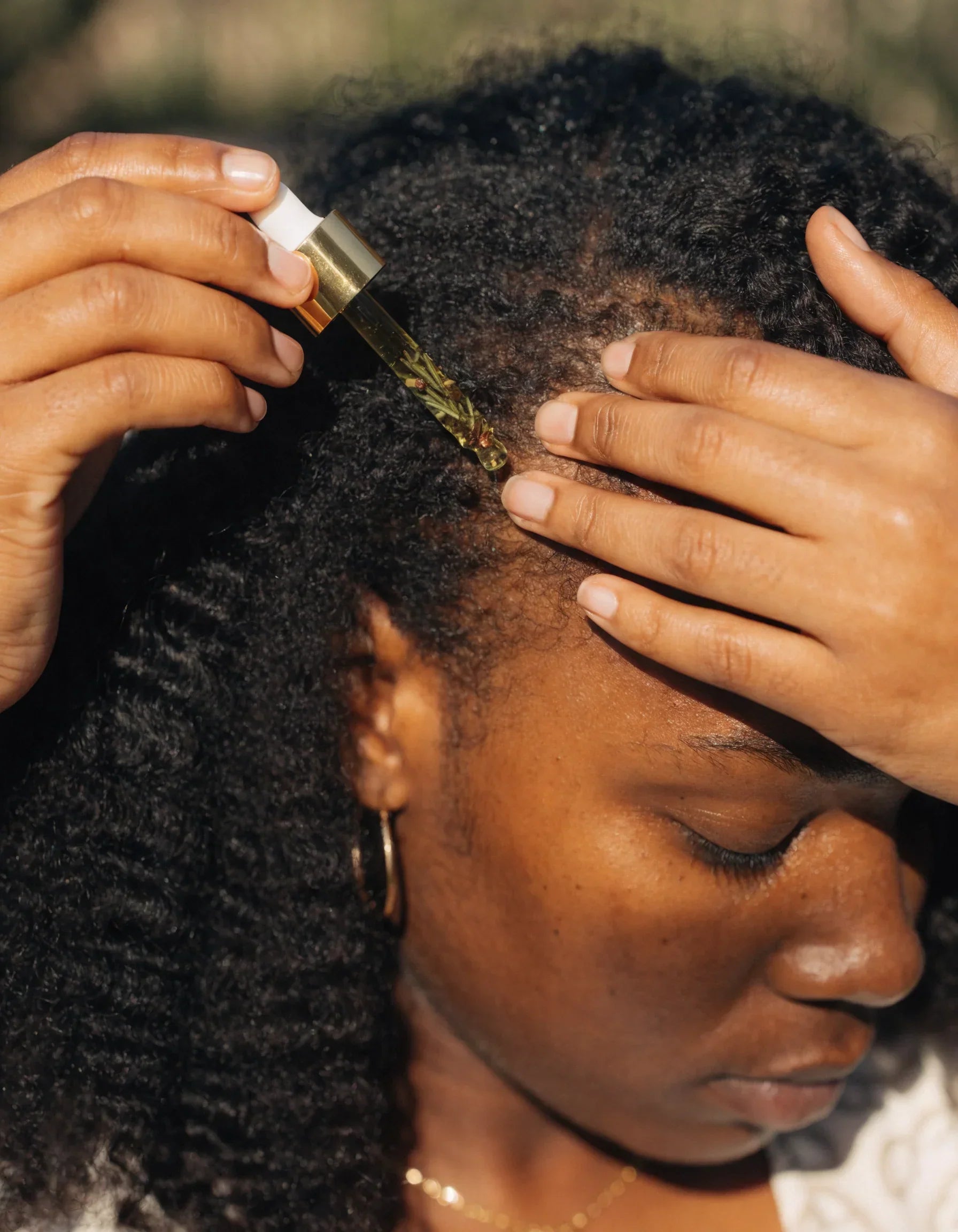
Visible baby hairs along the hairline are often the first sign rosemary oil is working.
Why Organic Rosemary Oil Specifically Matters
Not all rosemary oil is created equal. The strength of rosemary's hair-growth benefits depends entirely on the concentration and quality of its bioactive compounds. Conventionally grown rosemary often contains pesticide residues and is processed using chemical extraction methods that degrade these active molecules.
Certified organic rosemary oil is grown without synthetic chemicals and steam-distilled to preserve the bioactive compounds in their natural, functional form. When you use organic rosemary oil, you are getting the version of the ingredient that the clinical studies actually used — not a diluted, processed imitation. The full comparison is covered in our breakdown of organic versus regular hair oil.
How to Maximize Rosemary Oil for Hair Growth
Our roundup of the best organic skincare brands of 2026 explains the certification standards that genuinely matter — the same standards that separate effective hair oils from marketing claims.
Three factors determine whether rosemary oil works for you: quality, consistency, and application. Use a certified organic, properly formulated oil. Apply it 1 to 3 times per week, massaging into the scalp for 5 to 10 minutes. For detailed timing instructions read how long to leave rosemary oil in your hair and whether daily use is right for you. Pair with a healthy diet, adequate sleep, and stress management — because hair growth is whole-body work.
The Bottom Line
Yes, organic rosemary oil really does help hair grow. The clinical evidence is strong, the mechanism is well understood, and millions of users — alongside published research — confirm the results. The keys are consistency, quality, and patience. Start with a certified organic formula, use it consistently for at least 3 to 6 months, and you will see real changes.