Einkaufswagen
0
Best Mineral Sunscreen for Sensitive Skin
Why mineral SPF is the gentlest choice for reactive skin — how to avoid the white cast, what reef-safe really means, and how to choose one you will actually wear every day.

If your skin stings, flushes, or breaks out the moment you apply sunscreen, you are not alone — and you are almost certainly using the wrong type. For sensitive skin, mineral sunscreen is the gentlest and safest choice, and once you understand why, choosing the right one becomes simple. This complete guide covers everything: why mineral beats chemical for reactive skin, how modern formulas finally solved the white cast, what reef-safe actually means, and how to pick a sunscreen you will genuinely wear every day.
Why Mineral Sunscreen Is Best for Sensitive Skin
There are two kinds of sunscreen: mineral (also called physical) and chemical. The difference matters enormously for sensitive skin. Mineral sunscreens use zinc oxide and titanium dioxide, which sit on top of the skin and physically reflect UV rays away. Chemical sunscreens use filters like oxybenzone and octinoxate, which absorb into the skin and convert UV light into heat.
For reactive skin, that distinction is everything. Because mineral filters do not penetrate the skin, they are far less likely to cause irritation, stinging, or allergic reactions. Zinc oxide is also naturally anti-inflammatory — it is the same ingredient used in nappy rash creams precisely because it calms skin. That makes mineral sunscreen the dermatologist-preferred choice for rosacea, eczema, allergy-prone, and generally sensitive skin.
Key point: Chemical filters absorb into the skin and convert UV to heat — which can trigger redness and stinging in reactive skin. Mineral filters reflect UV from the surface, so they soothe rather than provoke.
Mineral vs Chemical Sunscreen: The Honest Comparison
| Factor | Mineral (Physical) | Chemical |
|---|---|---|
| How it works | Reflects UV from skin surface | Absorbs UV, converts to heat |
| Irritation risk | Very low | Higher for sensitive skin |
| Works immediately | Yes, on application | No, needs ~20 min to activate |
| Best for | Sensitive, rosacea, eczema, kids | Those who want a totally invisible finish |
| Reef-safe | Yes (non-nano) | Often not (oxybenzone, octinoxate) |
| Pregnancy-safe | Yes | Some filters discouraged |
| White cast | Possible (solved by tinted/modern formulas) | None |
The honest takeaway: chemical sunscreen wins only on one point — an invisible finish — and modern tinted mineral formulas have now closed even that gap. For sensitive skin, mineral is the clear choice.
The White Cast Problem — and How It's Solved
For years, the single reason people avoided mineral sunscreen was the dreaded white cast — that chalky, ghostly film zinc oxide could leave behind. Modern formulation has largely solved this in two ways. First, non-nano mineral particles in a well-designed oil base blend far more smoothly than older formulas. Second, and most effectively, tinted mineral sunscreens add a tiny amount of iron oxide that melts invisibly into all skin tones, neutralizing any whiteness while adding a light, even finish.
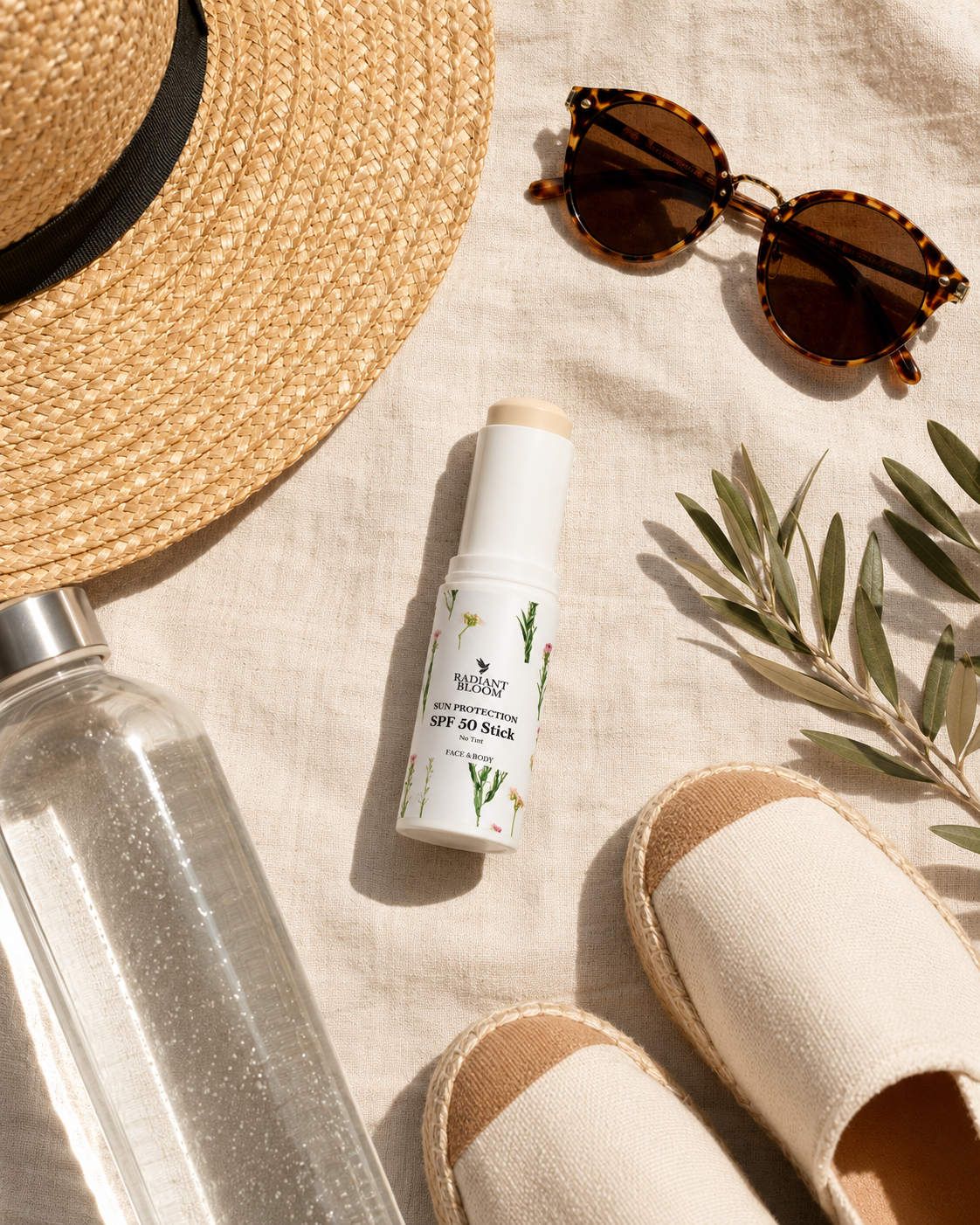
A tinted mineral stick is the easiest way to get gentle, sensitive-skin-friendly protection with zero chalky residue — and the stick format makes reapplying every two hours actually realistic.
The one reason people avoided mineral sunscreen — the white cast — is exactly the problem a modern tinted formula is built to solve.

A tinted mineral stick blends invisibly and makes reapplication genuinely easy.
What Does Reef-Safe Sunscreen Actually Mean?
Reef-safe sunscreen is free from the chemical filters — chiefly oxybenzone and octinoxate — that have been linked to coral bleaching and marine harm. These ingredients are now banned outright in destinations including Hawaii, parts of Mexico, and several Caribbean islands. Reef-safe formulas rely instead on mineral filters that do not damage marine life.
One caveat worth knowing: "reef-safe" is an unregulated marketing term, so always check the actual ingredient list. The genuine markers are non-nano zinc oxide and titanium dioxide as the only active filters, with no oxybenzone or octinoxate. Radiant Bloom's tinted SPF50 stick uses exactly this — non-nano mineral filters that physically reflect UV and are compliant with reef-protection regulations in Hawaii, Mexico, and other sensitive destinations.
Mineral Sunscreen for Pregnancy and Babies
Because mineral filters sit on top of the skin rather than being absorbed into the bloodstream, mineral sunscreen is widely considered the safest sunscreen category during pregnancy and breastfeeding — particularly formulas free from oxybenzone, retinyl palmitate, and synthetic fragrance. The same gentleness makes mineral sunscreen the recommended choice for children's delicate skin. (For babies under six months, paediatricians generally advise keeping them out of direct sun rather than using any sunscreen.) If you are building a pregnancy-safe routine, pair your SPF with our guide on pregnancy-safe anti-aging with bakuchiol.
How to Choose a Mineral Sunscreen for Sensitive Skin
- 1. Check the active filters. They should be only zinc oxide and/or titanium dioxide — no chemical filters.
- 2. Choose SPF 30 or higher. The minimum for reliable daily protection; SPF 50 for extended sun exposure.
- 3. Confirm it is fragrance-free. Synthetic fragrance is a leading irritant for sensitive skin.
- 4. Prefer non-nano minerals. Non-nano particles stay on the skin's surface and are the gold standard for both safety and reef-friendliness.
- 5. Look for soothing oils. Jojoba, sunflower, and rice bran oils nourish and calm rather than dry out the skin.
- 6. Consider a tinted format. For no white cast and an even finish on all skin tones.
- 7. Always patch test. 24 to 48 hours on the inner forearm before applying to your face.
If you are still assembling your wider routine, our organic skincare routine for sensitive skin shows where SPF fits, and our beginner routine guide covers the essentials step by step.
Sunscreen Ingredients to Avoid for Sensitive Skin
- Oxybenzone & octinoxate: Chemical filters linked to irritation and coral bleaching.
- Synthetic fragrance (Parfum): One of the most common causes of skin reactions.
- Drying alcohols: Common in lightweight chemical sunscreens; strip the barrier.
- Avobenzone: A chemical filter that can sensitize reactive skin.
- Nano particles: Choose non-nano minerals for surface-level protection and reef safety.
For more on reading labels and what "clean" really means, see our natural vs organic skincare guide.
How to Apply Mineral Sunscreen Correctly
Even the best mineral sunscreen only works if applied properly. Use about a quarter-teaspoon for the face and neck, applied as the last step of your morning routine (after moisturizer, before makeup). Mineral sunscreen works immediately, so there is no waiting period. Reapply every two hours when outdoors, and after swimming or sweating — which is exactly why a stick format is so practical for reapplying over makeup or on the go.
Frequently Asked Questions
What is the best mineral sunscreen for sensitive skin?
The best mineral sunscreen for sensitive skin uses non-nano zinc oxide and/or titanium dioxide as its only UV filters, is fragrance-free, and is free from chemical filters like oxybenzone and octinoxate. Look for nourishing additions like jojoba, sunflower, and rice bran oils that support the skin barrier. Radiant Bloom Organic's Sun Protection SPF50 Stick uses non-nano zinc oxide and titanium dioxide in a base of organic oils, with no chemical filters or fragrance.
Is mineral sunscreen better than chemical sunscreen for sensitive skin?
Yes, for most sensitive skin. Mineral sunscreen sits on top of the skin and physically reflects UV rays, so it is far less likely to irritate than chemical filters, which absorb into the skin and convert UV to heat. Mineral filters like zinc oxide are also naturally anti-inflammatory, making them the preferred choice for reactive, rosacea-prone, and allergy-prone skin.
Does mineral sunscreen leave a white cast?
Traditional mineral sunscreens can leave a white cast, but modern formulas have largely solved this. Non-nano mineral filters in a well-formulated base blend far better, and tinted mineral sunscreens use a small amount of iron oxide to melt invisibly into all skin tones. A tinted stick format is the easiest way to get mineral protection with no chalky residue.
Is mineral sunscreen safe during pregnancy?
Yes. Mineral filters sit on top of the skin rather than being absorbed, which makes them the safest sunscreen category during pregnancy and breastfeeding. Choose a formula free from oxybenzone, retinyl palmitate, and synthetic fragrance for added reassurance.
What does reef-safe sunscreen mean?
Reef-safe sunscreen is free from chemical filters like oxybenzone and octinoxate, which have been linked to coral bleaching and are banned in destinations such as Hawaii and parts of Mexico. Reef-safe formulas use mineral filters, ideally non-nano zinc oxide and titanium dioxide, that do not harm marine life. Always check the ingredient list, since reef-safe is an unregulated marketing term.
How do I choose a mineral sunscreen for sensitive skin?
Choose SPF 30 or higher, confirm the only active filters are zinc oxide and/or titanium dioxide, and check that it is fragrance-free and free from chemical filters. Prefer non-nano minerals, look for soothing plant oils, and patch test on your inner forearm for 24 to 48 hours before applying to your face.
✦
The Bottom Line
For sensitive skin, mineral sunscreen is not a compromise — it is the better choice. It soothes instead of irritates, works the moment you apply it, protects coral reefs, and is safe through pregnancy and for children. The old downside, the white cast, is solved by modern tinted formulas. Choose a non-nano, fragrance-free mineral SPF 30 or higher with nourishing plant oils, apply it every morning, reapply through the day, and your sensitive skin gets the gentle, reliable protection it has been missing.