Einkaufswagen
0
Organic Skincare for Sensitive Skin: The Complete Guide
Everything you need to choose, buy, and use organic skincare for sensitive skin — the best products, the ingredients to avoid, and a gentle routine that actually calms redness and irritation.

If you have sensitive skin, you already know the frustration: a product promises to be gentle, you try it, and your face responds with redness, stinging, or breakouts. The search for skincare that actually calms rather than irritates can feel endless. Organic skincare is often recommended as the answer — but does it really help, and how do you choose the right products? This complete guide answers every question, with clear product comparisons and a gentle routine you can trust.
Why Organic Skincare Works Better for Sensitive Skin
Sensitive skin reacts because its barrier — the outermost protective layer — is more easily disrupted. When that barrier is compromised, irritants pass through more easily and trigger inflammation, redness, and discomfort. The most common triggers in conventional skincare are exactly the ingredients that certified organic formulas exclude: synthetic fragrance, sulfates, drying alcohols, and harsh preservatives.
Certified organic skincare replaces these with gentle, plant-derived alternatives and soothing botanicals. The result is a routine that supports the skin barrier instead of stripping it. For a deeper look at the distinction, our guide on natural versus organic skincare breaks down exactly what each label means and why certification matters so much.
Key point: The word "natural" is unregulated — any product can claim it. Look instead for genuine third-party certification like ECOCERT COSMOS Organic, which independently verifies that a product is free from the synthetics most likely to irritate sensitive skin.
Ingredients to Avoid in Skincare for Sensitive Skin
Whether a product calls itself organic or not, these are the ingredients most likely to trigger sensitive and reactive skin. Scan every label for them:
- Synthetic fragrance (Parfum): The single most common cause of skincare reactions. Often hides dozens of undisclosed allergens.
- Drying alcohols: Denatured alcohol, SD alcohol, and isopropyl alcohol strip the barrier and worsen sensitivity.
- Sulfates (SLS, SLES): Harsh foaming agents that disrupt the skin's natural lipids.
- Parabens & formaldehyde-releasing preservatives: Common irritants and sensitizers.
- High-concentration essential oils: Even natural, peppermint, citrus, and other strong essential oils can irritate reactive skin.
- Harsh physical scrubs: Abrasive particles create micro-tears in an already fragile barrier.
An important note: organic does not automatically mean irritation-free. Some natural ingredients, particularly concentrated essential oils, can still trigger sensitive skin. This is why patch testing every new product matters — more on that below.
Soothing Ingredients to Look For
The best organic skincare for sensitive skin is built around calming, barrier-supportive botanicals and gentle actives:
- Aloe vera: Reduces inflammation and delivers lightweight hydration.
- Oat extract (colloidal oat): Clinically soothing, relieves itching and supports barrier function.
- Chamomile & calendula: Calm redness and irritation.
- Rosewater: Gentle, hydrating, and pH-balancing.
- Niacinamide: Strengthens the barrier and reduces redness without irritation.
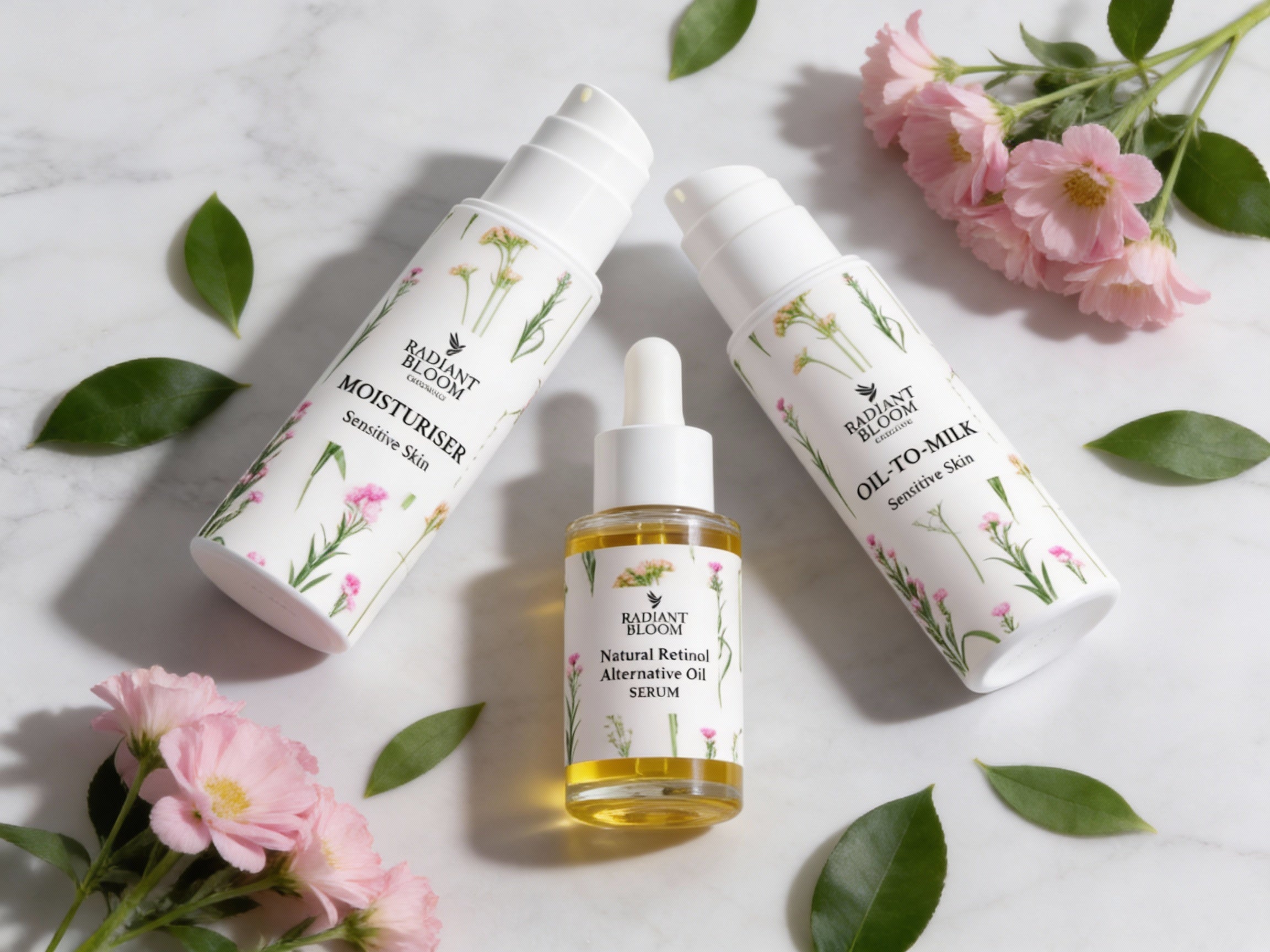
- Bakuchiol: A gentle, anti-inflammatory anti-aging active — a retinol alternative that calms rather than inflames.
- Hyaluronic acid & squalane: Deep, non-irritating hydration suitable for all sensitive skin types.
How to Choose Organic Skincare for Sensitive Skin
Follow these five steps to choose products that genuinely suit reactive skin:
- 1. Check for real certification. Look for ECOCERT COSMOS Organic, not just "natural" claims.
- 2. Confirm it is fragrance-free. Or scented only by gentle botanicals, never synthetic parfum.
- 3. Read the first five ingredients. They make up most of the product — they should be gentle, not harsh.
- 4. Match it to your specific concern. Rosacea, acne-prone, dryness, and allergies each need slightly different formulations.
- 5. Always patch test. Apply to your inner forearm for 24 to 48 hours before using on your face.
If you are just getting started, our guide to building your first skincare routine walks through the essentials step by step.
The Best Gentle Organic Cleanser for Easily Irritated Skin
Cleansing is where most sensitive-skin damage happens, because harsh foaming cleansers strip the barrier before any treatment even begins. The right cleanser removes impurities without tightness or stinging. A sulfate-free gel or cream cleanser with soothing botanicals is ideal.
Radiant Bloom Organic's Clarifying Gel Cleanser is a sulfate-free gel with chamomile and cucumber that cleanses thoroughly without leaving skin tight — formulated specifically for reactive skin and free from synthetic fragrance and drying alcohols.

A sulfate-free gel cleanser removes impurities without disrupting the skin barrier.
Top-Rated Organic Moisturizers Safe for Sensitive Skin
The right moisturizer rebuilds the barrier and locks in hydration. For sensitive skin, the texture should match your skin type — lightweight gels for oily and combination skin, richer creams for dry and reactive skin.
For sensitive, acne-prone skin
Look for oil-free, non-comedogenic hydration. Radiant Bloom's Oil-Free Hydrating Gel uses hyaluronic acid, betaine, and zinc PCA to hydrate and clarify without clogging pores — ideal when sensitivity comes with breakouts.
For sensitive, dry skin
A richer moisturizer with ceramide-supporting plant oils and soothing botanicals restores comfort. The full step-by-step is in our organic skincare routine for sensitive skin.
How to Choose Organic Sunscreen for Delicate Skin
Sun protection is the single most important step for sensitive skin — UV exposure worsens redness, rosacea, and barrier damage. But chemical sunscreen filters are a common irritant. The solution is mineral sunscreen.
- Choose mineral, not chemical: Zinc oxide and titanium dioxide sit on top of the skin rather than being absorbed.
- SPF 30 or higher: The minimum for daily protection.
- Fragrance-free: Avoid added irritants in a product you wear every day.
- Look for soothing add-ins: Aloe or niacinamide make mineral SPF more comfortable on reactive skin.
Organic Skincare for Rosacea and Persistent Redness
Rosacea-prone skin is among the most reactive, and conventional skincare frequently triggers flares. The organic approach focuses on anti-inflammatory botanicals and avoiding all known triggers. Prioritize aloe, oat, chamomile, and calendula, use only mineral SPF, avoid hot water and physical exfoliation, and introduce gentle actives like bakuchiol and niacinamide that calm rather than stimulate. A simple, consistent, fragrance-free routine is far more effective than a complex one for rosacea.
For sensitive and rosacea-prone skin, simplicity is a feature, not a compromise. Fewer, gentler products almost always outperform a complex routine.
A Complete Organic Routine for Extremely Sensitive Skin
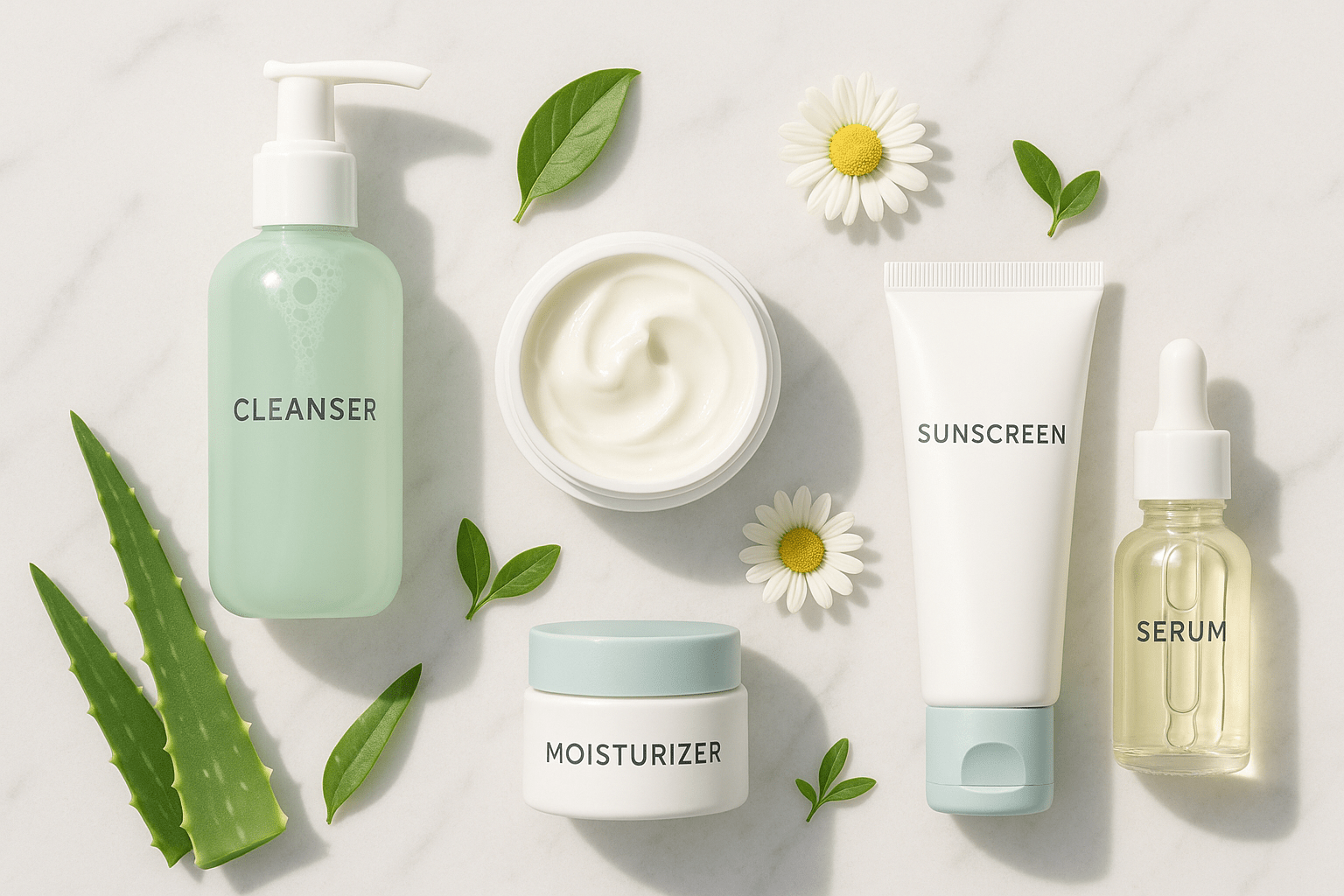
Here is a gentle, barrier-supportive routine that works for even very reactive skin:
| Step | Morning | Evening |
|---|---|---|
| Cleanse | Gentle sulfate-free gel cleanser | Same gentle cleanser (double cleanse if wearing SPF/makeup) |
| Tone | Alcohol-free hydrating toner (optional) | Same |
| Treat | Niacinamide or hydrating serum | Bakuchiol serum (gentle anti-aging) |
| Moisturize | Fragrance-free moisturizer | Richer barrier-repair moisturizer |
| Protect | Mineral SPF 30+ | — |
Introduce one product at a time, two weeks apart, and patch test each. For the detailed version with specific products, see our full sensitive skin routine guide and our best vegan skincare for sensitive skin roundup.
Where to Buy Organic Skincare for Sensitive Skin
You can buy certified organic skincare for sensitive skin directly from specialist brands online — which is often better than a general retailer, because you get the full ingredient transparency, certification details, and product guidance that sensitive skin requires. Radiant Bloom Organic ships its full ECOCERT COSMOS Organic range, and our guide to the top organic skincare brands in Europe compares the leading options. Buying direct also means access to bundles and sets, which are an affordable way to build a complete sensitive-skin routine without buying full sizes of everything at once.
Frequently Asked Questions
What is the best organic skincare for sensitive skin?
The best organic skincare for sensitive skin is fragrance-free, ECOCERT or COSMOS certified, and built around soothing botanicals like aloe, oat, chamomile, and rosewater rather than harsh actives. A complete gentle routine includes a sulfate-free cleanser, an alcohol-free toner, a calming moisturizer, and a mineral SPF. Radiant Bloom Organic's Clarifying Gel Cleanser and Sensitive Skin Moisturiser are formulated specifically for reactive skin, free from synthetic fragrance, parabens, and drying alcohols.
What ingredients should you avoid in skincare for sensitive skin?
Sensitive skin should avoid synthetic fragrance (parfum), drying alcohols (denatured alcohol, SD alcohol), sulfates (SLS, SLES), parabens, formaldehyde-releasing preservatives, essential oils in high concentrations, and harsh physical exfoliants. Even in organic products, strong essential oils like peppermint or citrus can irritate reactive skin, so always patch test first.
Is organic skincare better for rosacea and easily irritated skin?
Yes, for most people. Certified organic skincare excludes the synthetic fragrances, sulfates, and harsh preservatives that most commonly trigger rosacea flares and irritation. Look for anti-inflammatory botanicals like aloe, oat, chamomile, and calendula, plus gentle actives like bakuchiol and niacinamide that calm rather than inflame the skin barrier.
How do I switch to organic skincare without irritating my sensitive skin?
Introduce one new product at a time, waiting about two weeks between each, and always patch test on your inner forearm for 24 to 48 hours first. Start with your cleanser, then moisturizer, then treatments. Avoid layering multiple new actives at once, and give your skin barrier time to adjust to the gentler formulations.
Are organic moisturizers safe for sensitive, acne-prone skin?
Yes, when they are non-comedogenic and oil-balanced. Look for lightweight, fragrance-free organic moisturizers with hyaluronic acid, aloe, niacinamide, or zinc rather than heavy occlusive oils. Radiant Bloom Organic's Oil-Free Hydrating Gel uses hyaluronic acid and zinc PCA to hydrate and clarify without clogging pores.
How do I choose an organic sunscreen for delicate skin?
Choose a mineral (physical) sunscreen with zinc oxide or titanium dioxide rather than chemical UV filters, which are more likely to irritate sensitive skin. Look for SPF 30 or higher, fragrance-free formulas, and added soothing ingredients. Mineral sunscreens sit on top of the skin rather than being absorbed, making them the safest choice for reactive or rosacea-prone skin.
✦
The Bottom Line
Organic skincare genuinely helps sensitive skin — but only when it is certified, fragrance-free, and built around soothing rather than stimulating ingredients. Choose products that support your barrier, avoid the common triggers, introduce changes slowly, and keep your routine simple. With the right gentle, certified organic products, calm and comfortable skin is absolutely achievable.