Cart
0
Bakuchiol oil is the plant-based retinol alternative bakuchiol delivered in a nourishing oil base instead of a water-based serum, and for many skin types it is the better way to take it. The oil format slows absorption, buffers sensitivity, and feeds dry skin lipids while the bakuchiol works on lines and firmness. Water-light serums suit oily skin and layered routines better. Here is exactly how the two formats differ, who each one is for, and how to use bakuchiol oil for the best results.
In this article
- What is bakuchiol oil, exactly?
- Bakuchiol oil vs serum: what is the real difference?
- Who should choose the oil (and who the serum)?
- How do you use bakuchiol oil correctly?
- FAQ
What is bakuchiol oil, exactly?
Bakuchiol itself is an extract from the seeds of the babchi plant, clinically shown to smooth lines and improve firmness in ways comparable to retinol, without the irritation, sun sensitivity or pregnancy restrictions. We cover the head-to-head evidence in bakuchiol vs retinol and the ideal strength in what percentage of bakuchiol is most effective.
"Bakuchiol oil" simply means that active delivered in a base of plant oils (think jojoba, rosehip or squalane) rather than a water-and-humectant serum base. Because bakuchiol is oil-soluble by nature, the oil format is arguably its native habitat: stable, well-dissolved, and delivered together with barrier-supporting fatty acids.

Bakuchiol oil vs serum: what is the real difference?
| Bakuchiol oil | Water-based bakuchiol serum | |
|---|---|---|
| Texture | Silky, cushioning, slight glow finish | Light, fast-absorbing, invisible finish |
| Best skin types | Dry, mature, sensitive, barrier-compromised | Oily, combination, breakout-prone |
| Extra benefits | Delivers fatty acids and antioxidants alongside the active | Layers easily with humectants like hyaluronic acid |
| Routine position | Last or second-to-last step at night | Early, right after cleansing |
| Irritation buffer | Highest, oils slow delivery | Still gentle, slightly more direct |
Performance of the active itself is equivalent at the same concentration; the format decides comfort, finish and what else your skin gets in the same step. An oil serum hybrid, bakuchiol in a lightweight blend of fast-absorbing plant oils, deliberately sits between the two columns, which is exactly how ours is built.
The best of both formats
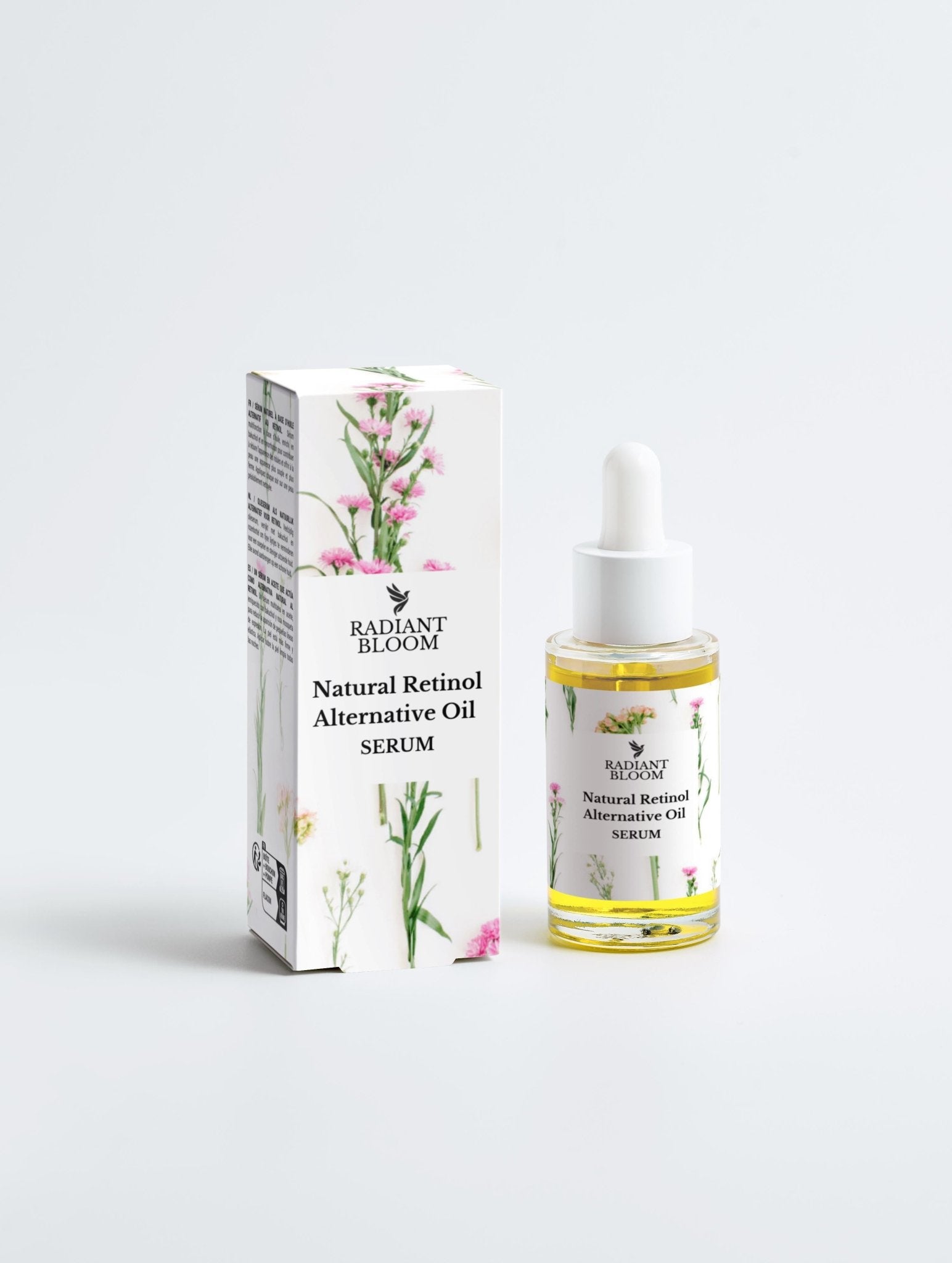
Organic Bakuchiol Oil Serum
Bakuchiol in a fast-absorbing organic oil blend: serum lightness, oil nourishment, pregnancy-safe by design.
€34.99
Shop bakuchiol oil serum →
Who should choose the oil (and who the serum)?
- Choose the oil format if your skin is dry, mature, sensitive, or recovering from over-exfoliation; if retinol always stung; if you want anti-aging and nourishment in one step; or if you are pregnant or nursing and building the gentlest effective routine, as covered in our bakuchiol pregnancy guide.
- Choose a water-light serum if your skin is oily or congestion-prone, you wear it under makeup in the morning, or your routine already ends with a rich moisturiser and another oil would be one layer too many.
- Either way, check the contraindications. Bakuchiol is famously tolerant, but not universal; see who should not use bakuchiol.
How do you use bakuchiol oil correctly?
- Start at night, 3 to 4 evenings a week. Bakuchiol does not cause sun sensitivity the way retinol does, so daytime use is fine too, but nights build the habit. Timing details live in our day vs night guide.
- Apply after water-based steps. Cleanse, hydrate (hyaluronic or niacinamide serums), then press 3 to 5 drops of the oil over damp-finished skin. Oil goes over water, never under.
- Moisturiser is optional. Drier skin can seal with a cream on top; normal skin can let the oil serum be the final step.
- Pair wisely. Bakuchiol layers happily with hydrators, niacinamide, and even gentle acids; the combinations are mapped in what to layer with bakuchiol.
- Give it 8 to 12 weeks. Like retinol, results build with skin cycles, not applications; the week-by-week expectations are in how long bakuchiol takes to work.

For very dry nights
Nourishing Facial Oil
Alternate with your bakuchiol nights when skin wants pure nourishment without actives.
€24.99
Shop nourishing oil →
Frequently asked questions
Is bakuchiol oil better than bakuchiol serum?
Neither is stronger; the active performs the same at equal concentrations. Oil suits dry, mature and sensitive skin and delivers nourishment alongside the active; water-light serums suit oily skin and heavy layering. Oil serum hybrids split the difference.
Can I use bakuchiol oil around my eyes?
Yes, carefully. Bakuchiol is gentle enough for the orbital area where retinol often is not, making it a natural alternative to a separate bakuchiol eye cream. Pat a half drop along the orbital bone and avoid the lash line.
Can I use bakuchiol oil in the morning?
Yes. Unlike retinol, bakuchiol does not increase sun sensitivity, so morning use under SPF is fine. Most people still prefer it at night purely for texture reasons.
Can I mix bakuchiol oil with vitamin C or niacinamide?
Yes to both, which is one of bakuchiol's biggest advantages over retinol. Use vitamin C in the morning and bakuchiol at night, or layer niacinamide under the oil in the same routine.
Is bakuchiol oil safe during pregnancy?
Yes, bakuchiol is the go-to retinol alternative for pregnancy and breastfeeding, with none of the vitamin A concerns. As always, run your routine past your doctor for personal peace of mind.
Retinol results, oil comfort
Certified organic bakuchiol in a silky oil serum your skin will actually enjoy.
Shop Bakuchiol Oil Serum →Vegan. Cruelty-free. Pregnancy-safe.
This article is for general information. Patch test any new active, and if you have a diagnosed skin condition, check with a dermatologist. The clinical bakuchiol-retinol comparison is available via the US National Library of Medicine.