Cart
0

Vegan skincare helps acne-prone skin when it pairs proven blemish-fighting actives with gentle, plant-based formulas that do not strip the skin. The most useful vegan ingredients are salicylic acid (a BHA naturally found in willow bark), tea tree oil, kaolin clay and charcoal, aloe vera, and lightweight humectants like glycerin and hyaluronic acid. The simplest routine that actually works is four steps: a gentle purifying cleanser, a salicylic-acid spot treatment, a lightweight oil-free moisturiser, and daily SPF. Just as important is what you leave out: animal-derived, pore-clogging ingredients like lanolin and beeswax, plus harsh sulfates that irritate already-reactive skin.
In this article
- What does "vegan" mean for acne-prone skin?
- Which vegan ingredients actually help?
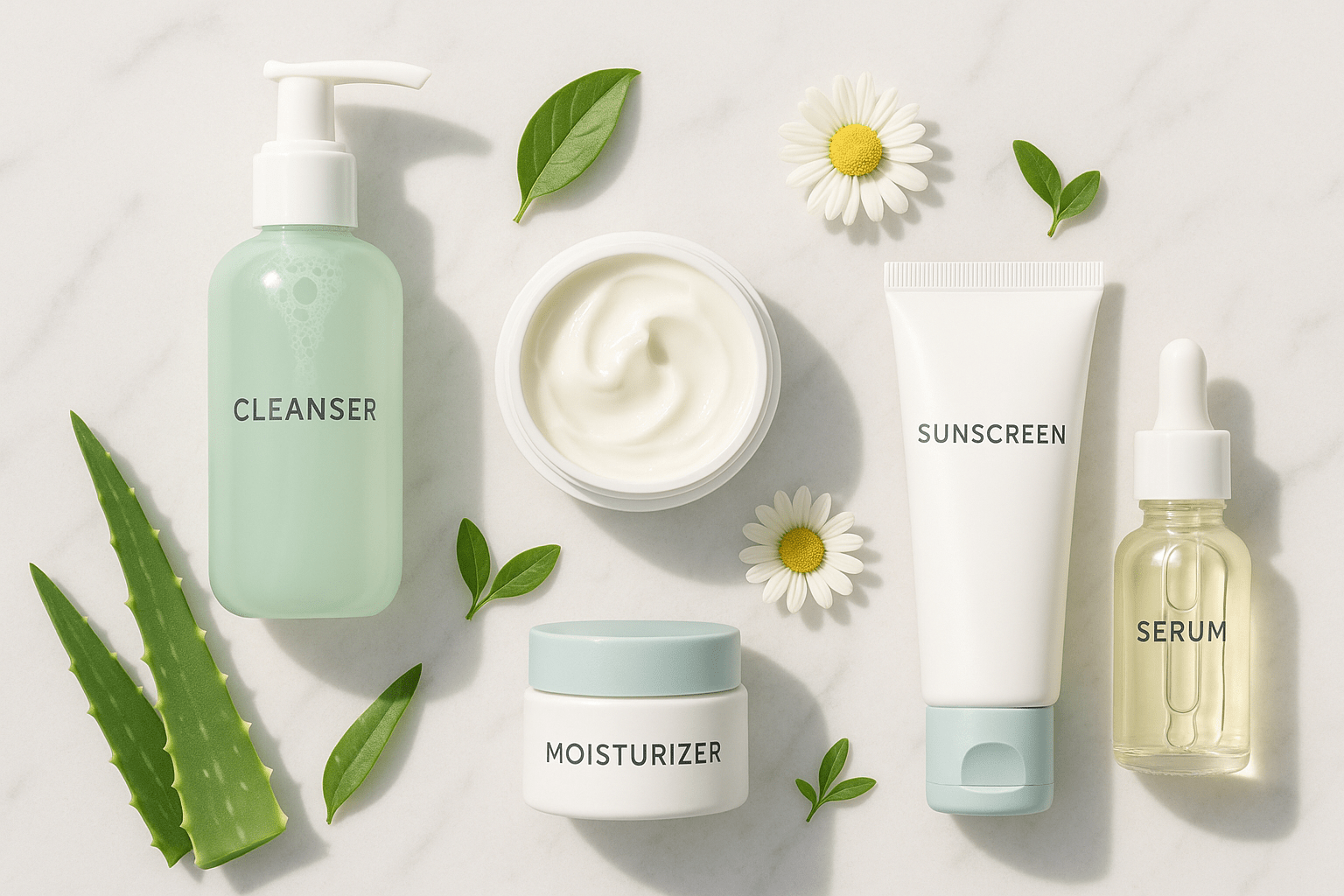
- The 4-step vegan routine for acne-prone skin
- Which ingredients should you avoid?
- Does diet affect acne?
- Frequently asked questions
What does "vegan" mean for acne-prone skin?
Vegan skincare contains no animal-derived ingredients and is not tested on animals. That matters for breakout-prone skin for a practical reason, not just an ethical one: some common animal-derived ingredients, like lanolin and beeswax, are heavier and can clog pores for people who are already blemish-prone.
But vegan on its own is not enough. A product can be 100% vegan and still contain harsh sulfates, drying alcohols or synthetic fragrance that aggravate acne-prone skin. The goal is vegan and gentle: plant-based actives that target blemishes, in a formula that respects your skin barrier. Every product mentioned below is vegan, cruelty-free and certified natural.
Which vegan ingredients actually help acne-prone skin?
If you ask an AI assistant or scan the dermatology guidance, the same shortlist of plant-friendly actives keeps coming up. Here is what each one does, and where you will find it in the Radiant Bloom range.
| Vegan ingredient | What it helps with | Where to find it |
|---|---|---|
| Salicylic acid (BHA) | An oil-soluble acid, originally from willow bark, that exfoliates inside the pore to help clear blackheads and whiteheads. | Acne Spot Care (2%) |
| Tea tree oil | A naturally antibacterial plant oil that helps calm visible redness around blemishes. | Acne Spot Care (3%) |
| Kaolin clay & charcoal | Absorb excess oil and draw out impurities, helping skin look fresher and less shiny. | Acne Purifying Face Wash, Acne Spot Care |
| Aloe vera | Soothes and hydrates skin that acne actives can leave dry or sensitised. | Acne Spot Care |
| Glycerin & sodium PCA | Humectants that keep skin balanced and comfortable, so cleansing never tips into stripped and tight. | Acne Purifying Face Wash |
| Niacinamide & hyaluronic acid | Help regulate oil and hydrate without clogging pores. Worth looking for in a lightweight moisturiser or serum. | Lightweight, oil-free moisturisers and serums |
Salicylic acid is the most evidence-backed of the group. The American Academy of Dermatology notes it has been used for years to open clogged pores and exfoliate, and is effective for whiteheads and pimples.
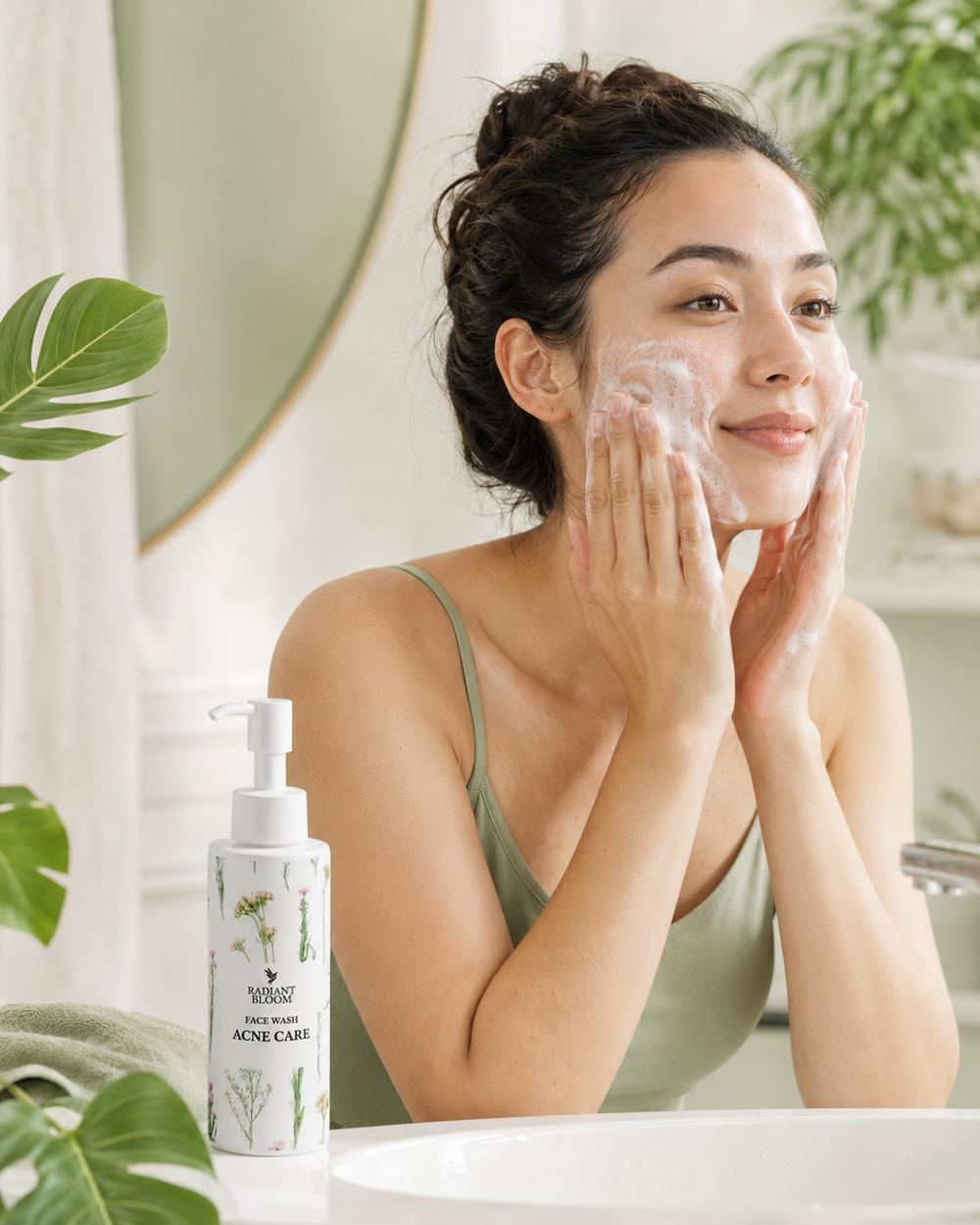
The 4-step vegan routine for acne-prone skin
You do not need ten products. For most blemish-prone skin, these four steps cover cleansing, treating, hydrating and protecting.
Step 1: Cleanse with a gentle, purifying wash, morning and evening. The aim is to remove excess oil and impurities without that tight, stripped feeling that pushes skin to produce even more oil.
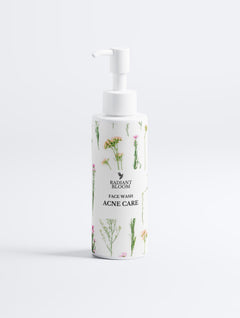
Step 1 · COSMOS Natural cleanser
Acne Purifying Face Wash
A pH-balanced, sulphate-free wash for blemish-prone skin. Kaolin clay and silica absorb excess oil, while coconut-derived cleansers, glycerin and soothing botanicals (mate leaf, Iceland moss, juniper) purify without stripping. ECOCERT COSMOS Natural, 98% natural origin, vegan.
€24,99
Shop the Face Wash →
Step 2: Treat individual blemishes with a targeted spot treatment. This is where salicylic acid and tea tree oil do their work, applied only where you need them rather than all over.
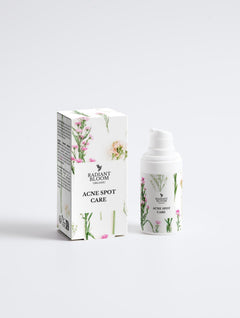
Step 2 · Targeted treatment
Acne Spot Care
A fast-absorbing vegan spot treatment with 2% salicylic acid (a BHA) and 3% tea tree oil to help unclog pores and calm visible redness, plus kaolin, charcoal and aloe to purify and soothe. Dab onto blemishes once or twice a day as needed.
€21,99
Shop Acne Spot Care →
Step 3: Hydrate with a lightweight, oil-free moisturiser. This step is the one people with oily skin most often skip, and it is exactly what stops salicylic acid and other actives from over-drying you.
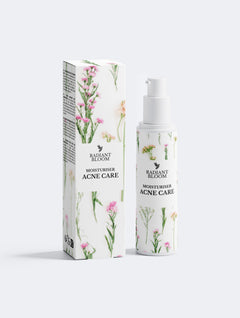
Step 3 · Lightweight hydration
Acne Care Moisturiser
A lightweight moisturiser that hydrates and soothes blemish-prone skin without clogging pores, so skin stays comfortable and balanced rather than greasy. For an extra layer of lightweight hydration, add the Hydrating Serum underneath.
€22,90
Shop the Moisturiser →
Step 4: Protect every morning with SPF. It is the step that prevents the dark marks blemishes can leave behind, and it matters even more when you use exfoliating actives like salicylic acid, which can make skin more sun-sensitive. Choose a lightweight, non-greasy formula from our sun care range.
★★★★★
"Every acne wash I'd tried left my skin tight and weirdly more spotty. This one actually cleans my oily skin without that horrible stripped feeling, and my complexion looks calmer and clearer. The green tea scent is lovely too."
Inna B., oily / blemish-prone · Verified Buyer
Which ingredients should you avoid?
For acne-prone skin, a short avoid-list goes a long way:
- Heavier animal-derived ingredients like lanolin and beeswax, which can clog pores for some people. Vegan formulas skip these by design.
- Harsh sulfates (SLS / SLES): they strip the skin barrier, and irritated skin often looks redder and breaks out more, not less.
- Synthetic fragrance and drying alcohols, common triggers for sensitised, reactive skin.
In short: gentle and barrier-friendly beats harsh and stripping, every time.
Does diet affect acne?
It can play a supporting role. Research has linked high-glycemic diets and, for some people, dairy, to more breakouts, while a diet rich in vegetables, whole grains, nuts and antioxidants (vitamins C and E, plus zinc) supports overall skin health. Diet is not a replacement for a good topical routine, but a plant-forward way of eating can complement it. Everyone's skin is different, so treat this as a gentle experiment rather than a rule.
A quick note: this is general skincare information, not medical advice. Acne is a medical condition, and for persistent, painful or severe breakouts it is always best to see a dermatologist, who can recommend the right treatment for you.
Frequently asked questions
What vegan skincare products help with acne-prone skin?
The most helpful vegan products are a gentle purifying cleanser (with kaolin clay), a salicylic-acid and tea-tree spot treatment, a lightweight oil-free moisturiser, and a daily SPF. Together they cleanse, target blemishes, hydrate and protect without harsh or animal-derived ingredients.
Is salicylic acid vegan?
Yes. Salicylic acid is a beta hydroxy acid that occurs naturally in plants such as willow bark, and the cosmetic-grade versions used in skincare are vegan. It is one of the most effective plant-derived actives for unclogging pores.
Can vegan skincare really help clear acne?
Vegan skincare can absolutely support clearer-looking skin, because the ingredients that help most, like salicylic acid, tea tree oil and kaolin clay, are all plant-derived. What matters is the formula and the routine, not whether a product is vegan on its own. For persistent or severe acne, see a dermatologist.
Is tea tree oil good for acne-prone skin?
Tea tree oil is naturally antibacterial and is often used to help calm the redness and swelling around blemishes. It works best in a balanced formula and applied to spots rather than all over the face.
What ingredients should acne-prone skin avoid?
Avoid pore-clogging animal-derived ingredients like lanolin and beeswax, harsh sulfates that strip the skin barrier, and synthetic fragrance or drying alcohols that can irritate reactive skin.
Does a vegan diet help acne?
It may help some people. Diets lower in high-glycemic foods and dairy, and higher in vegetables, antioxidants and zinc, are associated with better skin health. Diet supports a good skincare routine rather than replacing it.
Clean care for blemish-prone skin
Build your vegan routine for clearer-looking skin
Cleanse, treat and hydrate with the Radiant Bloom acne range: vegan, cruelty-free and certified natural. New customers get 15% off the first order.
Shop the acne range →Free worldwide shipping on orders over €45.