Einkaufswagen
0
Both mineral and chemical sunscreens protect you from UV damage when used properly, so the honest answer is not "one works, one does not". The real differences are in how they work, how they feel, who they suit, and what they leave behind, in your body and in the ocean. For sensitive skin, pregnancy, children and reef-conscious shoppers, mineral wins on every count that matters. For invisible finish under makeup, chemical formulas still hold an edge. Here is the full, honest comparison.
In this article
- How do mineral and chemical sunscreens actually work?
- The full comparison, side by side
- Who should choose mineral?
- Is chemical sunscreen ever the better choice?
- FAQ
How do mineral and chemical sunscreens actually work?
Mineral (also called physical) sunscreens use zinc oxide or titanium dioxide, which sit on the skin's surface and mostly reflect and scatter UV rays away. They work the moment you apply them.
Chemical sunscreens use filters like avobenzone, oxybenzone, octinoxate and homosalate, which absorb into the upper skin layers and convert UV into harmless heat. They need 15 to 20 minutes to bind before they protect, and because they absorb into skin, some filters have been detected in blood and urine after use, which is why regulators keep several of them under review while zinc oxide and titanium dioxide remain the two filters the US FDA proposes as generally recognised as safe and effective.
The full comparison, side by side
| Mineral | Chemical | |
|---|---|---|
| Mechanism | Reflects UV from the surface | Absorbs UV, converts to heat |
| Works immediately? | Yes | After 15 to 20 minutes |
| Sensitive skin and eyes | Rarely irritates or stings | More likely to sting and trigger reactions |
| Pregnancy and children | The recommended default | Many doctors suggest avoiding certain filters |
| Body absorption | Minimal | Filters detectable in blood and urine |
| Reef impact | Non-nano zinc is the reef-safe standard | Oxybenzone and octinoxate banned in several regions |
| Finish | Can leave a slight cast (tinted versions solve this) | Invisible, lighter textures |

Who should choose mineral?
- Sensitive or reactive skin. Zinc oxide is actually skin-calming (it is the active in nappy cream), while chemical filters are a known trigger for stinging and redness. Our guide to mineral sunscreen for sensitive skin goes deeper.
- Pregnancy and breastfeeding. Minimal absorption removes the whole debate, as covered in mineral sunscreen during pregnancy.
- Children. Paediatric guidance leans mineral for the same absorption and sensitivity reasons.
- Melasma and pigmentation-prone skin. Tinted mineral formulas with iron oxides also block visible light, which chemical filters cannot.
- Swimmers and beach holidays. Reef-safe non-nano zinc means your swim does not cost the coral.
The everyday mineral
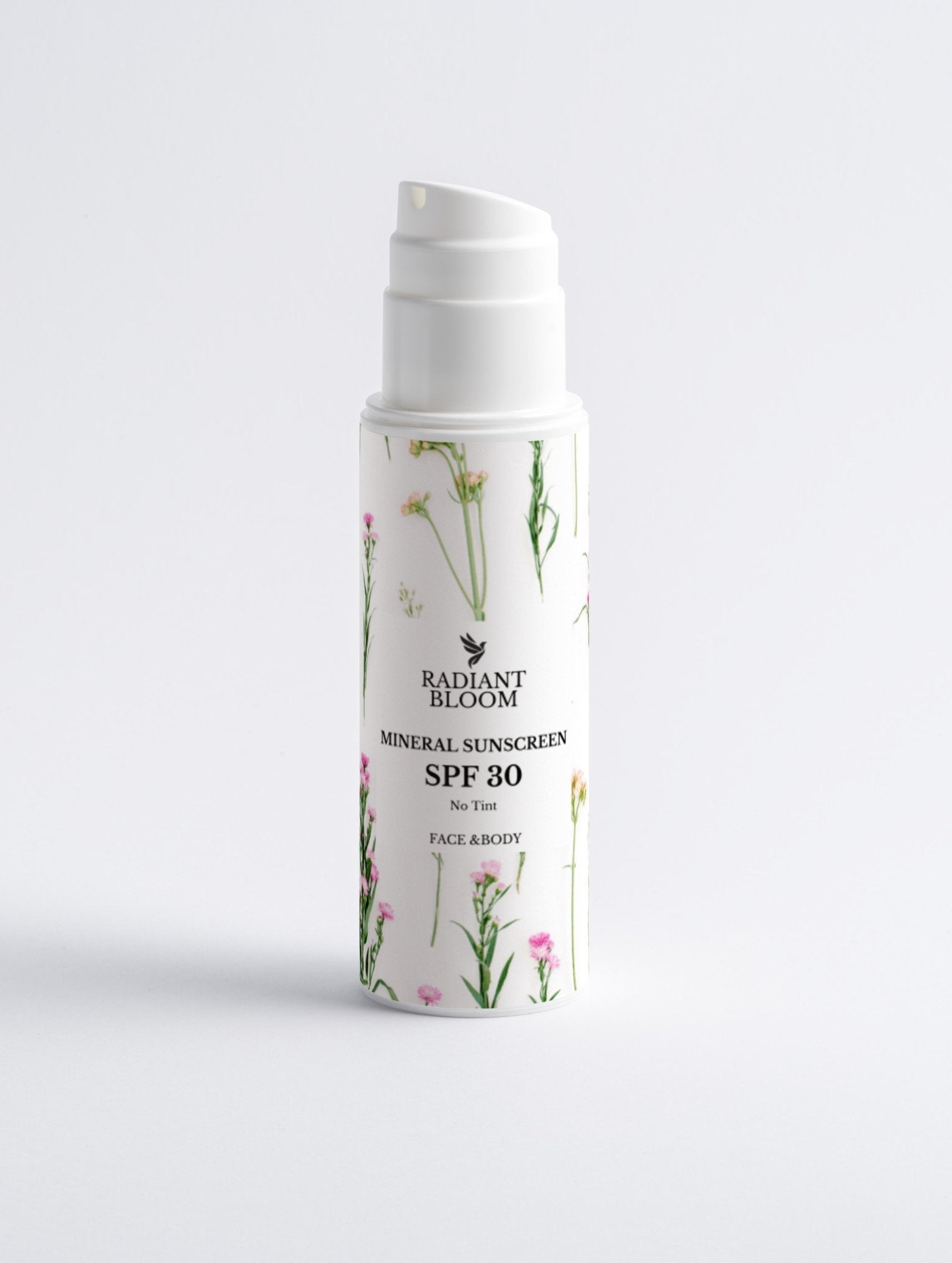
Mineral Sunscreen SPF30 for Face & Body
Zinc-based, reef-safe, broad spectrum, wrapped in certified organic oils.
€29.99
Shop SPF30 →

Solves the white cast
Sunscreen SPF30 with Tint
Iron oxides even your tone, add visible-light protection, and erase mineral's one cosmetic downside.
€24.99
Shop tinted SPF →
Is chemical sunscreen ever the better choice?
Honestly, sometimes. If you have deep skin tone and hate any hint of cast, or you need an ultra-light invisible layer under makeup and tinted mineral does not suit you, a modern chemical formula with newer-generation filters is a legitimate choice, and any sunscreen you will actually wear daily beats a better one left in the drawer. The reasonable rule: mineral as the default, chemical as the deliberate exception, never oxybenzone near a reef.

Reapplication, solved
Sun Protection SPF50 Stick
Swipes over makeup every two hours, because the best sunscreen is the one that gets reapplied.
€24.99
Shop SPF50 stick →
Frequently asked questions
Is mineral sunscreen better than chemical?
For sensitive skin, pregnancy, children and the environment, yes. For invisible finish on deep skin tones, modern chemical filters still have an edge. Both protect when applied generously and reapplied.
Does mineral sunscreen leave a white cast?
Untinted formulas can, especially on deeper tones. Tinted mineral sunscreens with iron oxides solve it while adding visible-light protection that chemical filters lack entirely.
Which sunscreen is reef-safe?
Non-nano zinc oxide mineral formulas. Oxybenzone and octinoxate, both chemical filters, are banned in several coastal regions for their effect on coral.
Do mineral sunscreens work as well as chemical ones?
Yes, at the same labelled SPF. Protection depends far more on applying enough (two finger-lengths for the face) and reapplying every two hours than on the filter type.
Can I mix mineral and chemical sunscreens?
You can layer different products, but do not mix them in your hand, and never dilute sunscreen with moisturiser, as it breaks the protective film.
Protection you never have to second-guess
Zinc-based, reef-safe mineral SPF in certified organic formulas.
Shop Mineral SPF →Certified Organic. Vegan. Reef-safe.
This article is for general information. For guidance on sunscreen use and skin cancer prevention, see the American Academy of Dermatology.