Einkaufswagen
0
-->
What's the Difference Between Organic and Regular Hair Oil?
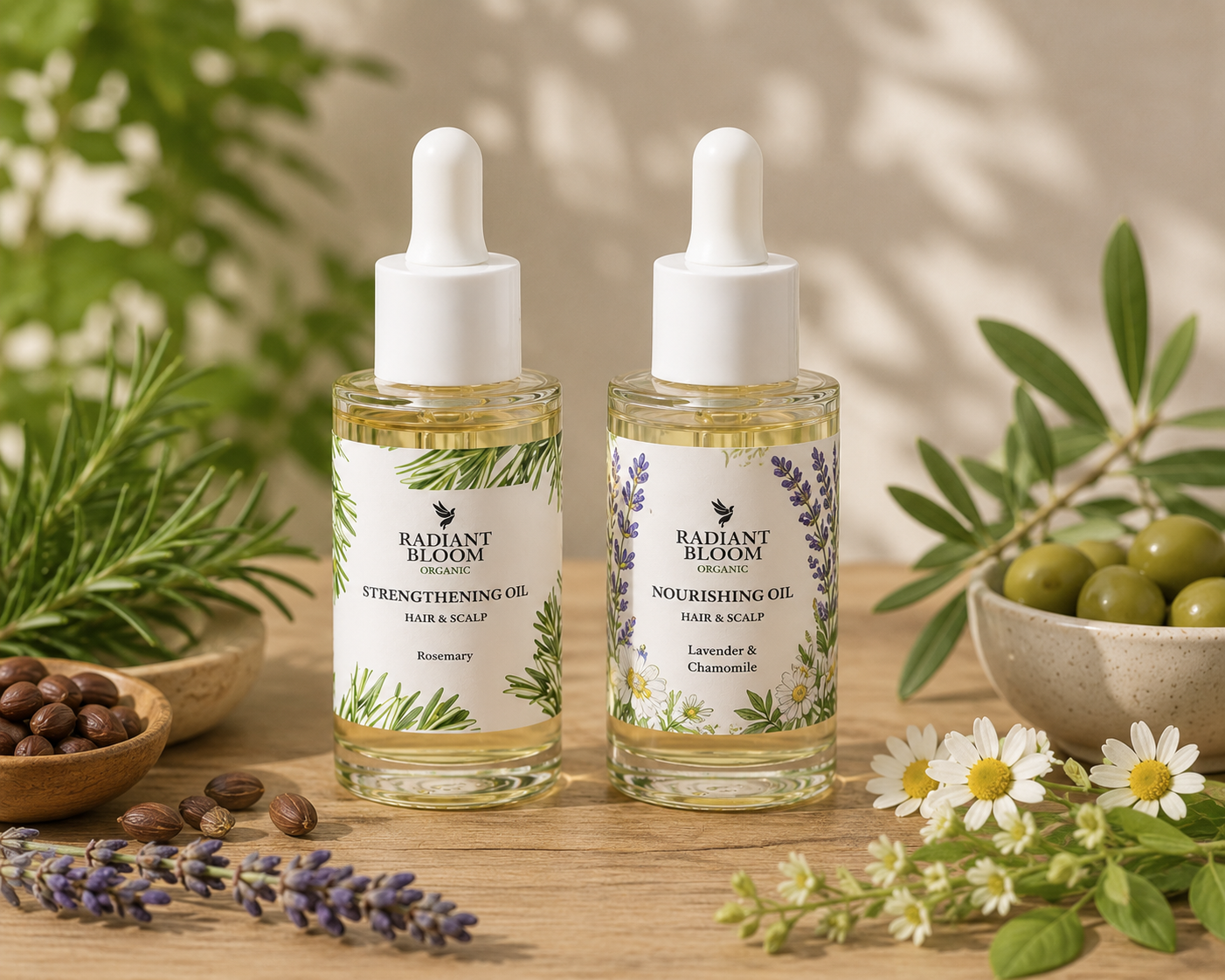
Two bottles, both labeled hair oil. The differences inside go far deeper than the packaging — and they matter for your hair.

Two bottles. Both labeled hair oil. The same labeling problem exists in skincare — which is why our review of the metal detox versus organic skincare trend unpacked the marketing games conventional brands play. One costs €8, the other €25. They look similar in the bottle. But they are not the same product — not even close. The difference between regular and organic hair oil goes much deeper than packaging or price. Here is the complete side-by-side breakdown so you can make an informed choice.
Ingredient Foundation
- Regular hair oil: Built on mineral oil (Paraffinum Liquidum), dimethicone or cyclopentasiloxane, isohexadecane, and other petroleum-derived or silicone-based ingredients. Plant oils typically make up less than 5% of the formula.
- Organic hair oil: Built entirely on cold-pressed, certified organic plant oils. Plant oils make up 90% or more of the formula, often with no fillers at all. Every ingredient serves a specific purpose.
The full case for why this distinction matters is covered in our science-based breakdown of organic versus regular hair oil.
How They Interact with Your Hair
- Regular hair oil: Sits on top of the hair shaft and creates a synthetic coating. Mimics shine and smoothness instantly but provides zero nutritional value. Over time the coating builds up and prevents nutrients, moisture, and even other hair products from absorbing.
- Organic hair oil: Penetrates the hair shaft and scalp. Delivers vitamins, antioxidants, and fatty acids that actually nourish the hair structure. The shine that develops is real shine from healthy hair, not a synthetic coating.

Scalp Health Impact
- Regular hair oil: Can clog hair follicles over time, contributing to scalp buildup, dandruff, and reduced hair growth. Synthetic fragrances frequently cause scalp irritation.
- Organic hair oil: Actively supports scalp health. Rosemary improves blood circulation, peppermint stimulates dormant follicles, argan and avocado strengthen the scalp barrier. See the clinical evidence on rosemary oil and hair growth for the supporting science.
Long-Term Hair Quality
- Regular hair oil: Hair becomes dependent on the synthetic coating to look healthy. Underneath, hair is often progressively drier, more brittle, and weaker. Stop using and the underlying damage is revealed.
- Organic hair oil: Hair quality genuinely improves over time. The same compounding pattern shows up in organic anti-aging skincare — measurable gains build week over week. After 3 to 6 months of consistent use, hair is structurally healthier — even without the product applied.
Conventional oils make hair look healthier instantly. Organic oils make hair actually healthier — measurably, over weeks and months.
Fragrance and Sensitivity
- Regular hair oil: Almost universally contains synthetic fragrance (Parfum), one of the most common causes of scalp sensitivity. Often hides undisclosed allergens behind the generic Parfum label.
- Organic hair oil: Naturally fragranced by the plant oils themselves — rosemary, peppermint, lavender — without synthetic perfume. Significantly safer for sensitive scalps.
Environmental Footprint
- Regular hair oil: Petroleum-based ingredients link directly to the fossil fuel industry. Silicones are not biodegradable and accumulate in water systems.
- Organic hair oil: Plant-based ingredients are renewable. Certified organic farming protects soil, water, and biodiversity.
Cost Comparison Over Time
- Regular hair oil: Cheaper per bottle, but you typically use more product. Buildup requires more frequent washing, and underlying hair damage requires more styling and repair products to compensate.
- Organic hair oil: More expensive per bottle, but a little goes a long way (most users need only 3-5 drops per application), the bottle lasts much longer, and improving hair health reduces need for other products.
Which One Is Right for You?
If you only care about instant cosmetic smoothness for a single event, a conventional hair oil can deliver fast results. For everyday use, building long-term hair health, supporting hair growth, or addressing scalp concerns, certified organic hair oil is the clearly superior choice — measurably and meaningfully better. For matching the right organic oil to your hair, see our guide to choosing the best organic hair oil for your hair type.
The Bottom Line
Regular hair oil and organic hair oil are not just two versions of the same product. They are fundamentally different categories: synthetic surface coatings versus active plant-based nutrition. The difference shows up clearly over weeks and months of use. For genuine hair and scalp health, certified organic is the only choice that delivers on its promises. Before committing, double-check the brand with the 9 questions every smart haircare shopper should ask.
✦