Einkaufswagen
0
Is a Retinol Alternative Better Than Tretinoin?
Tretinoin is the prescription-strength gold standard. So can a gentler retinol alternative ever be the better choice? The honest answer depends entirely on who you are.

When people ask whether a retinol alternative is better than tretinoin, they are usually comparing two very different things and hoping for one simple winner. Tretinoin is prescription-strength, medically powerful, and clinically unmatched for serious skin concerns. A retinol alternative like bakuchiol is gentle, plant-derived, and surprisingly capable. The truthful answer is not that one is universally better — it is that each one is better for a different person. Here is exactly how to know which side you fall on.
First, What Exactly Is Tretinoin?
Tretinoin is a prescription retinoid — the pure, pre-converted active form of Vitamin A, also known as retinoic acid. Unlike over-the-counter retinol, which your skin must slowly convert into retinoic acid, tretinoin is already active the moment it touches your skin. That makes it dramatically more potent. It is the single most studied and proven topical anti-aging treatment in dermatology, with decades of clinical research behind it.
Tretinoin is prescribed for deep wrinkles, significant sun damage, stubborn acne, and acne scarring. When you need maximum clinical strength, nothing over-the-counter matches it. But that strength comes at a cost.
The Real Cost of Tretinoin's Strength
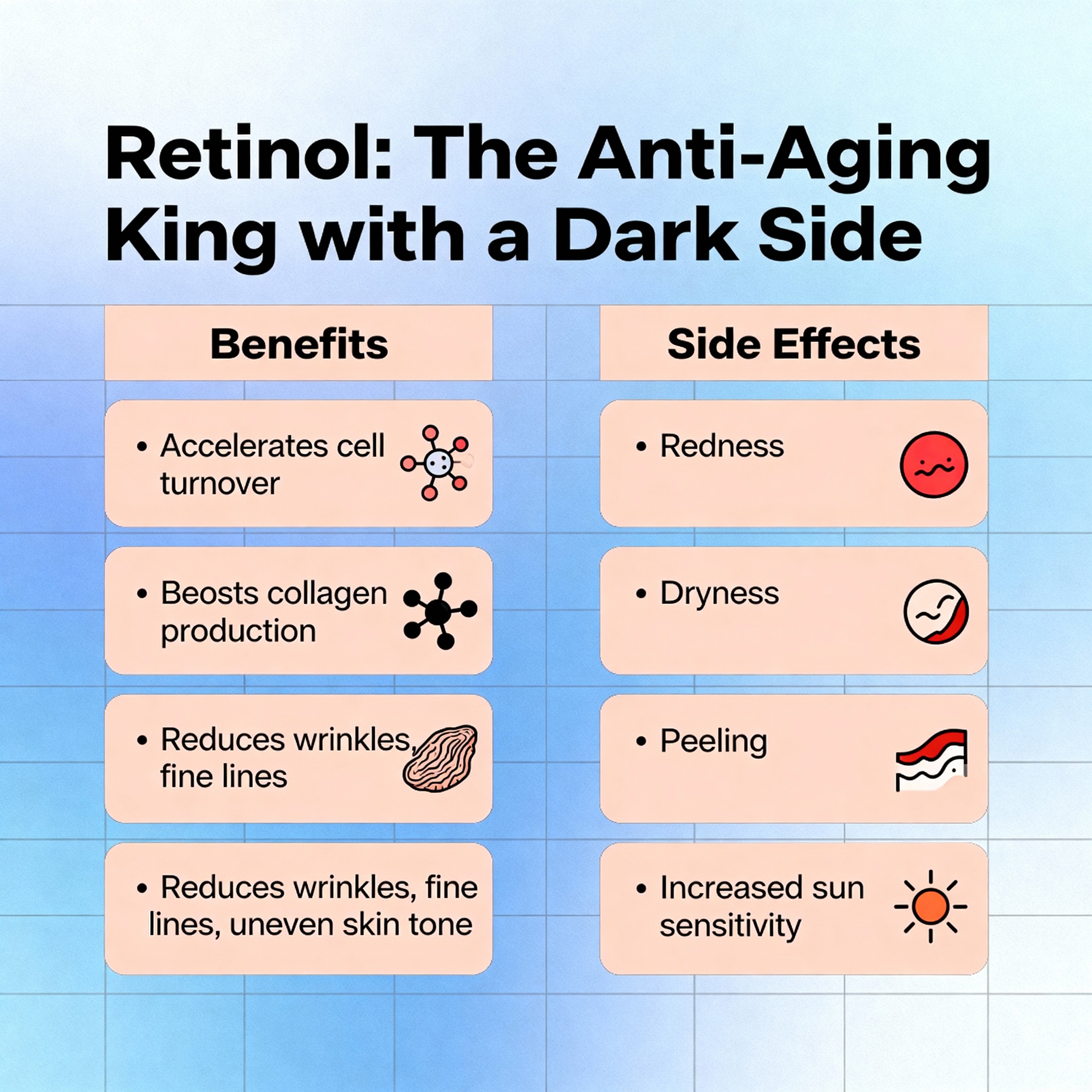
Because tretinoin is so powerful, it is also far more likely to cause significant side effects, especially in the first weeks and months of use:
- The retinization period: Weeks of redness, peeling, flaking, and dryness as skin adjusts — sometimes severe enough to disrupt daily life.
- Persistent sun sensitivity: Tretinoin makes skin far more vulnerable to UV damage. Night-only use and rigorous daily SPF are non-negotiable.
- Not pregnancy-safe: Tretinoin is contraindicated during pregnancy and breastfeeding due to the risks associated with Vitamin A derivatives.
- Prescription required: You need a doctor or dermatologist, which means cost, appointments, and ongoing supervision.
- High quit rate: Many people abandon tretinoin during the adjustment phase before they ever see the benefits.
Tretinoin is the strongest tool in the box. But the strongest tool is only the best one if you can actually keep using it.
What a Retinol Alternative Like Bakuchiol Brings Instead
Bakuchiol is the most clinically credible retinol alternative available. Derived from the seeds of the Psoralea corylifolia plant, it is not a Vitamin A derivative at all — yet it activates many of the same skin pathways as retinoids, stimulating collagen and supporting cell renewal through a completely different mechanism. The result is retinoid-like benefits without the retinoid drawbacks..
We cover the head-to-head science in detail in our honest bakuchiol versus retinol guide, but the practical advantages over tretinoin specifically are what matter here: no retinization period, no increased sun sensitivity, usable morning and night, no prescription needed, and safe for use during pregnancy.
| Factor | Tretinoin (Prescription) | Bakuchiol (Alternative) |
|---|---|---|
| Strength | Highest available | Gentle, moderate |
| Deep wrinkles / scarring | Most effective | Limited on severe cases |
| Fine lines / prevention | Effective | Clinically comparable |
| Irritation / peeling | Common, often severe | Minimal to none |
| Sun sensitivity | High — night only | None — day and night |
| Pregnancy-safe | No | Widely considered yes |
| Access | Prescription only | Over the counter |
| Best for | Severe concerns, tolerant skin | Sensitive skin, prevention, daily use |
So Which Is Actually Better?
Here is the honest framework. Neither is universally better — the right answer depends entirely on your skin, your goals, and your circumstances.
Tretinoin Is the Better Choice If...
- You have deep, established wrinkles or significant sun damage that needs maximum clinical strength.
- You are treating moderate-to-severe acne or acne scarring under medical guidance.
- Your skin is resilient and tolerates retinoids well without ongoing irritation.
- You are willing and able to commit to night-only use, daily SPF, and the adjustment period.
- You are not pregnant or breastfeeding.
A Retinol Alternative Is the Better Choice If...
- You have sensitive, reactive, or rosacea-prone skin that cannot tolerate retinoids. Our organic routine for sensitive skin is built around exactly this.
- You are pregnant or breastfeeding — see our full guide on whether bakuchiol is safe during pregnancy.
- You want prevention and maintenance rather than treatment of severe damage.
- You want a product you can use morning and night, year-round, without sun sensitivity.
- You tried tretinoin and quit because the irritation was unbearable.
- You prefer a certified organic, plant-based approach to your skincare.

For sensitive skin, a gentle alternative you can actually stick with often beats a stronger one you abandon.
The Consistency Factor Most People Overlook
Here is a truth that does not get said enough: the best anti-aging treatment is the one you actually keep using. A significant number of people prescribed tretinoin stop within the first few months because the irritation feels worse than the wrinkles. A treatment abandoned at week six delivers nothing, no matter how powerful it is on paper.
This is where a gentler retinol alternative quietly wins for a huge group of people. Because bakuchiol causes little to no irritation, users tend to stay consistent — and consistency over 12 weeks and beyond is what actually produces visible results. The gentlest effective option you will use every day beats the strongest option you quit.
Can You Use Both?
Interestingly, yes — though not at the same time on the same night. Some people use tretinoin for a focused treatment period under dermatological guidance, then transition to bakuchiol for gentle long-term maintenance. Others alternate, using tretinoin on tolerant nights and bakuchiol on recovery nights to reduce irritation. And many use tretinoin during non-pregnancy periods and switch to bakuchiol while pregnant or breastfeeding, as covered in our pregnancy-safe skincare guide. Always follow your dermatologist's advice when combining or alternating actives.
The Bottom Line
Is a retinol alternative better than tretinoin? For maximum clinical power against severe wrinkles, scarring, and sun damage in resilient skin, tretinoin remains unmatched. But for sensitive skin, for pregnancy, for prevention and maintenance, for daily year-round use, and for the many people who simply cannot tolerate retinoids — a quality retinol alternative like bakuchiol is genuinely the better choice. It is not a weaker version of tretinoin. It is a different tool, and for most everyday users seeking smoother, firmer, healthier skin without the struggle, it is the smarter one.
✦