Einkaufswagen
0
If you live in London, the South East, or anywhere across the chalky belt of England, your tap water is almost certainly "hard" — and it may be quietly working against your skin. Here's what hard water actually does, how to tell if it's your problem, and how to protect your skin barrier without spending a fortune on a whole-house filter.
Does hard water actually damage your skin?
Hard water is water with a high concentration of dissolved minerals, mainly calcium and magnesium. More than 60% of the UK lives in a hard or very hard water area, with London and the South East among the worst affected. On its own, hard water won't "burn" your skin — but the way it interacts with soap and your skin barrier can cause real, visible problems over time.
The main issue is that calcium and magnesium react with cleansers to form an insoluble "soap scum" — the same film you see on your shower screen. On your face and body, that residue clings to the skin, disrupts the protective barrier, and is harder to rinse away. The result is skin that feels tight, dry, and slightly rough even straight after washing.
The signs your skin is reacting to hard water
Hard water rarely announces itself. Most people blame their products or the weather first. Look for this pattern instead:
- Tightness right after cleansing — that "squeaky" over-cleansed feeling that never fully settles.
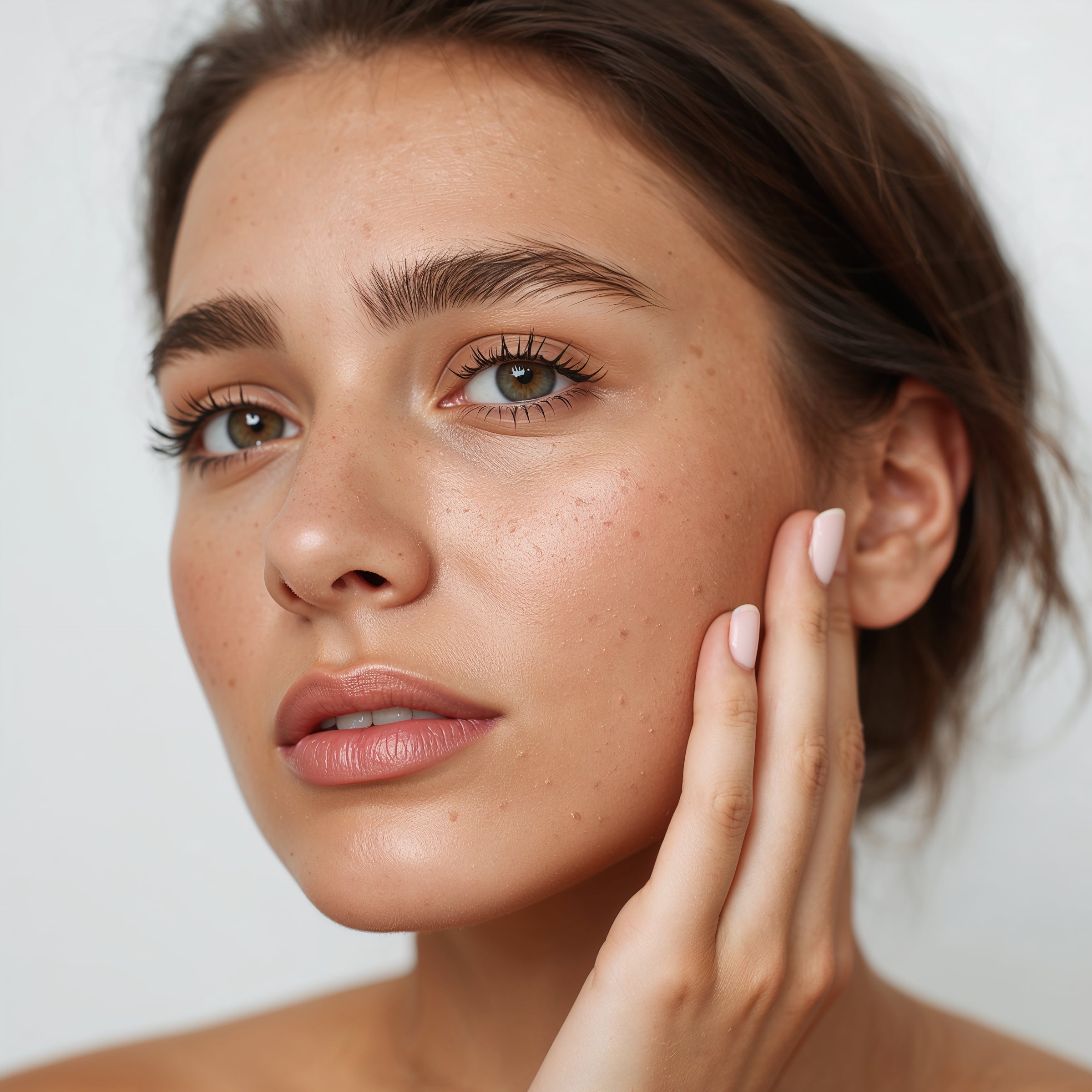
- Persistent dry patches around the cheeks, jaw and hairline that moisturiser only half-fixes.
- Small rough bumps or a dull, uneven texture that isn't quite acne.
- Flare-ups if you're prone to eczema, rosacea or sensitivity — hard water is a well-documented trigger for atopic skin.
- It improves on holiday. If your skin mysteriously calms down in a soft-water area or abroad, that's a strong clue.
Why hard water is especially rough on sensitive skin
A healthy skin barrier sits at a slightly acidic pH of around 4.7–5.5. Hard water is alkaline, and washing with it — particularly with a foaming, high-pH soap — nudges your skin the wrong way. For most people that's a minor, temporary shift. But if your barrier is already compromised (eczema, rosacea, or just naturally reactive skin), the mineral residue and pH disruption can tip you into itching, redness and flaking. UK dermatology research has repeatedly linked hard water exposure to a higher risk of eczema, especially in early life.
How to protect your skin from hard water (without replumbing your house)
You don't need a £400 water softener to see a difference. The goal is simple: stop stripping the barrier, and rebuild it faster than the water can wear it down.
1. Switch to a low-foaming, pH-considerate cleanser
Traditional foaming soaps are the biggest culprit because they react most with hard-water minerals. A gentle oil- or milk-based cleanser lifts away the day without that tight, stripped finish — and rinses cleaner, leaving less mineral film behind.
2. Do a final rinse with filtered or micellar water
After cleansing, a swipe of micellar water or a rinse with cooled filtered water removes leftover mineral residue that tap water leaves behind. It's the cheapest, fastest upgrade you can make.
3. Rebalance, then seal
Follow with a hydrating, alcohol-free toner to nudge your skin's pH back down, then lock everything in with a barrier-supporting moisturiser while skin is still damp. A drop of facial oil on top is ideal in very hard-water areas because it forms a light shield against mineral-heavy water.
4. Turn the temperature down
Hot water accelerates barrier loss and makes hard-water dryness worse. Lukewarm is kinder — for both your face and the long hot showers hard-water areas are so tempting in winter.
What we'd reach for
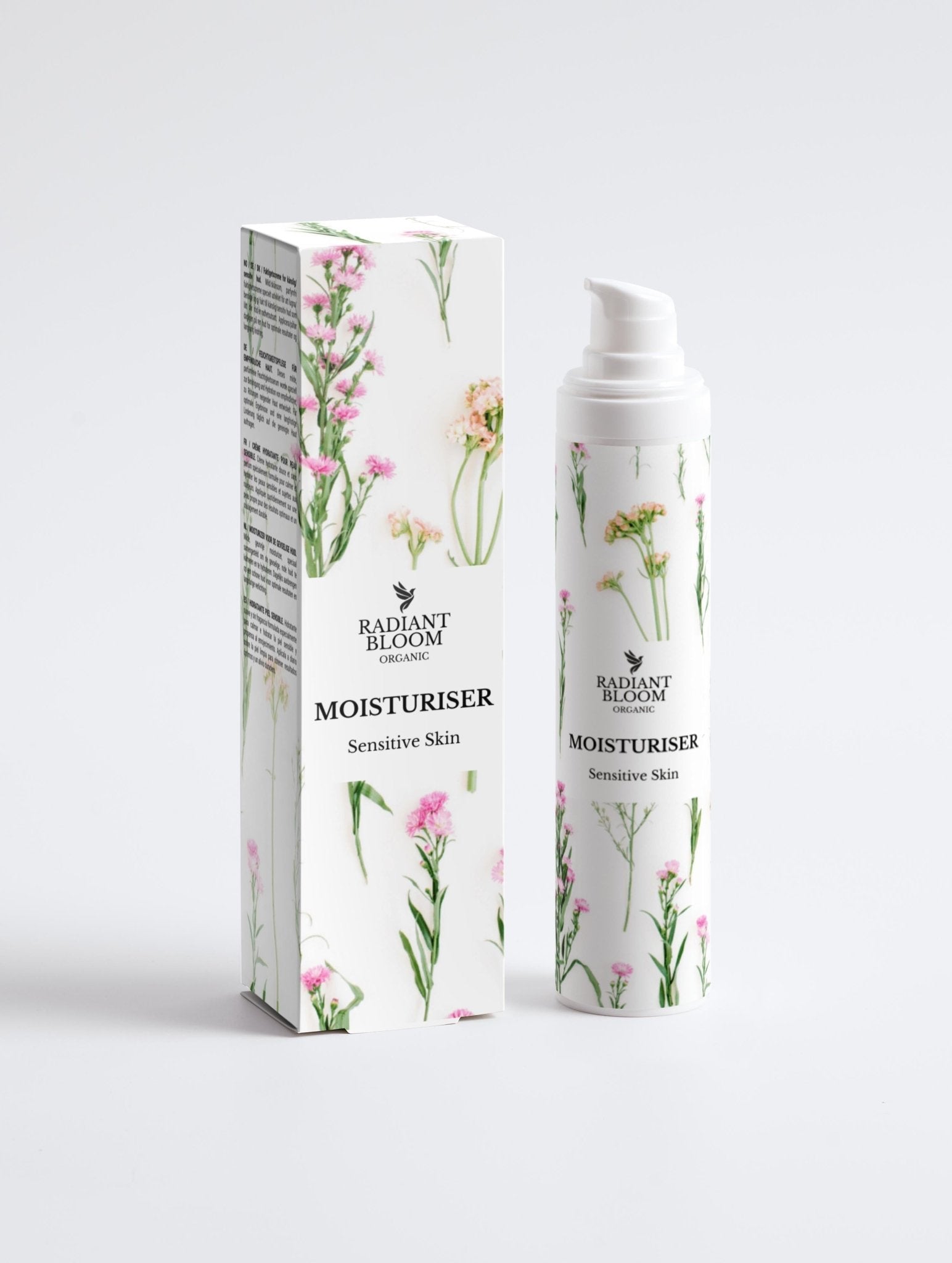
For hard-water skin, a barrier-first routine matters more than any single "miracle" active. Our Sensitive Skin Oil-To-Milk Cleanser lifts away grime and soap scum without stripping, and the organic Sensitive Skin Moisturiser rebuilds the barrier hard water wears down — fragrance-free and formulated for reactive, easily-irritated skin. In very hard areas, seal with a few drops of our All-In-One Facial Oil.
Shop the Sensitive Skin MoisturiserDo water softeners and shower filters help?
They can. A whole-house softener genuinely reduces calcium and magnesium, and many people with eczema report calmer skin afterwards. But they're expensive and not an option for renters. A vitamin-C shower filter is a cheaper middle ground for the shower specifically. For most people, though, adjusting the routine above delivers 80% of the benefit for a fraction of the cost.
Quick answers
Can hard water cause a rash?
Indirectly, yes. Hard water itself doesn't cause a true allergic rash, but the mineral residue and barrier disruption can trigger irritation, itching and eczema-style flare-ups in sensitive skin.
Does hard water cause spots and breakouts?
It can contribute. Soap-scum residue mixed with oil and dead skin can clog pores and leave a dull, congested texture, particularly if your cleanser doesn't rinse cleanly.
How do I know if I'm in a hard water area?
Check your postcode on your water supplier's website, or look for limescale on your kettle and taps — a reliable everyday giveaway.
· · ·