Einkaufswagen
0

Some sun damage is genuinely reversible and some is not. Surface changes such as dullness, uneven tone, rough texture and many brown patches respond well to consistent care over months. Deep structural changes to collagen and elastin, the ones behind loss of firmness and crepey texture, can be improved but not undone with skincare alone. The one thing that changes the outcome either way is daily sun protection from today onward.
In this article: what sun damage looks like, what you can and cannot reverse, the ingredients that work, a realistic routine, how long results take, and an FAQ.
Check anything that changes. This article is about cosmetic sun damage. Any mole or patch that is growing, changing shape or colour, itching, bleeding or not healing should be seen by a GP promptly. That is not a skincare question.
What does sun damage actually look like?
Most people picture a suntan or a burn, but the changes that matter accumulate quietly over decades. Around 80 to 90 percent of visible skin ageing is attributed to UV exposure rather than the passage of time itself, which is why skin on the face, neck, chest and backs of the hands looks older than skin that stays covered.
The signs fall into two groups, and the distinction matters because they respond very differently.
| Sign | What is happening | Realistic outlook |
|---|---|---|
| Dullness and rough texture | Build-up of dead cells, slowed turnover | Very responsive, improves in weeks |
| Uneven tone, brown patches | Excess melanin produced in response to UV | Responsive over 3 to 6 months |
| Fine lines | Surface dehydration plus early collagen loss | Softens noticeably with consistent care |
| Persistent redness, visible vessels | Damage to small blood vessels | Limited response to skincare |
| Loss of firmness, crepey skin | Structural collagen and elastin breakdown | Improved but not reversed topically |
| Deep set wrinkles | Long-term structural change | Not reversible with skincare |
Can sun damage be reversed?
Partly, and it is worth being straight about which parts. Your skin does have real repair capacity, and studies consistently show that people who start protecting their skin see measurable improvement in tone and texture over the following months, simply because the repair processes are no longer being overwhelmed by fresh daily damage.
What that means practically: expect meaningful improvement in brightness, smoothness and evenness. Expect softening rather than erasure of fine lines. Do not expect a cream to rebuild collagen structure that took thirty years to break down. Anyone promising that is selling you something.
The most valuable thing in this article is not a product. It is that stopping ongoing damage is more powerful than any corrective step, because it lets your skin get ahead of the backlog.
Which ingredients genuinely help?
- Sunscreen, daily. Not a corrective ingredient but the foundation everything else depends on. Without it, you are repairing with one hand and damaging with the other.
- Exfoliating acids. Glycolic acid accelerates the turnover that sun exposure slows, clearing dull surface cells and gradually fading pigmentation.
- Antioxidants. They neutralise the free radicals UV generates, and are best used in the morning underneath sunscreen.
- Niacinamide. Supports the barrier and helps with uneven tone and redness.
- Retinol alternatives. Bakuchiol encourages renewal with less irritation than retinol, which matters for skin that is already sensitised.
- Peptides and rich night creams. Support the skin overnight, when repair activity is highest.

Step 1 · Stop the damage
Mineral Sunscreen SPF30
Everything else in this routine only works if you stop adding new damage on top. Wear it daily, including in a British winter, since UVA passes through cloud and glass.
View product →
2 to 3 times a week · Resurface
Glycolic Acid Liquid Exfoliator
Sun exposure slows cell turnover, which is why sun-damaged skin looks dull and feels rough. Glycolic acid speeds it back up and gradually evens out patchy tone.
View product →
Nightly · Support repair
Collagen Anti-Age Night Cream
Skin does most of its repair work overnight. A richer night cream supports that window and helps sun-exposed skin on the face, neck and chest feel less tight and crepey.
View product →A realistic routine
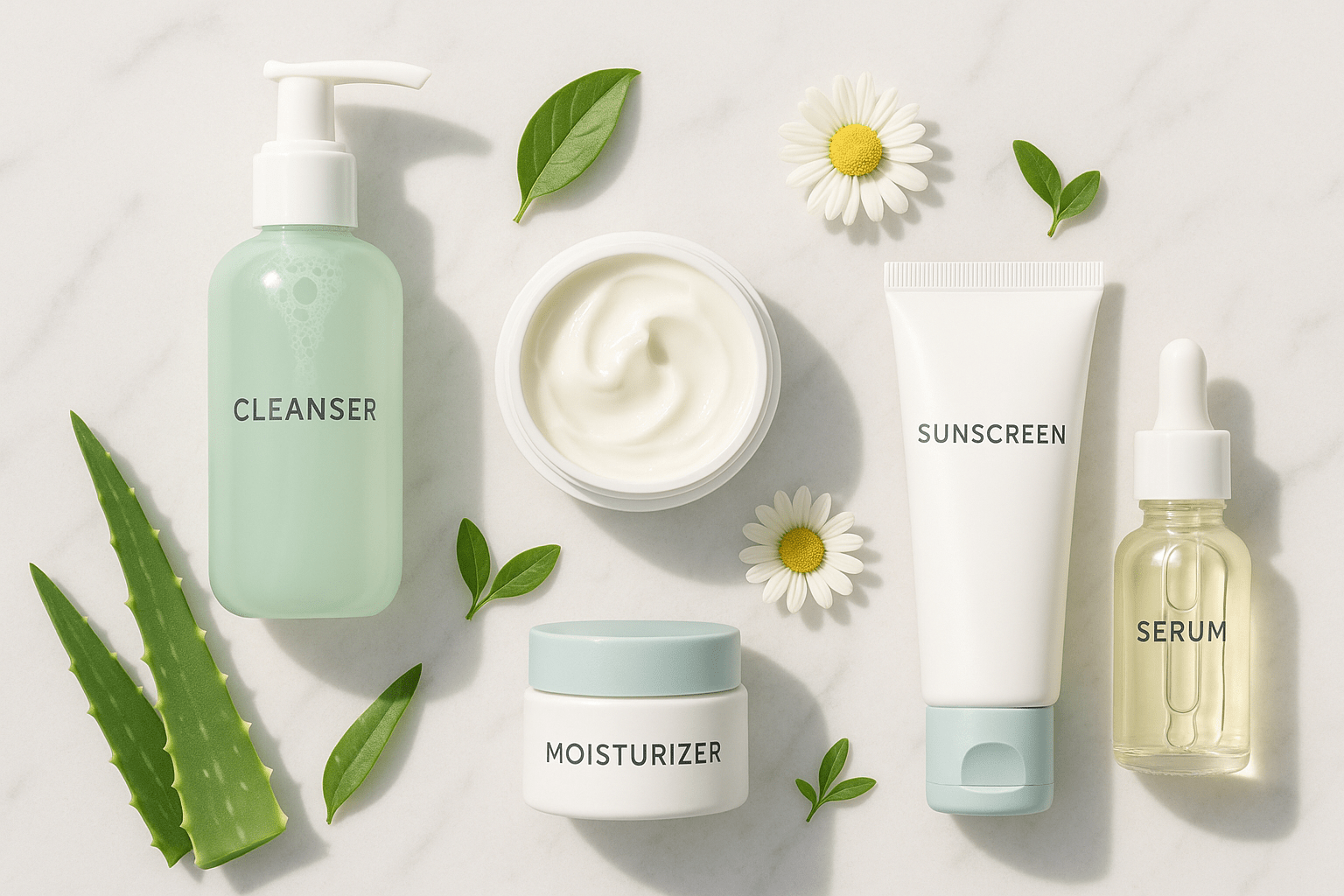
Morning: gentle cleanse, antioxidant serum, moisturiser, sunscreen. Reapply the sunscreen if you are outdoors for any length of time.
Evening: cleanse thoroughly to remove sunscreen, then either your renewal step or your exfoliating acid, then a nourishing night cream. Keep acids to two or three evenings a week rather than nightly.
Do not forget: your neck, chest and the backs of your hands. These areas show sun damage as clearly as the face and are routinely skipped, which is why they often age faster than the face of the same person.
How long does it take?
Texture and brightness improve first, often within four to six weeks. Pigmentation is slower, generally three to six months of consistent use plus disciplined sun protection, because every unprotected day makes pigment darker again. Firmness changes least and slowest.
The most common reason people conclude nothing works is stopping at eight weeks, or using actives diligently while skipping sunscreen. That combination cannot succeed, since UV both creates new damage and darkens the pigment you are trying to fade.
When are professional treatments worth it?
Chemical peels, microneedling, laser and IPL work faster and go deeper than anything topical, particularly for stubborn pigmentation and visible vessels. They are a reasonable step if you have been consistent for six months and want more. They also require a qualified practitioner, cost considerably more, and still depend entirely on daily sunscreen afterwards, or the pigment simply returns.
Frequently asked questions
Can you reverse sun damage on your face?
Partly. Dullness, rough texture and much pigmentation improve with consistent care over three to six months. Deep structural collagen loss and set wrinkles cannot be reversed with skincare alone.
What is the best cream for sun damaged skin?
There is no single cream. The combination that works is daily sunscreen, an exfoliating acid two to three times weekly, antioxidants in the morning and a nourishing night cream.
Is it too late to start protecting my skin?
No. Skin repair capacity continues throughout life, and people who begin consistent protection at any age see improvement in tone and texture over the following months.
Do I need sunscreen in the UK in winter?
Yes. UVA, which drives ageing and pigmentation, is present year round and passes through cloud and window glass. Daily use is what prevents further damage accumulating.
How long does it take to fade sun spots?
Usually three to six months of consistent exfoliation and daily sun protection. Skipping sunscreen will darken them again faster than any treatment can fade them.
· · ·