Cart
0
Most people should exfoliate their face 2 to 3 times a week, and their body 1 to 2 times a week. Sensitive or dry skin does better at once a week, while oily or congestion-prone skin can usually handle three. Daily exfoliation is almost always too much: it damages the skin barrier, which causes the redness, tightness and breakouts people mistake for needing to exfoliate more.
In this article: how often to exfoliate by skin type, face vs body, chemical vs physical, the signs you are overdoing it, how to build up safely, and an FAQ.
How often should you exfoliate your face?
The honest answer depends on your skin type and the strength of what you are using, but this is the range that works for most people.
| Skin type | Face frequency | Best approach |
|---|---|---|
| Sensitive or reactive | Once a week, or once a fortnight | A mild acid, short contact, always followed by moisturiser |
| Dry | Once or twice a week | Gentle AHA such as lactic or glycolic, in the evening |
| Normal or combination | 2 to 3 times a week | AHA for texture, BHA on congested areas |
| Oily or congestion-prone | 3 times a week | BHA for pores, AHA for surface texture |
| Mature | 2 to 3 times a week | AHA helps with dullness and uneven tone |
Start at the low end of your range, always. You can build up. What you cannot do quickly is repair a barrier you have stripped, which takes weeks of doing very little.
How often should you exfoliate your body?
Body skin is thicker than facial skin, but it is also drier, especially on the shins, upper arms and back. Once or twice a week is right for most people. Areas prone to rough texture or ingrown hairs can take a little more; anywhere already dry or flaky needs less, plus a good body moisturiser afterwards. If you shave or wax, exfoliate the day before rather than immediately after, when skin is already sensitised.
If the rough patches on the backs of your arms or thighs feel like permanent sandpaper, that may be keratosis pilaris rather than ordinary dryness, and it needs a slightly different approach. Our guide to smoothing keratosis pilaris covers it.

Everyday exfoliation
Glycolic Acid Liquid Exfoliator
A sweep-on liquid AHA for smoother texture and brighter tone. Easy to control the frequency: start once a week and build up.
View product →New to acids and not sure where to start? Our complete guide to glycolic acid, its benefits and who it suits walks through strengths, timing and who should approach it carefully.
Chemical or physical: which should you use?
Chemical exfoliants use acids or enzymes to loosen the bonds between dead skin cells so they shed naturally. Physical exfoliants use grains or a tool to buff them away manually. For the face, chemical is usually the better choice because it is more even and far less likely to cause micro-tears. Physical scrubs are better suited to the body, and even there a fine-grain formula and a light hand beat anything harsh.
| Chemical (AHA / BHA) | Physical (scrub) | |
|---|---|---|
| Best for | Face, uneven tone, congestion, fine lines | Body, rough patches, ingrown hairs |
| Evenness | Very even | Depends on pressure |
| Risk | Over-use irritation | Micro-tears if too abrasive |
| Frequency | 1 to 3 times a week | 1 to 2 times a week |
What are the signs you are over-exfoliating?
Over-exfoliation is far more common than under-exfoliation, and it is often mistaken for a skin problem that needs more treatment. Watch for:
- A tight, shiny or waxy-looking surface
- Stinging when you apply products that never used to sting
- New redness, flaking or rough patches
- Increased sensitivity to sun and wind
- Breakouts appearing alongside dryness
If that sounds familiar, stop all exfoliation for two to three weeks. Cleanse gently, moisturise generously, use sunscreen daily, and let the barrier rebuild before reintroducing anything. Then restart at half your previous frequency.

Weekly treatment
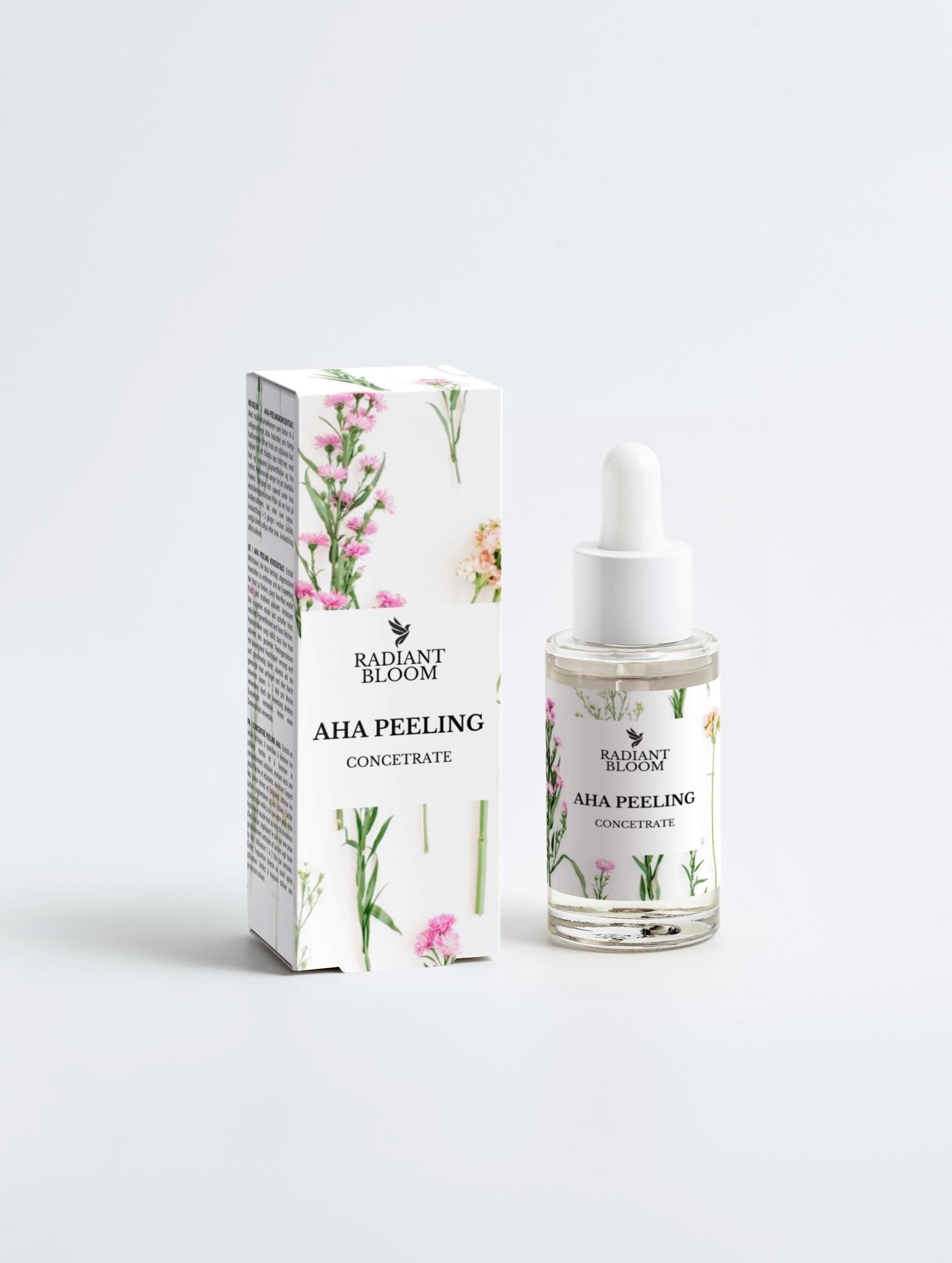
AHA Peeling Concentrate
A more intensive weekly resurfacing step for dullness and uneven texture. Once a week is plenty for most skin.
View product →How to build up safely
- Week 1: exfoliate once, in the evening. See how your skin feels the next morning.
- Weeks 2 to 3: if there is no stinging or redness, move to twice a week.
- Week 4 onward: if skin is comfortable, three times a week is your ceiling for the face.
- Always: moisturise afterwards and wear SPF daily. Acids increase sun sensitivity.
One more rule worth following: do not layer multiple exfoliating actives on the same night, and give exfoliation its own evening rather than stacking it with other strong treatments.
Does everyone need to exfoliate?
No. Skin sheds dead cells on its own. Exfoliation speeds that up and helps with dullness, rough texture and congestion, but if your skin looks and feels good without it, there is no obligation. People with very sensitive skin, rosacea or eczema often do better with little or none, and should check with a professional first.
Frequently asked questions
Can I exfoliate every day?
For almost everyone, no. Daily exfoliation strips the skin barrier and leads to redness, sensitivity and more breakouts. Two to three times a week is the maximum for most facial skin.
Should you exfoliate in the morning or at night?
At night. Exfoliating acids make skin more sun-sensitive, so evening use lets skin recover overnight. Follow with SPF the next morning regardless.
How often should you exfoliate the body?
Once or twice a week for most people. Dry areas like shins need less; rough patches or ingrown-prone areas can take slightly more, always followed by a moisturiser.
How long does it take to recover from over-exfoliating?
Usually two to four weeks of gentle care with no exfoliation, focusing on cleansing gently, moisturising and daily sun protection.
Can you exfoliate if you have sensitive skin?
Yes, but sparingly. Once a week or once a fortnight with a mild formula is plenty, and stop entirely if you notice stinging or redness.
· · ·