Cart
0
You cannot permanently mend a split end, because hair is not living tissue and will not knit itself back together. What you can do is trim the splits away, then stop new ones forming: cut back on heat, add a weekly protein or moisture mask, use a leave-in to seal the cuticle, and be gentle with wet hair. Most people see hair look and feel dramatically better within 3 to 4 weeks, even before the next trim.
In this article: what damage really is, whether split ends can be repaired, protein vs moisture, a weekly repair routine, prevention, and an FAQ.
What does damaged hair actually mean?
Each strand has an outer layer of overlapping scales called the cuticle, which protects the cortex inside. Healthy hair has a smooth, flat cuticle, which is why it feels soft and reflects light. Heat styling, bleaching, colouring, hard water, sun and rough brushing lift and chip away at those scales. Once the cuticle is damaged, moisture escapes, the strand becomes porous and rough, and eventually the fibre splits at the weakest point, usually the oldest part of the hair: the ends.
That is why damage always shows up at the bottom first. The ends of long hair may be three or four years old and have been through hundreds of washes and heat sessions.
Can you really repair split ends?
Honestly, no. Nothing can permanently fuse a split fibre back together. Products that claim to "repair" split ends are temporarily binding the strand so it looks and feels smoother, which is genuinely useful cosmetically but washes out. The only permanent fix for an existing split is to cut it off, because a split left alone travels further up the shaft and causes more breakage.
The good news is that the rest of your hair responds very well to care. You can dramatically improve softness, shine and manageability, and prevent the next round of splits, which is what actually changes how your hair looks day to day.
Protein or moisture: which does your hair need?
This is the single most useful thing to understand, because using the wrong one makes hair worse. Damaged hair usually needs both, alternated.
| Needs protein | Needs moisture | |
|---|---|---|
| How it feels | Limp, mushy or gummy when wet, over-stretchy | Dry, straw-like, brittle, frizzy |
| Usual cause | Bleaching, colouring, chemical treatments | Heat, sun, hard water, over-washing |
| What helps | Keratin or protein mask to rebuild structure | Rich conditioner or oil to restore softness |
| How often | Every 2 to 3 weeks | Weekly |
Too much protein makes hair stiff and prone to snapping; too much moisture makes it limp and shapeless. If you are unsure, start with moisture and add a protein treatment every second or third week.

Weekly · Rebuild
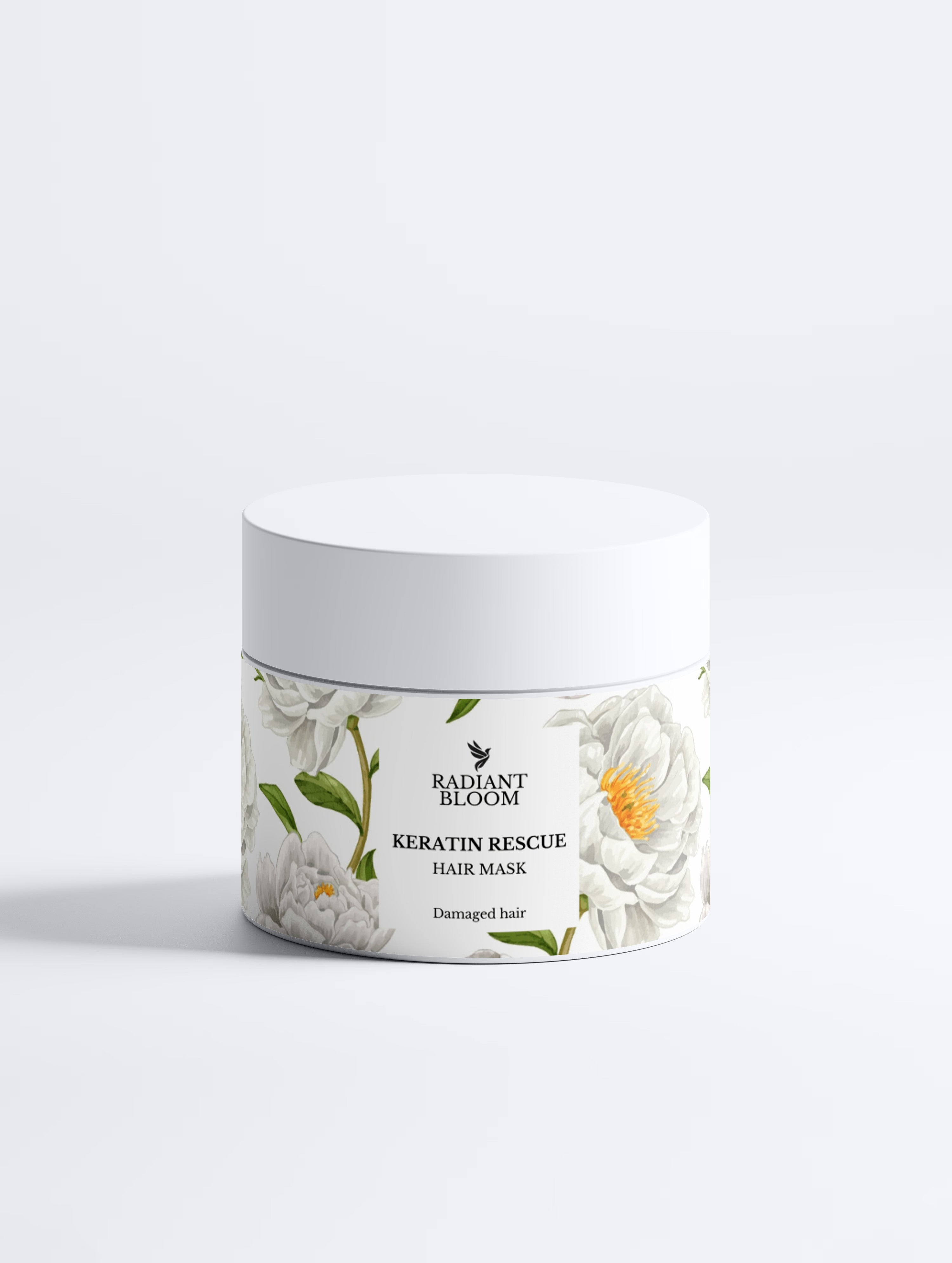
Keratin Intensive Rescue Hair Mask
An intensive treatment for hair weakened by heat, colour or bleach. Strengthens the fibre and restores softness where damage shows most.
View product →
Every wash · Condition
Split-End Rescue Mask Fresh Conditioner
Smooths and binds frayed ends so they look and feel sealed, while keeping mid-lengths soft and easy to detangle.
View product →A weekly routine for damaged hair
- Wash less often, and gently. Two to three washes a week is plenty for most damaged hair. Focus shampoo on the scalp, not the fragile ends.
- Condition every wash, mid-lengths to ends. This is where the damage lives. Leave it on for two to three minutes rather than rinsing straight away.
- Mask once a week. Alternate a strengthening keratin treatment with a purely moisturising one, based on the table above.
- Detangle wet hair carefully. Hair is weakest when wet. Use a wide-tooth comb and start at the ends, working upward.
- Seal with a leave-in. A light mist or serum on damp ends smooths the cuticle, cuts frizz and adds slip before styling.
- Trim every 8 to 12 weeks. Even half a centimetre stops splits travelling upward.

Daily · Protect
Keratin Shine Leave-In Hair Mist
A light leave-in for frizz control and shine on damaged lengths. Mist on damp hair before styling to smooth and protect.
View product →How do you stop split ends coming back?
- Turn the heat down. Styling above roughly 180C causes disproportionate damage. Lower heat, fewer passes, and always use a protectant.
- Air dry when you can. Even a partial air dry before finishing with a dryer reduces total heat exposure considerably.
- Rethink the towel. Rough towel-drying roughs up the cuticle. Squeeze water out with a soft cotton t-shirt or microfibre instead.
- Protect at night. A silk or satin pillowcase creates less friction than cotton, which means less morning frizz and breakage.
- Mind hard water. Much of the UK has hard water, and mineral build-up leaves hair dull and rough. A clarifying wash now and then helps.
- Loosen tight styles. Constant tight ponytails create a stress point that snaps.
How long until damaged hair looks better?
Softness, shine and manageability improve quickly, often within two to four weeks of consistent conditioning and less heat. Genuinely healthier hair takes longer, because hair grows around 1 to 1.5 cm a month, so replacing badly damaged lengths is a matter of months rather than weeks. Combine regular trims with better habits and each trim removes less.
Frequently asked questions
Can split ends be repaired without cutting?
Not permanently. Products can temporarily bind and smooth a split so it looks sealed, but the only lasting fix is to trim it off before it travels further up the strand.
How often should you trim damaged hair?
Every 8 to 12 weeks. Trimming little and often removes splits before they climb, which usually means keeping more length overall than waiting until damage is severe.
Does a keratin mask really work on damaged hair?
Yes, for strength and feel. Protein treatments fill gaps in a damaged cuticle so hair is stronger and smoother, but they should be alternated with moisture to avoid stiffness.
Is it better to air dry damaged hair?
Generally yes, or at least partially. Less heat means less cuticle damage. If you do blow dry, use a lower setting and a heat protectant.
Why does my hair keep splitting even after a trim?
Because the underlying cause has not changed. High heat, bleaching, rough brushing and towel-drying will create new splits within weeks unless those habits are adjusted.
· · ·