Cart
0
The short answer: apply your skincare from thinnest to thickest, water-based before oil-based, and finish with the step that seals or protects. In the morning that order is cleanser, serum, moisturiser, then SPF (always last). At night it is cleanser, serum, moisturiser, then facial oil (always last). The single most confusing step, your face oil, almost always goes near the end, because oil sits on top of skin and seals everything beneath it. Below is the full routine for both morning and night, where each Radiant Bloom product fits, and the definitive answer on where that oil belongs.
In this article
- Does the order actually matter?
- The correct order, thinnest to thickest
- Your morning routine, step by step
- Your evening routine, step by step
- Where does face oil actually go?
- Can a facial oil replace your moisturiser?
- Adjusting the routine for your skin
- Frequently asked questions
Does the order of your skincare actually matter?
Yes, and the reason is absorption. Thin, water-based products (like most serums) are designed to sink in, while heavier, oil-based products sit on the surface and seal. If you apply them in the wrong order, a rich cream or oil can block a lightweight serum from ever reaching your skin, so you pay for actives that never get to work. As Healthline puts it, the rule is simply to layer water-based products before oil-based ones. Get the sequence right and every product earns its place.
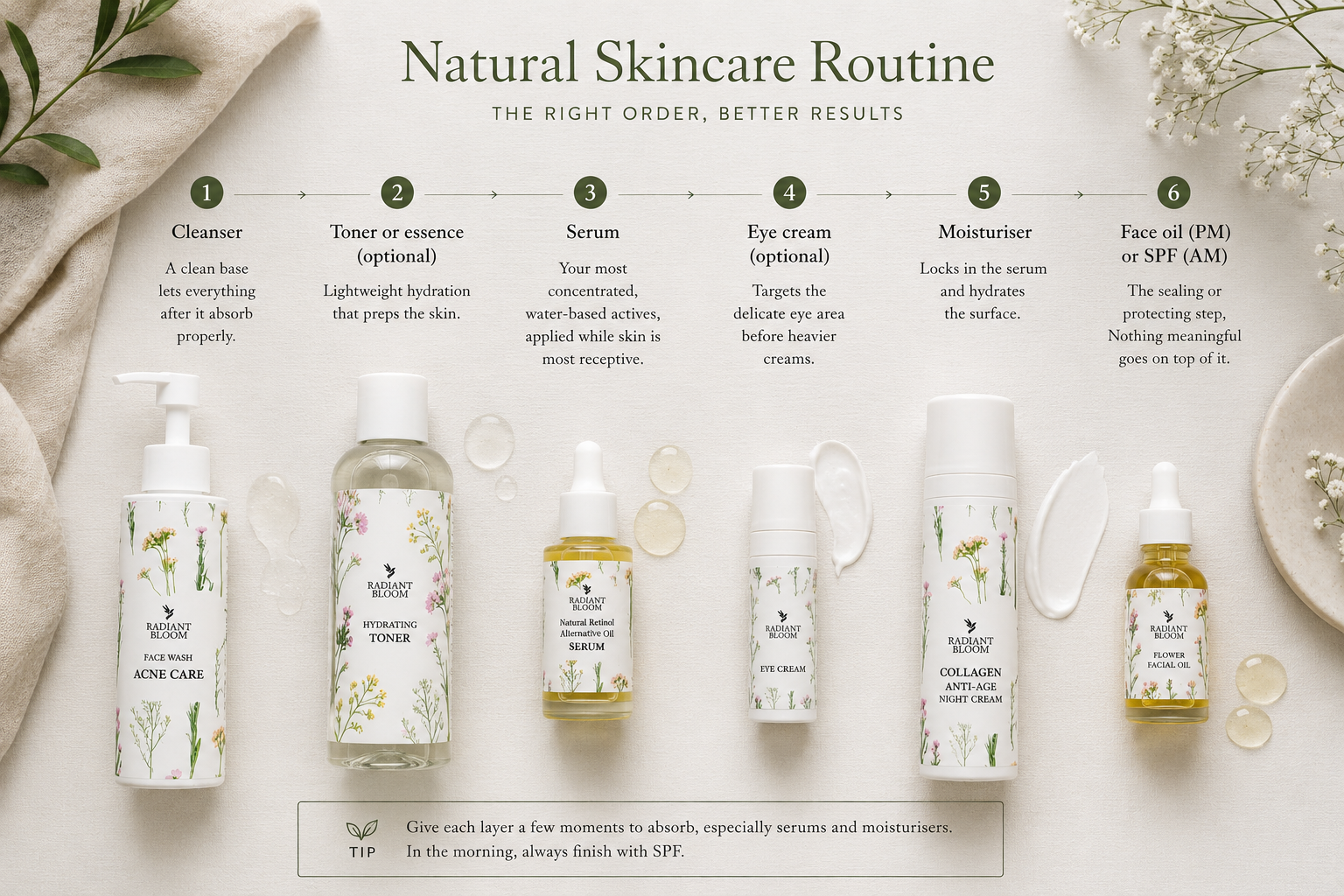
The correct order, thinnest to thickest
Whether you run a simple three-step routine or a fuller one, the sequence follows one rule: thinnest to thickest, with your most active, water-based products first.
| Step | Product | Why it goes here |
|---|---|---|
| 1 | Cleanser | A clean base lets everything after it absorb properly. |
| 2 | Toner or essence (optional) | Lightweight hydration that preps the skin. |
| 3 | Serum | Your most concentrated, water-based actives, applied while skin is most receptive. |
| 4 | Eye cream (optional) | Targets the delicate eye area before heavier creams. |
| 5 | Moisturiser | Locks in the serum and hydrates the surface. |
| 6 | Face oil (PM) or SPF (AM) | The sealing or protecting step. Nothing meaningful goes on top of it. |
Your morning routine, step by step
Mornings are about protection: antioxidants and SPF to defend against the day.
- Cleanse with a gentle natural cleanser to remove overnight oil.
- Vitamin C serum to brighten and provide antioxidant defence, ideal in the morning.
- Eye cream (optional), such as the Calming Eye Cream.
- Moisturiser suited to your skin. Lightweight Oil-Free Hydrating Gel for oily skin, or a richer Anti-Age Day Cream for drier or mature skin.
- SPF, always last. Sunscreen has to sit on the surface to protect properly, so nothing skincare goes over it. Try the SPF50 Stick.
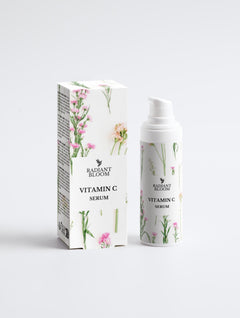
Morning · Step 2
Vitamin C Serum
A brightening, antioxidant-rich serum that helps defend against daily environmental stress and supports a more even, radiant-looking complexion. Apply on clean skin before your moisturiser and SPF.
€24,99
Shop Vitamin C Serum →
Your evening routine, step by step
Evenings are about repair: treatment serums and richer nourishment while your skin rests.
- Cleanse. If you wore SPF or makeup, double cleanse: an oil-based cleanser first, then a gentle water-based one.
- Treatment serum for your main concern, such as the Hydrating Serum, the Bakuchiol Serum (a gentle retinol alternative) or the Peptide Serum.
- Eye cream (optional), such as the Smoothing Eye Cream.
- Moisturiser to nourish overnight.
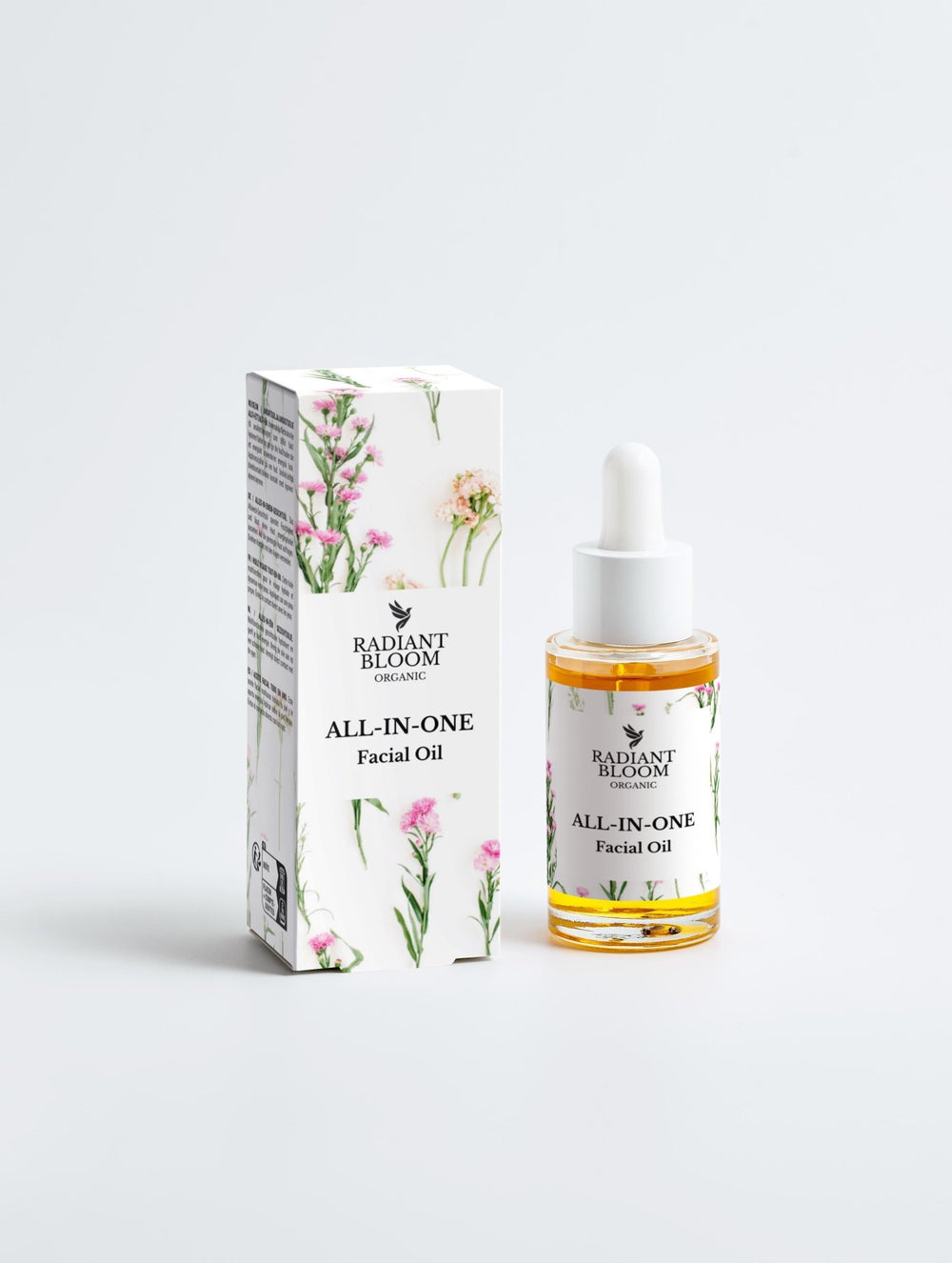
- Facial oil, last, to seal everything in (more on this next).
Where does face oil actually go?
This is the step that trips everyone up, and the advice online genuinely contradicts itself. Here is the clear answer.
A facial oil is occlusive, meaning it forms a seal on the surface of your skin. Because nothing water-based can pass through that seal, your oil goes on at or near the end of your routine, after your water-based serums and after (or in place of) your moisturiser. Applying a serum on top of an oil simply will not work, the serum cannot get through.
Two simple rules cover almost every situation:
- At night: facial oil is your final step, applied after moisturiser to lock everything in.
- In the morning: SPF must be the last step, so if you use an oil in the day, apply it before SPF, or save the oil for night-time.
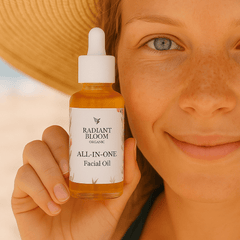
Final step · Seal & glow
All-In-One Facial Oil
An organic blend that nourishes and seals in the steps beneath it for a healthy glow. Use it as the last step at night, or as a lightweight moisturiser alternative. A few drops is all you need.
€26,99
Shop the Facial Oil →
Can a facial oil replace your moisturiser?
For some people, yes. If your skin is normal to dry and feels comfortable, a nourishing facial oil can stand in for a separate moisturiser as your final nourishing step. If your skin is dehydrated, a water-based moisturiser plus a few drops of oil on top usually works better, because the oil seals the water-based hydration in rather than replacing it. Oily and acne-prone skin often does best with a lightweight oil-free gel and only a small amount of a non-comedogenic oil, if any. Listen to how your skin feels and adjust.
Adjusting the routine for your skin
The order stays the same. What changes is the products you slot into each step.
- Oily or acne-prone: keep textures light, lean on a gel moisturiser, and go easy on oils. Our guide to a vegan routine for acne-prone skin breaks down the right actives.
- Dry or mature: add richer textures and consider a treatment oil. If your skin is changing with hormones, see perimenopause skin changes and natural solutions.
- Sensitive: keep the routine short, introduce one new product at a time, and patch test first.
And remember your scalp is skin too. If it gets itchy or flaky, our guide on clearing scalp build-up naturally applies the same gentle principles.
Frequently asked questions
Do you apply face oil before or after moisturiser?
After. Because a facial oil seals the skin, applying it after your moisturiser locks that hydration in. If you apply oil first, it can block your moisturiser from absorbing. The exception is that SPF always comes after everything in the morning.
What order do you apply serum, oil and moisturiser?
Serum first (it is the thinnest and most active), then moisturiser, then facial oil last. Always work thinnest to thickest so each layer can absorb before the next seals it in.
Where does SPF go in a skincare routine?
SPF is always the final step of your morning routine, applied after moisturiser. Sunscreen needs to sit on the surface to protect your skin, so no skincare goes on top of it. Makeup can go over SPF.
Can a facial oil replace your moisturiser?
It can for normal to dry skin that feels comfortable with oil alone. Dehydrated skin usually does better with a water-based moisturiser underneath, sealed with a few drops of oil. Oily skin tends to prefer a light gel.
Can you use a face oil in the morning under SPF?
You can, applied before your SPF, but keep it light so it does not interfere with how the sunscreen sits. Many people prefer to save heavier oils for night and keep mornings lighter.
Does the order of skincare really matter?
Yes. Layering from thinnest to thickest, and water-based before oil-based, lets your active ingredients absorb instead of being blocked by heavier products. The right order is how you get the full value from what you have bought.
Build it the right way
Build your natural routine, step by step
Cleanse, treat, nourish and protect with the Radiant Bloom range: vegan, cruelty-free and certified natural. New customers get 15% off the first order.
Shop serums & oils →Free worldwide shipping on orders over €45.