Cart
0
When people search for a vegan suntan lotion, they usually mean one of two things: a sunscreen that lets them enjoy the sun without animal-derived ingredients, or an old-style tanning lotion that speeds up colour. The honest answer covers both. Yes, you can still tan while wearing SPF, because no sunscreen blocks 100 percent of UV; you simply tan more slowly and with far less damage. And no, classic tanning lotions are often not vegan, because lanolin from sheep's wool has been a base ingredient of suntan formulas for decades, with beeswax doing the same job in sun sticks. This guide explains what to check on a sun product's label, which vegan and cruelty-free format fits each situation, and how to care for skin after a day in the sun.
In this article
- What makes a suntan lotion vegan?
- Can you still tan while wearing sunscreen?
- Which sun protection format fits your day?
- How do you care for skin after the sun?
- Frequently asked questions
What makes a suntan lotion vegan?
The UV filters themselves are rarely the problem: mineral filters like zinc oxide and titanium dioxide are mined minerals, and most modern chemical filters are synthesised. The animal ingredients hide in the base of the formula:
- Lanolin and lanolin oil: the classic emollient of tanning lotions and after-sun creams, derived from sheep's wool.
- Beeswax (cera alba): the structural wax in many sun sticks and water-resistant balms.
- Collagen and elastin: added to after-sun products with firming claims, sourced from fish or cattle.
- Carmine: the insect-derived pigment occasionally used in tinted sun formulas.
- Glycerin and stearic acid: plant or animal sourced, with no way to tell from the label alone.
A vegan sun product replaces these with plant waxes, botanical oils and vegetable glycerin, and a cruelty-free claim needs separate verification, which our vegan vs cruelty-free guide explains in detail.
Can you still tan while wearing sunscreen?
Yes. SPF 30 filters roughly 97 percent of UVB rays, not all of them, so melanin production continues and colour develops gradually. What changes is the cost: with proper protection you trade the fast burn-and-peel cycle for a slower tan and dramatically less of the damage that shows up years later as spots, lines and worse. Two honest notes belong here. First, there is no such thing as a fully safe tan, because a tan is skin responding to injury; protection reduces the harm, it does not erase it. Second, a base tan is not meaningful protection, offering roughly the equivalent of SPF 3. If you want colour, the smart route is SPF on, time limited, and hydration afterwards. For the myths around mineral filters, white cast included, our mineral sunscreen myths guide clears them up.
Which sun protection format fits your day?
| Format | Best for | Good to know |
|---|---|---|
| Mineral lotion SPF30 | Beach days, face and body | Reapply every two hours and after swimming |
| Tinted lotion SPF30 | Everyday face wear, no white cast | Doubles as light, even-toning coverage |
| SPF50 stick | Nose, ears, lips, scalp lines, on the go | Fits a pocket, no mess, easy top-ups |
| Tinted SPF50 stick | High-exposure days with a finished look | Highest protection in this range |

The beach-day essential
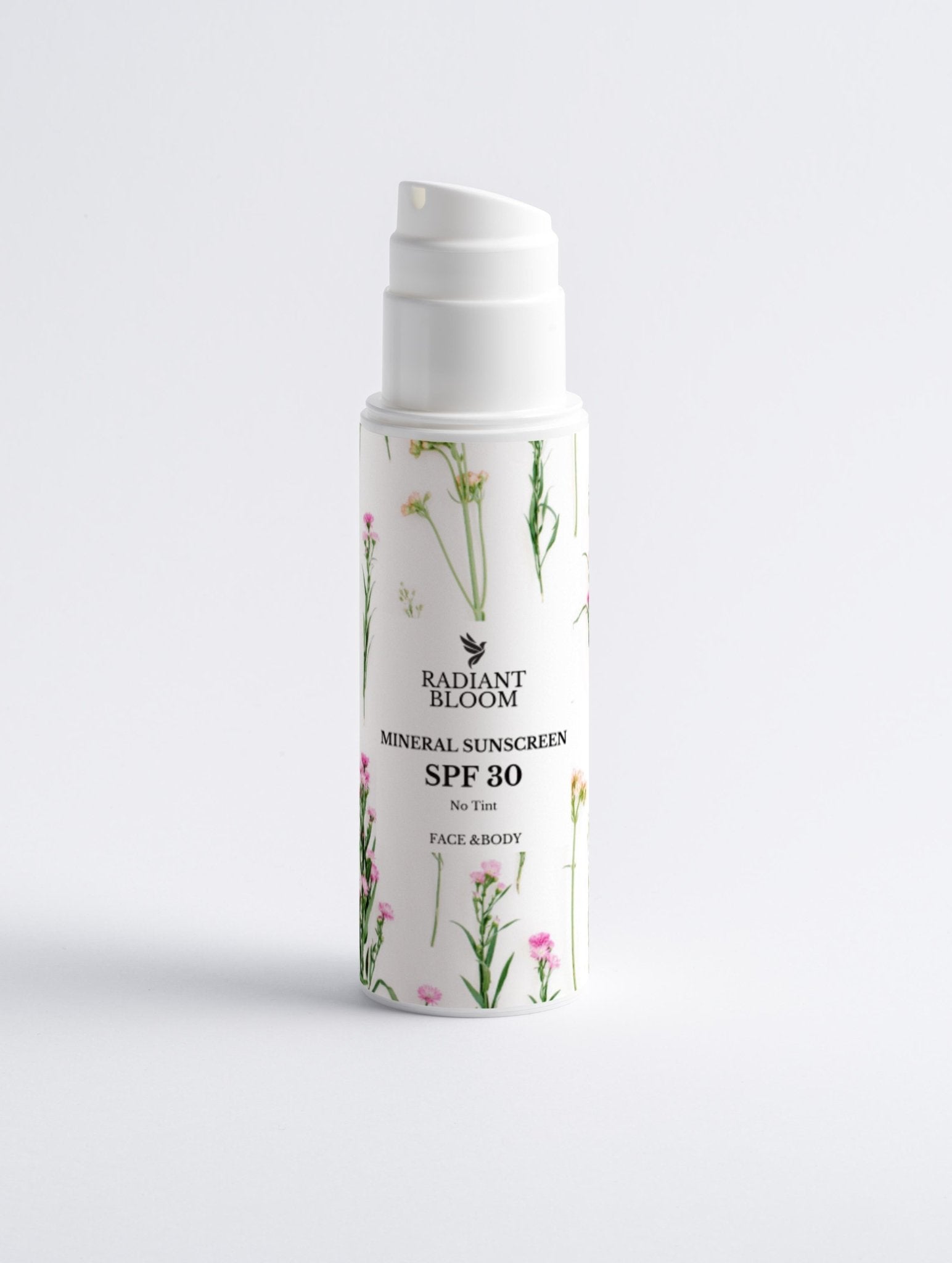
Mineral Sunscreen SPF30, Face & BodyA generous 150ml vegan mineral lotion that covers the whole family's day in the sun.
€29.99Shop Now →

Everyday face wear
Sunscreen SPF30 with TintVegan sun protection and a hint of skin-evening tint in one daily step, no white cast.
€24.99Shop Now →

Pocket-size top-ups
SPF50 Sun Stick, No TintA beeswax-free vegan stick for the spots everyone misses: nose, ears, lips and hairline.
€24.99Shop Now →

High protection, finished look
SPF50 Sun Stick with TintTop-tier vegan protection with a soft tint for long days in strong summer sun.
€24.99Shop Now →
How do you care for skin after the sun?
The tan you keep is decided in the evening. Rinse off salt, chlorine and sunscreen with a gentle wash such as the ones in our vegan body wash guide, then rehydrate generously: aloe-rich and hyaluronic formulas replace the water the sun pulled out, which keeps colour even and stops the flaking that fades a tan early. A few drops of plant oil seal everything in; our summer facial oil guide covers how to do this without heaviness. Skip exfoliating acids for a day or two after heavy sun, and if skin actually burned, treat it to cool water, minimal ingredients and patience rather than actives.
Frequently asked questions
Can you tan through SPF 30 or SPF 50?
Yes. No sunscreen blocks all UV, so a gradual tan still develops. It arrives more slowly and lasts better, because protected skin does not peel away in sheets the way burnt skin does.
Is sunscreen vegan by default?
No. The filters usually are, but bases frequently contain lanolin or beeswax, sticks especially. Check the full ingredient list or choose a certified vegan brand.
Are mineral or chemical filters more vegan-friendly?
Both can be vegan; zinc oxide and titanium dioxide are minerals, and modern chemical filters are synthesised. The vegan question sits in the rest of the formula, so judge the whole label, not the filter type.
How often should suntan lotion be reapplied?
Every two hours in active sun, immediately after swimming or towelling, and more generously than feels natural: most people apply half the amount the SPF rating assumes.
Does a base tan protect you?
Barely. A base tan offers protection of roughly SPF 3, which is why it cannot replace sunscreen. Treat it as cosmetic, not protective.
Sunshine, minus the animal ingredients
Mineral lotions, tinted formulas and SPF50 sticks, all vegan and cruelty-free.
Shop Vegan Sun Care →Free worldwide shipping on orders over €45. Vegan, cruelty-free and organic.