
Einkaufswagen
0
Rosemary oil genuinely can support hair growth, but only if you use it correctly, and the single most common mistake is applying the essential oil undiluted. Pure rosemary essential oil is far too concentrated for skin and can irritate the very scalp you are trying to help. The fix is simple: mix 3 to 5 drops of rosemary essential oil into one tablespoon of a carrier oil like jojoba, sweet almond or grapeseed (roughly a 2 to 3 percent dilution), massage it into the scalp, and give it consistent months, not days. Here is the full method.
In this article
- Does rosemary oil actually work for hair growth?
- Why do you need a carrier oil for rosemary oil?
- Which carrier oil is best for your hair type?
- How do you apply it, step by step?
- DIY mix or a pre-blended rosemary hair oil?
- FAQ
Does rosemary oil actually work for hair growth?
The evidence is real, if modest. In a widely cited 2015 randomised trial, people with androgenetic hair thinning used either rosemary oil or 2 percent minoxidil for six months. By the end, both groups showed a comparable increase in hair count, and the rosemary group reported less scalp itching. The proposed mechanisms are improved scalp circulation and a calming effect on the follicle environment.
Two honest caveats. First, results took six months in that study, so this is a habit, not a hack. Second, rosemary supports the follicles you have; it will not resurrect long-dead ones. We break down the research in more depth in our post on whether rosemary oil really helps hair grow.

Why do you need a carrier oil for rosemary oil?
Rosemary essential oil is a concentrated plant extract, dozens of times stronger than anything skin is designed to handle neat. Applied undiluted, it can cause redness, burning, flaking and contact dermatitis, which ironically stresses follicles and works against growth. A carrier oil does three jobs: it dilutes the essential oil to a skin-safe 1 to 3 percent, it spreads it evenly across the scalp, and it nourishes the hair shaft with fatty acids the essential oil does not contain.
The standard recipe: 3 to 5 drops of rosemary essential oil per 1 tablespoon (15 ml) of carrier oil. For a bigger batch, that scales to about 20 to 30 drops per 100 ml. When in doubt, go weaker; the study-level benefits come from consistency, not concentration.
Which carrier oil is best for your hair type?
| Carrier oil | Best for | Feel |
|---|---|---|
| Jojoba | Oily or flake-prone scalps (closest to natural sebum) | Light, non-greasy |
| Grapeseed | Fine hair that gets weighed down easily | Very light |
| Sweet almond | Normal to dry hair, all-rounder | Medium |
| Argan | Dry, frizzy or damaged lengths | Medium, silky |
| Coconut | Thick, coarse or very dry hair | Rich, can weigh fine hair down |
Choosing between oils in general? Our guide to choosing an organic hair oil goes deeper on matching oil to hair type.
How do you apply it, step by step?
- Mix fresh or in small batches. 3 to 5 drops rosemary essential oil per tablespoon of your chosen carrier. Store any batch in a dark bottle away from sunlight.
- Patch test first. A little inside the forearm, wait 24 hours. Essential oil sensitivities are common enough to respect.
- Massage into the scalp, not the lengths. Part the hair in sections, apply with fingertips or a dropper, and massage for 3 to 5 minutes. The massage itself boosts circulation and is part of the treatment.
- Leave it in for at least 30 minutes. Longer is fine; many people do an overnight treatment with a towel on the pillow. Full timing options are in our post on how long to leave rosemary oil in your hair.
- Shampoo out thoroughly and repeat 2 to 3 times per week. Daily is unnecessary; we cover why in can you use rosemary oil every day.
- Judge results at month 4 to 6. Take a photo now; follicle cycles are slow and the mirror lies week to week.
DIY mix or a pre-blended rosemary hair oil?
DIY blending works, but it comes with homework: sourcing a quality essential oil, getting the ratio right, patch testing each new batch. A professionally formulated rosemary hair oil solves all of that in one bottle, with the rosemary already diluted to a scalp-safe level in nourishing organic carriers, so you can go straight to the massage-and-consistency part that actually grows hair.
Pre-diluted and ready to massage
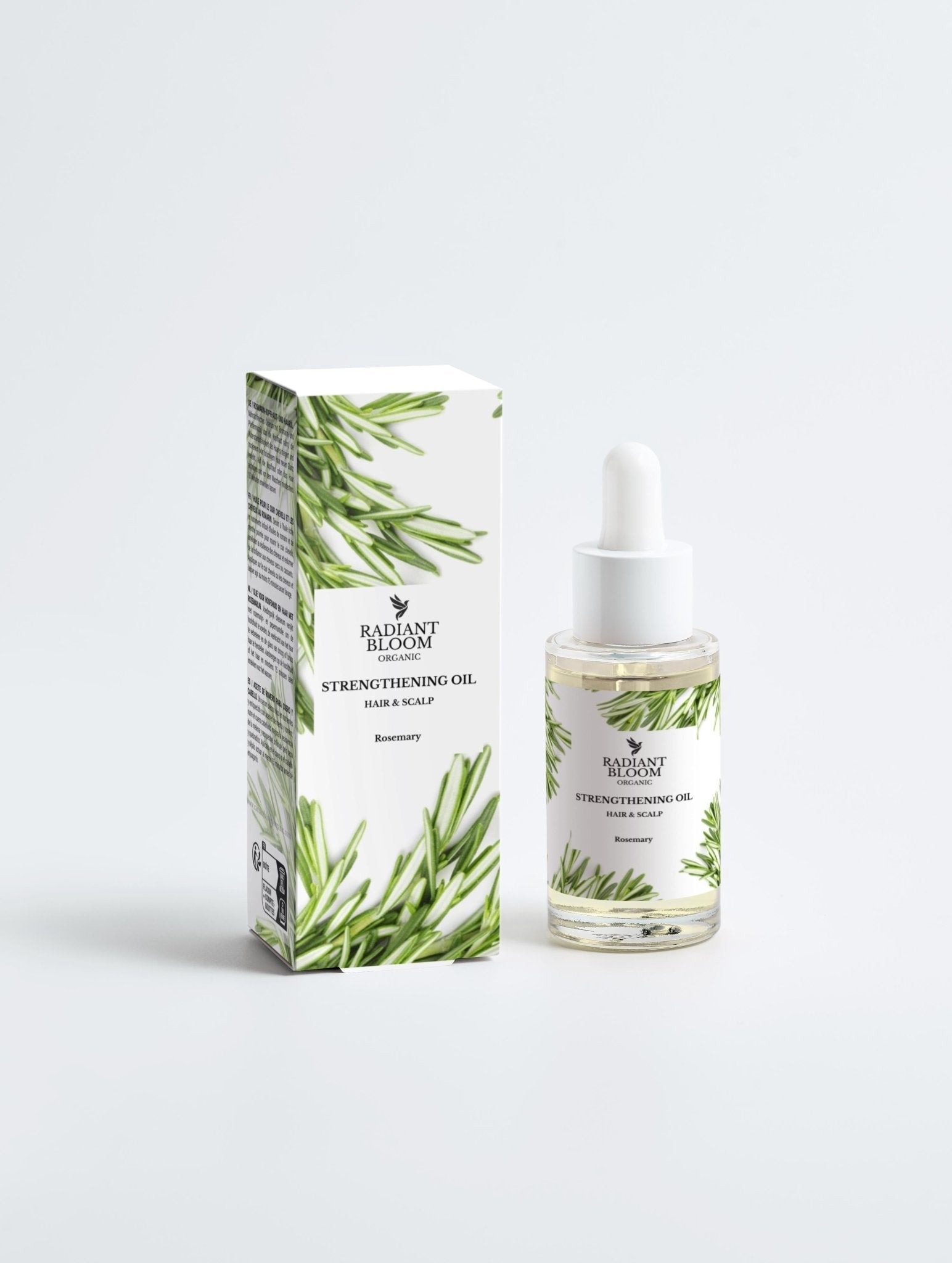
Organic Rosemary Hair & Scalp Oil
Rosemary blended at a scalp-safe strength in organic carrier oils: no measuring, no guesswork, just the ritual.
€27.99
Shop rosemary oil →

Once a week, before oiling
Scalp Detox Scrub with Rosemary & Peppermint
Clears buildup so the oil reaches follicles instead of sitting on residue, the step most routines skip.
€29.99
Shop scalp scrub →
Frequently asked questions
What is the best carrier oil for rosemary oil?
Jojoba for oily or flaky scalps, grapeseed for fine hair, sweet almond as the all-rounder, and argan or coconut for dry, coarse hair. Any of them works; pick by how your hair feels afterwards.
How many drops of rosemary oil per tablespoon of carrier oil?
3 to 5 drops per tablespoon (15 ml), which lands around a 2 to 3 percent dilution. For 100 ml of carrier, use roughly 20 to 30 drops.
Can I apply rosemary essential oil directly to my scalp?
No. Undiluted essential oil can burn and irritate the scalp, which harms rather than helps growth. Always dilute in a carrier oil or use a pre-blended rosemary hair oil.
How often should I use rosemary oil on my hair?
2 to 3 times per week is the sweet spot. Daily use adds little and raises the chance of irritation and buildup.
How long does rosemary oil take to grow hair?
In the clinical research, measurable improvement appeared at the six month mark. Expect to commit for at least 4 to 6 months of consistent use before judging.
Skip the measuring, keep the ritual
Scalp-safe rosemary, organically blended and ready to massage in tonight.
Shop Rosemary Hair & Scalp Oil →Vegan. Cruelty-free. Organically sourced.
This article is for general information. If you have sudden or patchy hair loss, see a doctor or trichologist, as the cause matters more than the oil. The clinical comparison referenced is available via the US National Library of Medicine.