Cart
0
Hormonal acne is the deep, tender kind that appears along the jawline, chin and lower cheeks, often flaring in a monthly pattern. It happens when hormonal shifts increase oil production and change how skin sheds inside the pore. Skincare cannot change your hormones, but a consistent gentle routine that controls oil, keeps pores clear and protects the barrier makes a real difference, and a GP can help when it goes deeper than that.
In this article: how to recognise hormonal acne, what causes it, why harsh routines backfire, the routine that helps, what to avoid, when to see a GP, and an FAQ.
Worth saying up front: acne is a medical condition and this article is general skincare guidance, not medical advice. Persistent, painful or cystic acne deserves a GP appointment, because prescription treatment works far better than anything cosmetic and early treatment reduces the chance of scarring.
How do you know if your acne is hormonal?
Hormonal acne has a recognisable pattern that sets it apart from the breakouts most people had as teenagers.
- Location. It concentrates on the lower third of the face: jawline, chin, along the neck and lower cheeks.
- Depth. The spots are deeper, firmer and often tender, rather than the surface whiteheads of teenage acne.
- Timing. It frequently flares in a monthly cycle, commonly in the week or so before a period.
- Age. It is very common in adults, especially women in their twenties, thirties and forties, and again during perimenopause.
- Persistence. The same few spots return to the same few places, again and again.
If your breakouts are mostly small blackheads and whiteheads across the nose and forehead, that is congestion rather than hormonal acne, and it responds to a different approach. Our guide to getting rid of blackheads covers that case.
What causes hormonal acne?
Androgens, the hormone group that includes testosterone, stimulate the oil glands. When androgen activity rises relative to other hormones, or when skin is simply more sensitive to it, the glands produce more sebum. At the same time, the cells lining the pore shed less efficiently and become stickier. Excess oil plus sticky cells creates a blockage, bacteria multiply in that environment, and inflammation follows, producing the deep tender bump you can feel before you can see it.
The common triggers behind those hormonal shifts are the menstrual cycle, coming off or starting hormonal contraception, pregnancy and the postnatal period, perimenopause, and conditions such as PCOS. Stress plays a part too, because it raises cortisol, which in turn influences oil production. This is also why hormonal acne so often coincides with poor sleep and demanding periods of life.
Why harsh routines make hormonal acne worse
This is the single most common mistake, and it is completely understandable. Skin breaks out, so you reach for the strongest thing available: a foaming wash that leaves skin squeaky, a scrub, an astringent toner, and a spot treatment applied liberally. Within a fortnight the skin is tight, flaky and red, and breaking out more than before.
What has happened is barrier damage. Stripping the skin of oil triggers it to produce more, so you end up oilier than when you started. A damaged barrier is also more inflamed, and inflammation is central to how acne forms. Aggressive treatment of hormonal acne reliably produces a face that is simultaneously dry and spotty.
The approach that works is almost boringly gentle: control oil without stripping, keep pores clear with measured exfoliation, hydrate properly, and give it time.
The routine that actually helps
Morning
Cleanse with something mild, apply a lightweight oil-free hydrator, and finish with sunscreen. Sun protection matters more than people expect with acne, because the marks left behind by spots darken with sun exposure and take far longer to fade.
Evening
Cleanse thoroughly to remove sunscreen, oil and the day's grime. Follow with a clarifying treatment on the areas that break out, then moisturise. Two to three evenings a week, swap in a chemical exfoliant instead of the treatment step.

Step 1 · Cleanse without stripping
Purifying Mousse
Clears oil and grime from breakout-prone skin without that tight, squeaky finish that pushes the skin to produce even more oil.
View product →
Step 2 · Target the breakout zone
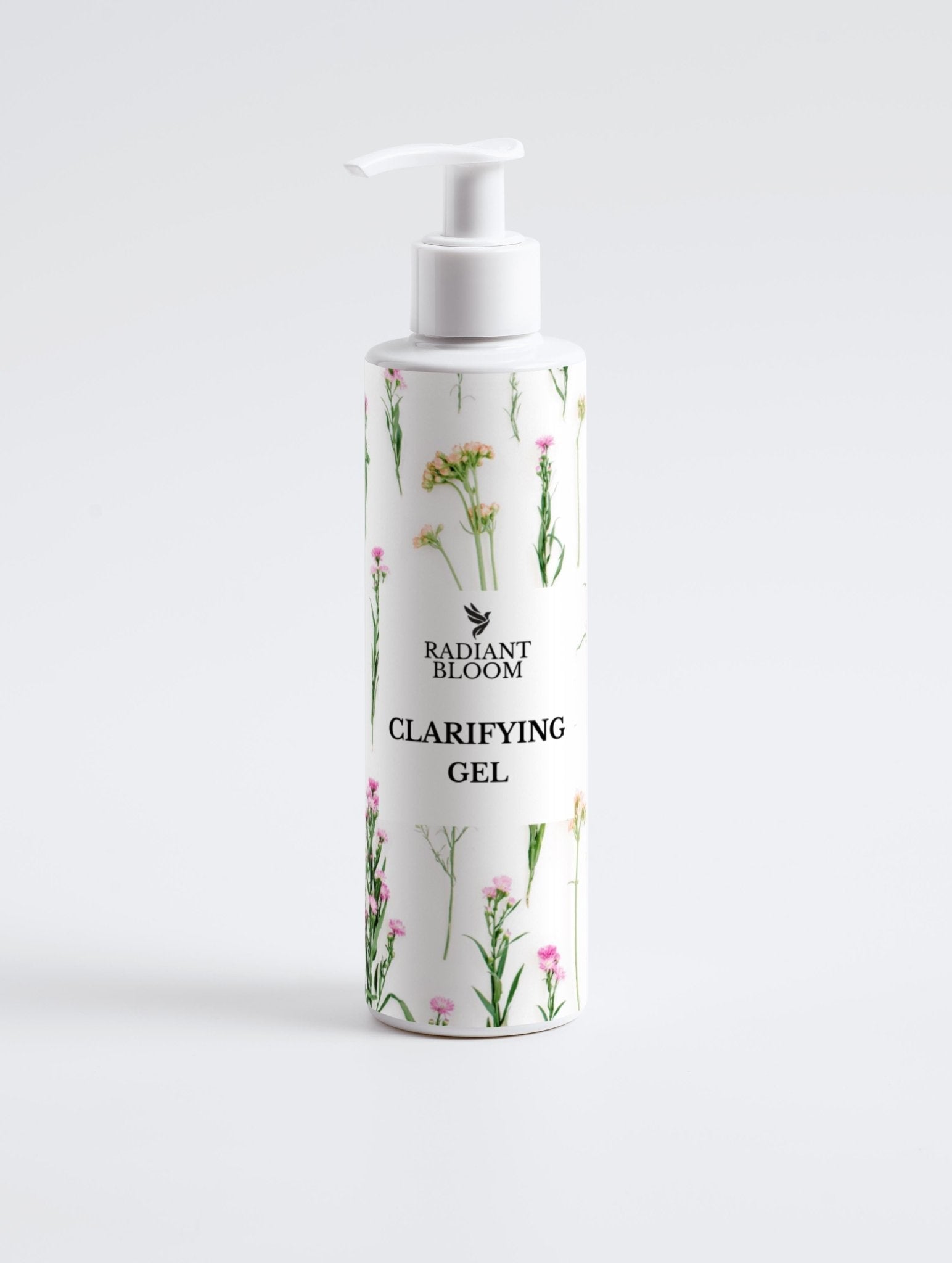
Clarifying Gel
Apply along the jawline and chin where hormonal breakouts concentrate, rather than over the whole face, so the rest of your skin is not over-treated.
View product →
Step 3 · Hydrate anyway
Oil-Free Hydrating Gel
Breakout-prone skin still needs moisture. Skipping this step is what leaves skin dry and spotty at the same time. Lightweight and non-greasy.
View product →What to do and what to avoid
| Do this | Not this |
|---|---|
| Cleanse twice daily with a mild formula | Washing repeatedly to remove oil |
| Exfoliate chemically 2 to 3 times a week | Scrubbing over active spots |
| Treat the breakout zone specifically | Applying spot treatment across the whole face |
| Moisturise every day | Skipping moisturiser because skin is oily |
| Wear SPF to stop marks darkening | Leaving post-spot marks unprotected |
| Give a routine 8 to 12 weeks | Switching products every fortnight |
| Let spots heal on their own | Squeezing, which causes marks and scars |
How long before you see a difference?
Be prepared for this to be slower than you would like. Skin turnover takes roughly a month, and a spot begins forming under the surface weeks before it appears. That means eight to twelve weeks of consistency before you can fairly judge whether a routine is working. Constantly switching products is one of the biggest reasons people conclude that nothing helps, when in reality nothing was given long enough.
Marks left behind after a spot heals fade on their own timeline: red marks over a few months, brown marks slower still. Daily sunscreen genuinely speeds this up.
When should you see a GP?
Book an appointment if spots are deep, painful or cystic, if you are seeing any scarring, if acne is affecting your confidence or mood, or if a diligent routine has not helped after around three months. Prescription options work considerably better than cosmetics for hormonal acne, and treating it early is the most reliable way to avoid permanent scarring. It is also worth mentioning if breakouts arrived alongside irregular periods or unusual hair growth, since that combination is worth investigating.
Frequently asked questions
Where does hormonal acne usually appear?
Typically along the jawline, chin, lower cheeks and neck. The lower-face pattern, combined with deeper tender spots, is the clearest sign that breakouts are hormonally driven.
Can skincare cure hormonal acne?
No. Skincare cannot change hormones. A gentle, consistent routine reduces oil, keeps pores clearer and calms inflammation, which genuinely improves things, but persistent acne needs medical treatment.
Why does my acne flare before my period?
Hormonal shifts in the second half of the cycle increase oil production and inflammation, so spots that were already forming beneath the surface become visible at a predictable point each month.
Should I stop moisturising if my skin is oily and breaking out?
No. Skipping moisturiser makes things worse, because stripped skin compensates by producing more oil. Use a lightweight, oil-free hydrator instead of avoiding moisture altogether.
Does hormonal acne go away on its own?
It often fluctuates with hormonal changes and may settle over time, but it can persist for years. It is not something to simply wait out if it is deep, scarring or distressing.
· · ·