Einkaufswagen
0
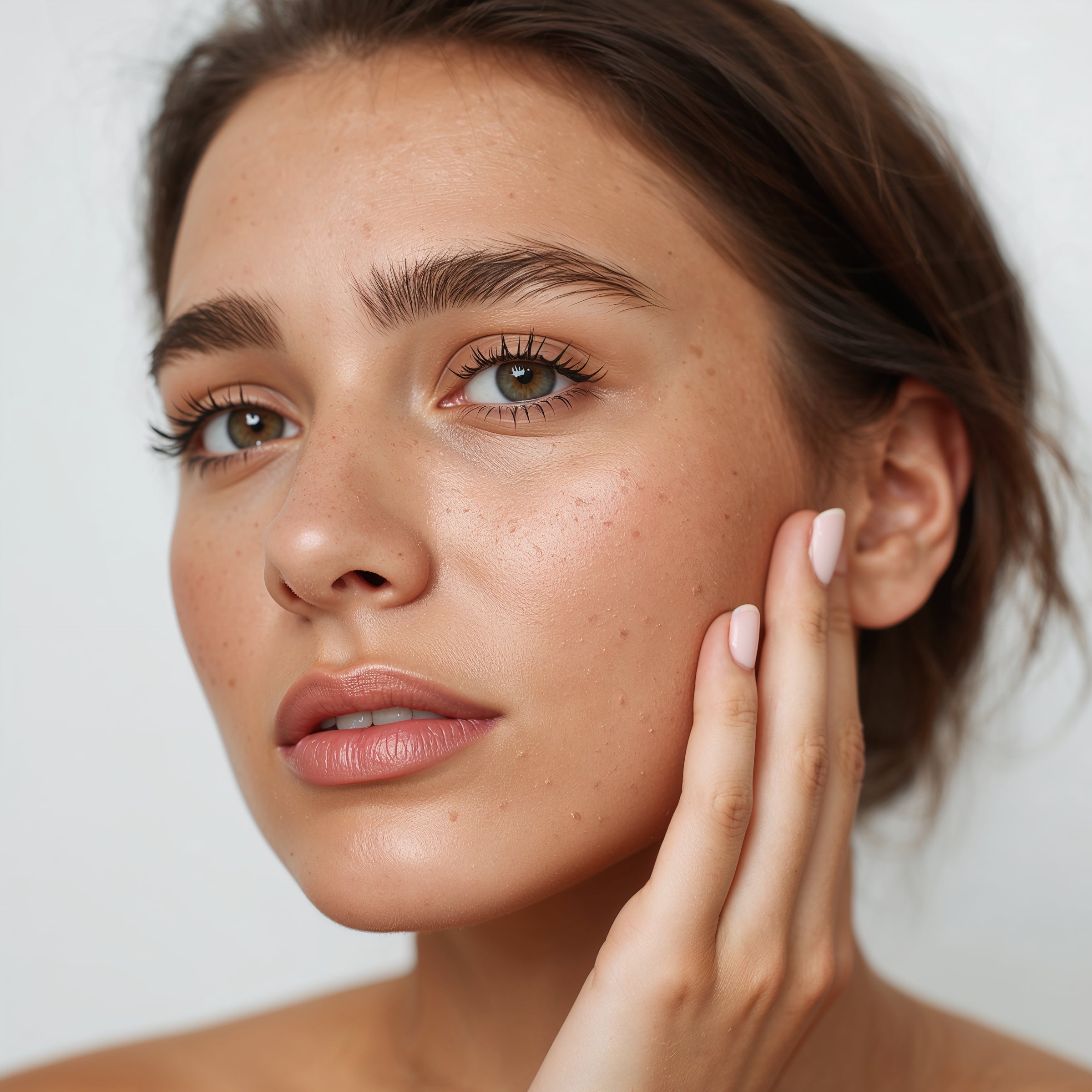
Milia are tiny, firm white bumps that form when keratin becomes trapped just beneath the surface of the skin. They are harmless, extremely common, and they are not spots, which is why squeezing them does not work and often causes damage. Most milia clear on their own within weeks or months. You can encourage them along with gentle chemical exfoliation and a lighter eye-area routine, and stubborn ones are quickly removed by a professional.
In this article: what milia are, why they form, milia vs whiteheads and blackheads, why squeezing fails, what you can do at home, professional removal in the UK, milia around the eyes, prevention, milia in babies, and an FAQ.
What are milia?
Milia (a single one is a milium) are small cysts filled with keratin, the tough protein that forms the outer layer of your skin, your hair and your nails. When keratin gets trapped under the surface instead of shedding away normally, it forms a tiny, firm, pearl-like ball just below the top layer of skin.
They are usually between one and two millimetres across, white or slightly yellowish, and dome-shaped. The most obvious clue that you are looking at milia rather than a spot is how they feel: milia are firm and hard, like a grain of sand under the skin, and they do not hurt. There is no redness around them, no inflammation, and no head that comes to a point.
They appear most commonly around the eyes, on the eyelids, across the cheeks, on the nose and on the forehead. They can also turn up on the chest and, in newborns, all over the face. They are entirely harmless, they are not infectious, and they are not a sign that anything is wrong with your health.
What causes milia in adults?
The frustrating answer is that primary milia, the most common kind, often appear for no identifiable reason at all. Keratin simply fails to shed and becomes trapped. That said, several factors reliably make them more likely.
Slower skin cell turnover
As we get older, skin sheds dead cells more slowly. That gives keratin more opportunity to accumulate and become trapped, which is why milia become more common with age. It is also why gentle, regular exfoliation is the main preventive strategy.
Heavy or occlusive products
Rich creams, thick balms and heavy eye products can sit on the skin and slow natural shedding, particularly around the delicate eye area where skin is thinnest. This is one of the most common contributors in people who suddenly develop milia after changing their routine, and one of the easiest to fix.
Sun damage
Long-term sun exposure thickens the outer layer of skin over time, which makes it harder for keratin to escape. Sun damage is a well-recognised contributor to persistent milia in adults, and it is another reason daily sunscreen earns its place.
Skin trauma
Secondary milia can appear after the skin has been damaged: after a burn, a blistering rash, prolonged sun damage, or an aggressive cosmetic procedure. In these cases the milia form as the skin heals, and they may be more persistent than primary milia.
Not enough cleansing
Sleeping in makeup or not properly removing sunscreen allows product to build up over the surface. On its own this rarely causes milia, but combined with the factors above it can tip the balance.
Milia vs whiteheads vs blackheads: how to tell the difference
This is where most people go wrong, because treating milia as if they were acne makes things worse. The three look superficially similar and behave completely differently.
| Milia | Whiteheads | Blackheads | |
|---|---|---|---|
| What it is | Keratin trapped in a tiny cyst | A pore blocked with oil and bacteria | An open pore blocked with oil that has oxidised |
| How it feels | Firm and hard, like a small bead | Soft, sometimes tender | Slightly rough, not tender |
| Appearance | Uniform white or yellowish dome, no opening | White or yellow head, often with redness | Dark dot at the surface |
| Inflammation | None | Often inflamed | Usually none |
| Responds to | Gentle exfoliation, time, professional extraction | Acne treatment, BHA | BHA and AHA exfoliation |
| Can you squeeze it? | No, there is no opening to squeeze through | Best not to, but it has an exit route | Best not to |
The critical distinction is that a milium has no opening to the surface. A blackhead sits in an open pore and a whitehead in a closed but connected one. A milium is a fully enclosed little sac of keratin trapped beneath intact skin. That single fact explains almost everything about how to handle them. If your bumps turn out to be blackheads instead, our guide to getting rid of blackheads covers a completely different approach.
Why you should never squeeze milia
Because there is no opening, squeezing has nowhere to push the keratin out through. What actually happens when you press hard enough is that you damage the surrounding skin: you can rupture the cyst wall under the surface, cause bruising, break tiny capillaries, and introduce bacteria into broken skin.
The results are predictable and worse than the original bump. You can be left with a red mark that takes weeks to fade, post-inflammatory pigmentation that takes months, or in some cases a small scar that is permanent. Around the eyes, where the skin is at its thinnest and most fragile, the risk is highest of all.
The same applies to the milia removal tools and needles sold online. Lancing a milium at home means making a deliberate wound in your own skin, without sterile equipment, without proper lighting, and without training. Infection and scarring are genuine risks. If a milium is bothering you enough to reach for a needle, that is exactly the point at which to see a professional instead, who can do it in seconds with sterile equipment.
What can you actually do at home?
The honest starting point is that most milia resolve without any intervention. They work their way out naturally over a few weeks to a few months as the skin above them gradually sheds. So patience is a legitimate strategy, and often the best one.
If you want to encourage the process, the goal is to speed up how quickly the skin above the milium sheds, so the trapped keratin can escape on its own.
1. Gentle chemical exfoliation
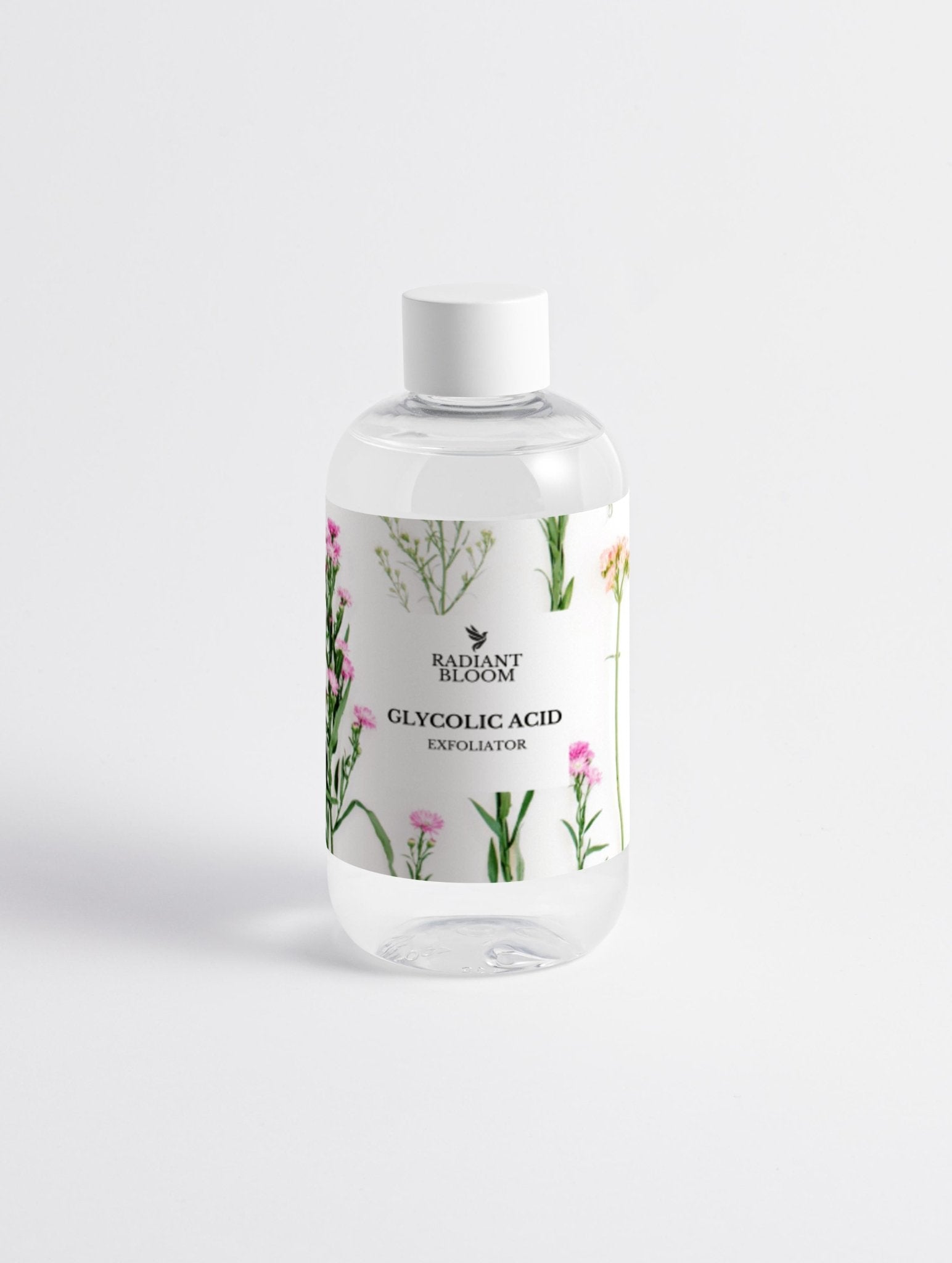
This is the most effective thing you can do at home. Acids loosen the bonds holding dead skin cells together, which thins the layer sitting over the milium and helps it clear. Salicylic acid works inside the follicle, while glycolic acid works on the surface to accelerate turnover. Use two to three times a week rather than daily, and follow with moisturiser. Our guide to how often you should exfoliate covers the right frequency for your skin type, and the full glycolic acid guide explains strengths and timing.

2 to 3 times a week · Exfoliate
Glycolic Acid Liquid Exfoliator
Accelerates surface turnover so trapped keratin can work its way out naturally. Sweep over affected areas, avoiding the immediate eye area.
View product →2. Lighten your eye-area routine
If your milia are clustered around your eyes, look hard at what you are putting there. Heavy eye creams and rich balms are a frequent culprit. Switching to a lighter gel-textured eye product often resolves the problem over a few weeks without doing anything else.

Swap in · Lighter eye care
Caffeine Gel Booster
A light gel texture for the eye area, rather than a rich occlusive cream. Worth trying if heavy eye products seem to be behind recurring milia.
View product →3. Cleanse properly every evening
Sunscreen and makeup need to come off thoroughly. A gentle but complete evening cleanse stops product building up on the surface and slowing natural shedding. If you wear SPF or makeup daily, double cleansing is the most reliable way to remove it without scrubbing.
4. Wear sunscreen daily
Since sun damage thickens the outer layer of skin and contributes to persistent milia, daily protection is both treatment and prevention. It is a slow-acting step, but it addresses one of the genuine underlying causes.

Every day · Prevent
Mineral Sunscreen SPF30
Sun damage thickens the outer layer of skin, which makes milia more likely to persist. Daily protection tackles that underlying cause.
View product →5. Be patient and consistent
Give any approach six to eight weeks before deciding it has not worked. Milia clear slowly because skin turnover is slow, and aggressive attempts to speed things up almost always backfire into irritation.
Professional milia removal in the UK
For milia that have been sitting there for months, or ones in an awkward spot such as the eyelid, professional removal is quick, safe and genuinely effective. It is one of the more satisfying treatments to have done because the result is immediate.
The standard method is simple: a trained practitioner makes a tiny opening in the skin over the milium with a sterile lancet, then applies gentle pressure with a comedone extractor. The whole thing takes seconds per milium, causes minimal discomfort, and usually leaves nothing more than slight redness for a day or so.
Other options include cryotherapy (freezing), which is sometimes used for clusters, and laser or electrolysis for particularly stubborn or awkwardly placed milia. These are less common and usually reserved for cases where standard extraction is not suitable.
Milia removal is a cosmetic procedure, so it is not normally available on the NHS, and you would typically see a private dermatologist, an advanced facialist or a skin clinic. Costs vary considerably by location and by how many milia are being treated, so it is worth asking for a quote at consultation rather than assuming.
One important point: make sure whoever treats you is properly qualified and works in a clinical setting with sterile equipment. Extraction involves breaking the skin, so hygiene is not optional.
Milia around the eyes: a special case
The eye area is where milia appear most often and where they cause the most frustration, because the skin there is roughly as thin as it gets on the human body. Two rules matter here.
First, do not attempt any extraction yourself near your eyes. The margin for error is tiny and the consequences of a slip are serious. This is unambiguously a job for a professional.
Second, be careful with actives. Strong acids and retinoids are generally not appropriate for the immediate eye area, and using them there in an attempt to clear milia often causes irritation, dryness and redness without helping. Apply your exfoliating products to the face while deliberately avoiding the orbital area, and address eye-area milia by lightening your products and seeing a professional if they persist.
How do you prevent milia coming back?
- Exfoliate gently but regularly. Two to three times a week keeps turnover moving without irritating the skin.
- Match product weight to the area. Save rich creams for dry cheeks and use lighter textures around the eyes.
- Remove everything at night. A complete evening cleanse is the foundation.
- Protect against sun damage. Daily SPF prevents the skin thickening that makes milia more likely.
- Do not pick. Trauma to the skin can cause secondary milia, so picking at existing ones can genuinely create new ones.
People who are prone to milia often find they recur periodically throughout life. That is normal and not a sign the routine is failing. Consistent gentle care makes them less frequent and less noticeable.
What about milia in babies?
Milia are very common in newborns, appearing as tiny white bumps across the nose, cheeks and chin in a large proportion of babies. They are completely harmless and they clear entirely on their own, usually within a few weeks.
The only thing to do is nothing. Do not apply creams, do not try to remove them, and do not use any exfoliating product on a baby's skin. Simply wash gently with water and leave them alone. If bumps persist beyond a few months, look inflamed, or you are unsure whether it is milia at all, speak to your health visitor or GP for reassurance.
When should you see a doctor?
Milia themselves are harmless and do not need medical attention. It is worth getting checked if you are not certain that what you have is milia, if the bumps are growing, changing colour or bleeding, if they appear suddenly in large numbers, or if they develop after a burn or a blistering rash. A GP or dermatologist can confirm what you are dealing with in a single appointment, which is worth doing rather than treating something for months on the wrong assumption.
Frequently asked questions
Do milia go away on their own?
Usually yes. Most milia clear naturally within a few weeks to a few months as the skin above them sheds. Gentle exfoliation can speed this up, and persistent ones can be removed professionally.
Can you pop milia?
No. Milia have no opening to the surface, so squeezing cannot release the keratin. It damages the surrounding skin instead and risks bruising, marks, infection and scarring.
What is the difference between milia and whiteheads?
Milia are hard keratin cysts with no opening and no inflammation. Whiteheads are blocked pores containing oil and bacteria, are softer, often inflamed, and respond to acne treatment.
Does milia removal hurt?
Professional extraction involves a tiny opening made with a sterile lancet and is generally described as a brief sting rather than pain. Redness usually settles within a day.
Is milia removal available on the NHS?
Generally no, because it is considered cosmetic. It is usually done privately by a dermatologist or qualified skin clinic. See your GP first if you are unsure whether the bumps are milia.
Can heavy eye cream cause milia?
It can contribute. Rich, occlusive products around the thin eye-area skin may slow natural shedding. Switching to a lighter texture often resolves recurring milia there.
How long do milia take to go away?
Anywhere from a few weeks to several months. Newborn milia usually clear within weeks. Adult milia are slower and sometimes need professional removal if they persist beyond a few months.
· · ·